

Research
- +4
Milan Vaishnav, Rahul Verma, Rukmini S., …
{
  "authors": [
    "Christophe Jaffrelot"
  ],
  "type": "legacyinthemedia",
  "centerAffiliationAll": "dc",
  "centers": [
    "Carnegie Endowment for International Peace"
  ],
  "collections": [],
  "englishNewsletterAll": "ctw",
  "nonEnglishNewsletterAll": "",
  "primaryCenter": "Carnegie Endowment for International Peace",
  "programAffiliation": "SAP",
  "programs": [
    "South Asia"
  ],
  "projects": [],
  "regions": [
    "South Asia",
    "India"
  ],
  "topics": [
    "Political Reform",
    "Economy"
  ]
}
Source: Getty
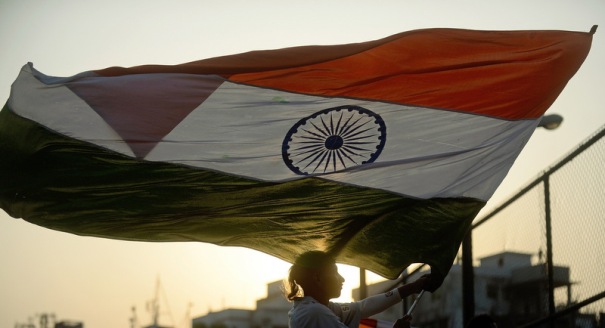
The mobilization of Jats, Marathas, and Patels, all dominant castes in India, describes something important about structural problems in the Indian economy.
Source: Indian Express
The Jats’ demonstrations for their inclusion on the list of the OBC castes in Haryana are echoing others — including the Patels’ agitation, which resulted in reportedly 10 deaths in August last year, a toll similar to the present one in Haryana where 16 people have died so far. And still other groups are asking for a “backward” status that would allow them to have a greater access to job quotas. The Gujjars in Rajasthan, the Kapus in Andhra Pradesh as well as the Marathas in Maharashtra are similarly mobilised. So far, they all have been denied reservations because of their dominant character. M.N. Srinivas, the pioneer of Indian anthropology in the 1950s, defined the dominant castes as those that are demographically important and own a lot of land. The Jats, Marathas and Patels are certainly dominant, but their mobilisation tells us something about structural problems in the Indian economy.
These dominant castes do not see their future in agriculture because of the attraction exerted by the city and because of the crisis in village India. The 2014-15 Economic Survey showed that the wages of rural India were increasing at 3.6 per cent only (when the inflation rate was above 5 per cent), against 20 per cent in 2011. Those who had land next to big cities could sell it to developers and even became rentiers sometimes. But most of the migrants who left their village to try their luck in the city are disappointed by the job market. In contrast to the middle class inhabiting urban centres for generations, they have not received the kind of English-medium education that gives access to the services, the sector (especially in IT) offering opportunities. While they have sometimes run heavy debts to get some private, not-so-good education, they have to fall back on unskilled jobs.These jobs are precarious and badly paid. In the private sector, the average daily earnings of the workers was Rs 249 in 2011-12, according to the Labour Bureau, and those of the employees at large, Rs 388. By contrast, in the public sector, the figures were respectively almost three times more at Rs 679 and Rs 945. Recently, the Seventh Pay Commission recommended an increase of the minimum monthly salary from Rs 7,000 to Rs 18,000.
Understandably, the young Jats, Patels, Kapus and Marathas who do not find good jobs in the private sector fall back on the government. The search for government jobs among these castes is also influenced by their particularly skewed sex ratio. Parents of girls prefer grooms with stable income – those with government jobs are often their preferred choice. With fewer girls compared to boys in these castes, there is competition in the marriage market.
However, there are fewer government jobs these days. There were 19.5 million jobs in the public sector in 1992-93 when India’s population was 839 million. While there are 1.2 billion Indians now, the number of jobs in the public sector has shrunk to 17.6 million. In states that have aggressively implemented the liberalisation policy, government jobs have almost disappeared. For instance, the government’s share in employment in Gujarat is only 1.18 per cent whereas it is 16 per cent in Kerala.
The dominant castes want to be counted as Other Backward Classes (OBC) to benefit from job reservation. But governments are wary to accede to the demand since the decision may alienate those already in the OBC list. The existing OBC castes, no less politically influential, fear that the dominant castes may corner the quotas if included in the list since the latter are richer and better educated. Moreover, the judiciary will probably not allow quotas to exceed the 49 per cent limit imposed by the Supreme Court on reservation.
Some chief ministers pretend they can influence the judiciary. For instance, Maharashtra CM Devendra Fadnavis has referred the Marathas’s demand for reservation to the Supreme Court. Some others claim that caste should not be the only criterion for positive discrimination. Rajasthan CM Vasundhara Raje passed two legislations in September 2015, the Rajasthan Economically Backward Classes (Reservation of Seats in Educational Institutions in the State and of Appointments and Posts in Services under the State) Bill, 2015, and the Rajasthan Special Backward Classes (Reservation of Seats in Educational Institutions in the State and of Appointments and Posts in Services under the State) Bill, 2015, with this intent. The main beneficiary of the second bill will be the Gujjars. Neither of laws will be validated by the Supreme Court probably because they push the quota to 68 per cent, beyond the acceptable level.
But legislating such bills sends signals to the dominant castes that the BJP is trying to reframe the reservation policy and reform it. The BJP government of Haryana may well follow the same strategy since it has decided to bring a bill to grant OBC status to Jats in the next session of the state assembly.
The end game, may well be to revisit the reservation system. Patels, Jats and Marathas will be the winners if quotas are not based on the criterion of caste but arthik adhar par [on economic basis] as the Sangh parivar used to say in the post-Mandal era.
However, such a reform of the quota system can only help the dominant castes if more jobs are created in the public sector — not in line with the BJP “minimum government” motto. Surprisingly, the government is not thinking about the most obvious way out: Better wages in the private sector. Three months ago, the Ministry of Labour & Employment has announced an amendment to the Minimum Wages Act, 1948 that would set the legally binding national minimum wage across the board. But the minimum wage so envisaged was only Rs 273 a day (against Rs. 160 since July, 2015) or Rs. 7,100 a month. In the Maruti Suzuki plants of Gurgaon and Manesar — places the Jats know well — the strike started in 2012 partly because workers got Rs 6,000 a month on an average, and that was definitely not enough (so much so that after months of negotiations, Maruti Suzuki has increased the wages of its employees by Rs 16,800 as an average).
The budget session of the Indian parliament may be the right time to debate the figures suggested in the amendment mentioned above — except that the government may not feel like displeasing India Inc. and those who are now supposed to Make in India because of the rise in labour costs in China.
Former Nonresident Scholar, South Asia Program
Jaffrelot’s core research focuses on theories of nationalism and democracy, mobilization of the lower castes and Dalits (ex-untouchables) in India, the Hindu nationalist movement, and ethnic conflicts in Pakistan.
Recent Work

Milan Vaishnav, Rahul Verma, Rukmini S., …
Christophe Jaffrelot
Carnegie does not take institutional positions on public policy issues; the views represented herein are those of the author(s) and do not necessarily reflect the views of Carnegie, its staff, or its trustees.

If the Russian-speaking community in Latvia cannot articulate their interests without being seen as disloyal, they could end up embracing a pro-Kremlin agenda.

Sergejs Potapkins

Russia’s ruling party would have benefited from Putin appearing as its distant patron, but as an active frontman imposing his views on the public, he has done nothing but harm both the party’s election campaign and the ruling system overall.

Andrey Pertsev

Depleted financial reserves and a shrinking tax base mean it is no longer possible to simultaneously deliver high defense spending, price stability, and economic growth.

Alexandra Prokopenko

In the tenth year of his presidency, President Mirziyoyev’s system is becoming even more personalized than that of his predecessor Karimov.

Galiya Ibragimova

With the growth in points of friction between the great powers, organizations like the SCO will continue to play a role in the strategic adaptation of the smaller powers caught between them.

Temur Umarov