

Paper
Christopher S. Chivvis, Rohan Mukherjee, Milan Vaishnav
{
  "authors": [
    "Milan Vaishnav"
  ],
  "type": "legacyinthemedia",
  "centerAffiliationAll": "dc",
  "centers": [
    "Carnegie Endowment for International Peace"
  ],
  "collections": [],
  "englishNewsletterAll": "ctw",
  "nonEnglishNewsletterAll": "",
  "primaryCenter": "Carnegie Endowment for International Peace",
  "programAffiliation": "SAP",
  "programs": [
    "South Asia"
  ],
  "projects": [],
  "regions": [
    "South Asia",
    "India"
  ],
  "topics": [
    "Political Reform",
    "Economy"
  ]
}
Source: Getty
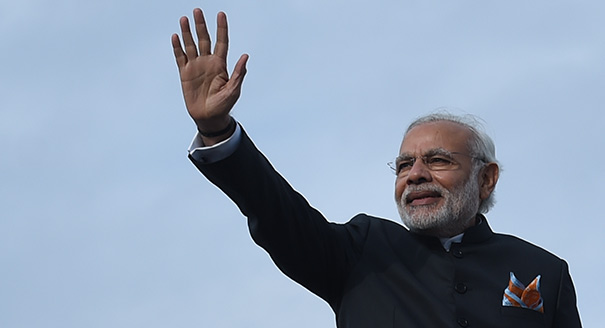
Despite winning the first single-party majority in India in three decades, Prime Minister Narendra Modi has not effectively used the bully pulpit to champion reformist economic policies.
Source: Foreign Affairs
Last week, Indian Finance Minister Arun Jaitley presented his third budget since the Bharatiya Janata Party (BJP) government, led by Prime Minister Narendra Modi, came to power in May 2014. Modi campaigned on a platform of good governance, and many of his backers wagered that he would work to transform India’s economy while keeping his party’s social extremists in check. Nearly two years later, the record is mixed.
Jaitley’s presentation of the 2016 budget came after several weeks of political turmoil, during which the worst tendencies of Modi’s nationalist acolytes were on full display. The denouement featured BJP partisans gleefully cheering for sedition charges against students at Jawaharlal Nehru University in New Delhi who had allegedly made “anti-national” statements at a campus rally. Against this backdrop—not to mention this government’s serviceable, if unspectacular, budgets to date—investors were primed for some good news.And this year’s budget offered some cause for good cheer. The BJP refused to budge from an ambitious road map for fiscal consolidation—adhering to a pledge to further slash the government’s deficit, a necessary and highly anticipated correction to its predecessor’s spending sprees. The news was particularly welcome given that last year’s budget had detoured somewhat from the plan with a pause in deficit cutting in favor of government stimulus.
The new budget, the government hopes, will set the stage for the central bank to slash interest rates, with the aim of rekindling the economy’s animal spirits and boosting growth. The budget also gives a fillip to roads, railways, and oil and gas—core infrastructure sectors in dire need of modernization. And it doubles down on India’s heroic biometric identification scheme (known as Aadhaar), designed to eventually channel leaky welfare benefits directly to citizens’ bank accounts, by promising to introduce legislation to place the program on a firm legal footing. Finally, the new budget reaffirms New Delhi’s commitment to reducing its micromanagement of the regions by devolving more funds to state governments.
Still, the BJP’s reform plans to date have failed to fundamentally transform the relationship between the state and capital, which has been historically skewed in favor of the former. Despite modest progress reducing the abundance of red tape that torments businesses and investors, outmoded state-owned enterprises and opaque and complex regulation remain deeply entrenched. Although Modi repeatedly pledged on the campaign trail to bring about “maximum governance, minimum government,” by now it is clear that the prime minister does not intend to drastically overhaul India’s economic model, preferring instead a piecemeal strategy, chipping slowly away at the myriad blocks that have frustrated private entrepreneurship and hampered development.
This year, talk of the aspirational “neo–middle class,” a hallmark of Modi’s campaign rhetoric, did not figure into the budget speech. Instead, in a move reminiscent of the Indian National Congress (INC) government that he triumphantly defeated, Modi delivered a budget aimed largely at India’s poor and rural citizens. This shift, while not entirely unexpected, was packed with political importance: the BJP was thrashed in last fall’s election in the critical state of Bihar, and it has been reeling from accusations from the INC’s peripatetic scion, Rahul Gandhi, that the BJP caters to the Indian corporate class at the expense of the common man. In a developing country such as India, especially one experiencing signs of rural distress, no government can afford to alienate the poor.
The challenge for Modi, therefore, is to use his considerable political capital to convince the electorate—not to mention skeptics within his own party—that pro-poor and pro-market are two sides of the same coin. For instance, the government’s most recent economic survey, released just prior to the budget, provided a devastating illustration of the extent to which costly subsidies for items such as fuel, food, and fertilizer have largely benefited groups other than the poor, in whose name they were established. Elsewhere, Modi has invested heavily in a glitzy “Make in India” campaign, designed to transform India into a global manufacturing powerhouse that would create jobs for the surfeit of low-skilled workers seeking formal employment, yet the government has yet to outline a progressive trade policy.
Despite winning the first single-party majority in parliament’s lower house in three decades, Modi has not effectively used the bully pulpit to champion such reformist policies. And that is part of an emerging pattern in which the prime minister’s silence has tended to speak louder than his words. Although Hindu nationalism is central to the BJP’s ethos, Modi largely stifled its most extreme manifestations in favor of a message of material and social uplift on his road to victory in 2014. Yes, the touchstones of Hindu nationalism are still littered throughout the party’s platform, but in a sharp departure from the days when they constituted the majority of the platform. Since coming to power, the BJP and its allies have casually deployed anti-minority rhetoric while falling over one another to prove their commitment to cow and nation. There is a lot of noise, but the prime minister himself is eerily quiet.
Modi appears unable to rein in elements of his party that perpetuate the worst of its hard-line traditions, and the fact that members of his cabinet have often vocally backed fringe positions suggests that he is also unwilling to do so. Either way, voters, investors, and commentators alike are recalibrating their expectations for what this government can achieve. The hope is that its efforts to modernize, if not necessarily liberalize, India’s economy will not be sideswiped by roiling social controversies. While Modi may no longer be hailed as the transformational leader whom so many Indians feverishly backed two years ago, he is still well positioned to steer a more favorable economic course for the world’s largest democracy. This week’s budget inches along in the right direction, but Modi must rediscover his voice if he is to preempt nationalist distractions and realize even its more modest economic vision.

Director and Senior Fellow, South Asia Program
Milan Vaishnav is a senior fellow and director of the South Asia Program and the host of the Grand Tamasha podcast at the Carnegie Endowment for International Peace. His primary research focus is the political economy of India, and he examines issues such as corruption and governance, state capacity, federalism, and electoral behavior. He also conducts research on the Indian diaspora.
Recent Work

Christopher S. Chivvis, Rohan Mukherjee, Milan Vaishnav



Sophia Besch, Eric Ciaramella, Steve Feldstein, …
Carnegie does not take institutional positions on public policy issues; the views represented herein are those of the author(s) and do not necessarily reflect the views of Carnegie, its staff, or its trustees.

If the Russian-speaking community in Latvia cannot articulate their interests without being seen as disloyal, they could end up embracing a pro-Kremlin agenda.

Sergejs Potapkins

Russia’s ruling party would have benefited from Putin appearing as its distant patron, but as an active frontman imposing his views on the public, he has done nothing but harm both the party’s election campaign and the ruling system overall.

Andrey Pertsev

Depleted financial reserves and a shrinking tax base mean it is no longer possible to simultaneously deliver high defense spending, price stability, and economic growth.

Alexandra Prokopenko

In the tenth year of his presidency, President Mirziyoyev’s system is becoming even more personalized than that of his predecessor Karimov.

Galiya Ibragimova

With the growth in points of friction between the great powers, organizations like the SCO will continue to play a role in the strategic adaptation of the smaller powers caught between them.

Temur Umarov