

Article
Paul Stronski
{
  "authors": [
    "Paul Stronski"
  ],
  "type": "legacyinthemedia",
  "centerAffiliationAll": "dc",
  "centers": [
    "Carnegie Endowment for International Peace"
  ],
  "collections": [],
  "englishNewsletterAll": "ctw",
  "nonEnglishNewsletterAll": "",
  "primaryCenter": "Carnegie Endowment for International Peace",
  "programAffiliation": "russia",
  "programs": [
    "Russia and Eurasia"
  ],
  "projects": [],
  "regions": [
    "Central Asia",
    "Kazakhstan"
  ],
  "topics": [
    "Political Reform",
    "Economy"
  ]
}
Source: Getty
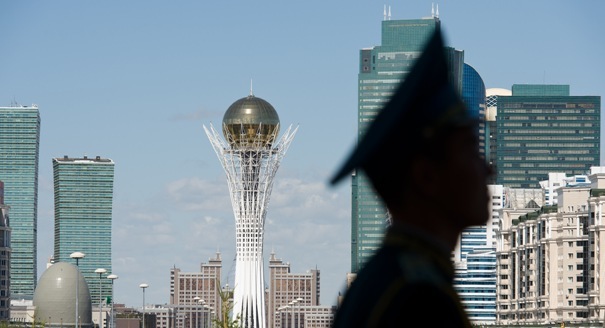
Recent protests against land reforms in Kazakhstan raise questions about whether the system that President Nazarbayev built can meet the country’s current challenges.
Source: Polish Institute of International Affairs
Kazakhstan’s governing model has been showing signs of strain in recent years, but these protests raise questions about whether the system that President Nazarbayev built can meet the country’s current challenges. The protests started over opposition to land reform proposals, but they now reflect growing anger at popular exclusion from governance, elite entitlement and pervasive corruption. This backlash is similar to protest sentiment elsewhere in Europe, Eurasia and North America where people increasingly feel that their countries’ long-standing political and economic systems are corrupt and benefit only the wealthy. In Kazakhstan, however, the fragility of the political system, protracted economic decline, and the lack of formal mechanisms for the population to influence public policy exacerbate the situation.
Why now? Kazakhstan’s economy is contracting due to low energy prices and several external factors, including the slowdown in the Russian and Chinese economies and disarray in the European Union. Foreign Direct Investment has declined steeply and the currency devaluation halved many Kazakhs’ purchasing power. This economic malaise undermines the social contract in which Kazakhs were promised improved living standards in exchange for an extremely limited say in how they were governed. The state now has difficulty holding up its end of the bargain.
The government’s tight control over media exacerbated the protests, which were fueled by rumors and alarmist social media reports that Astana was preparing to sell land to wealthy Chinese investors. Popular outrage over this prospect is worrying evidence that xenophobia and nationalism are on the rise. Astana has since scrapped the reforms and established a new land commission, while the police have largely refrained from using violence. Yet these positive steps are undermined by the continued detention of some activists, while the government’s ham-fisted efforts to discredit the protestors damage its own credibility. Dissent most likely will continue, although the exact form it will take is not yet clear.
This article originally appeared in the Polish Institute of International Affairs.
Former Senior Fellow, Russia and Eurasia Program
Paul Stronski was a senior fellow in Carnegie’s Russia and Eurasia Program, where his research focuses on the relationship between Russia and neighboring countries in Central Asia and the South Caucasus.
Recent Work
Paul Stronski
Paul Stronski
Carnegie does not take institutional positions on public policy issues; the views represented herein are those of the author(s) and do not necessarily reflect the views of Carnegie, its staff, or its trustees.

In the discussions made possible by the State Duma election campaign, one question is being asked more and more loudly. “What next?”

Andrey Pertsev

When faced with fuel shortages in the past, Central Asian governments could always count on additional supplies from Moscow. That safety net no longer exists.

Galiya Ibragimova

Two divergent trends—Putin’s hardline vision of how to prosecute the war in Ukraine, and a growing desire for change in Russia—could tear the regime apart.

Tatiana Stanovaya
Ultimately, Zelensky sided neither with the reform camp nor with the military establishment as such, but with political control.

Balázs Jarábik
Tokayev’s predecessor, Nursultan Nazarbayev, outlined arrangements for a power transition too soon and in too much detail, ultimately losing control over the process. Tokayev is determined not to meet the same fate.

Temur Umarov