

Commentary
Andrei Kolesnikov
{
  "authors": [
    "Andrei Kolesnikov"
  ],
  "type": "commentary",
  "centerAffiliationAll": "",
  "centers": [
    "Carnegie Endowment for International Peace",
    "Carnegie Russia Eurasia Center"
  ],
  "collections": [
    "Inside Russia"
  ],
  "englishNewsletterAll": "",
  "nonEnglishNewsletterAll": "",
  "primaryCenter": "Carnegie Endowment for International Peace",
  "programAffiliation": "",
  "programs": [],
  "projects": [],
  "regions": [],
  "topics": []
}
Source: Getty
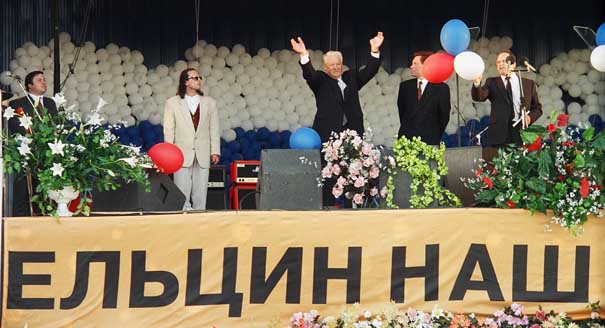
Boris Yeltsin’s reelection in 1996, hailed as a triumph of democracy, now looks like a Pyrrhic victory. The means by which the process was manipulated set a precedent for the Putin era.
Two decades ago this month, Boris Yeltsin faced Communist Party leader Gennady Zyuganov in the runoff of Russia’s presidential election. Yeltsin eventually won a contest that at the time was felt to be decisive in the country’s march toward democracy.
What would have happened to Russia if Zyuganov had won in 1996? And how would things have been different if Yeltsin, the incumbent, had won not with a liberal mandate but with the conservative one of some of his backers in the Kremlin, such as his chief bodyguard Alexander Korzhakov.
Of course these counterfactual questions only beg more questions. A conservative-backed Yeltsin might have lost his popular appeal, in which case he wouldn’t have won at all. If defeat looked likely, the government might have canceled the elections or banned the Communist Party altogether. That might have resulted in a fresh outbreak of the civil violence that wracked Moscow in October 1993. Both of these outcomes were distinct possibilities—so much so that in the spring of 1996 Yeltsin’s close adviser Anatoly Chubais cautioned the president against banning the Communist Party.
But let us imagine for a moment. We cannot know how “velvet” a 1996 Communist regime would have been. Zyuganov, the peaceable grumpy Stalinist, probably would have become, at best, a second version of Belarus’s Alexander Lukashenko. He is certainly not one of the “pink Communists” who came to power in Central and Eastern Europe at that time, such as Poland’s Aleksander Kwasniewski, who abandoned their previous ideological positions.
No doubt President Zyuganov would have flopped in the 2000 elections—if, of course, he himself had allowed them to take place. And Putin-the-Politician would never have stepped onto the Russian political stage. If that had happened, today’s Russia might more closely resemble the Czech Republic, or perhaps Hungary or Poland with their right-wing populism.
But what happened happened. Boris Yeltsin won and Russia made the inglorious transition from oligarchic capitalism to the state capitalism, authoritarianism, and resource nationalism of the Putin era.
Back in 1996, the Communists did not appear “velvet” or safe. Stalin had not yet been rehabilitated and made fashionable again. The fear of “red-brown” communist-fascists was not abstract, especially with the violence of the 1993 constitutional crisis still fresh in the mind.
When Chubais said that Yeltsin’s election victory was the “final nail hammered into the coffin of communism” it sounded like a definitive verdict. Back then, nobody could have imagined that twenty years later Russians might begrudgingly cast their ballots for the communists as a protest vote against the Kremlin.
At the time, some in the Kremlin believed Yeltsin had to recapture his post by any means possible. And they used the fact that much of the Russian public was voting not so much for the first Russian president as against the alternative. Strictly speaking, a vote for Yeltsin was a rational, anti-populist vote.
Now, twenty years on, we can see the adverse consequences of the final second-round result of July 3, 1996, in which Yeltsin beat Zyuganov.
You could say that this moment marked the fall of the Russian political class, symbolized by the infamous incident in which Yeltsin aides were caught carrying Xerox boxes full of cash.
Those efforts to get Yeltsin elected look positively amateur compared to the electoral manipulations we see today. But we can see a direct line between the price paid back then for victory and subsequent developments. Modern Russia’s dishonest elections grew out of the experimentation of the 1990s.
Another way in which Yeltsin’s victory of 1996 ultimately became a Pyrrhic one was that it legitimized the idea that there could be a controlled handover of power in Russia. This was later implemented when Yeltsin passed the “scepter of the nation” to Putin. When you decide that it’s possible to control elections, then you can also impose a leader on the people. In this case Vladimir Putin, the new young leader, was cynically constructed as the opposite image of his predecessor.
Boris Yeltsin was used to guarantee the transfer of power to Putin, someone who seemed at the time like a rational, controllable bureaucrat, a man who wasn’t even a politician. As a result, we profaned political democracy. By attempting authoritarian modernization, we ended up with authoritarian regression.
If the Soviet Union was jokingly referred to as “Upper Volta with rockets,” then modern Russia is better described as “Upper Volta with iPhones.” We no longer have the choice between illiberal democracy and undemocratic liberalism. Nowadays we have neither democracy nor liberalism.
The country now lives with strategic failure and a totally uncertain future. Does anyone—from the armchair politicians in provincial towns to the cynical “wise men” in their Moscow offices—know what will happen to Russia after 2018? The answer is a decisive “no.”
In a free country, elections become a large sociological investigation of the state of society. In last year’s election in Poland, for example, the results revealed a political split in the population between supporters of liberalism and conservatism. The losing president just lost his appeal and the people were hungry for change.
But elections in an unfree environment—the kind that take place in Russia today—tell us nothing about our society except that it’s apathetic and doesn’t believe the ballot box will change who is in power.
Russian society is not hungry for knowledge about itself. The only demand is to construct a society where the post-Crimea majority dominates public discourse. That also means that the ruling regime acts blindly and one day it could easily lose sight of what the Russian people are thinking.
And if we don’t really know the society in which we live, that is a delayed consequence of the political degradation that occurred in Russia in 1996.
Former Senior Fellow, Carnegie Russia Eurasia Center
Kolesnikov was a senior fellow at the Carnegie Russia Eurasia Center.
Recent Work
Andrei Kolesnikov
Andrei Kolesnikov
Carnegie does not take institutional positions on public policy issues; the views represented herein are those of the author(s) and do not necessarily reflect the views of Carnegie, its staff, or its trustees.
Rather than consolidating Russian society, the conflict in Ukraine has exacerbated existing divisions on a diverse array of issues, including support for the regime. Put another way, the impression that Putin now has the full support of the Russian public is simply incorrect.
Denis Volkov, Andrei Kolesnikov
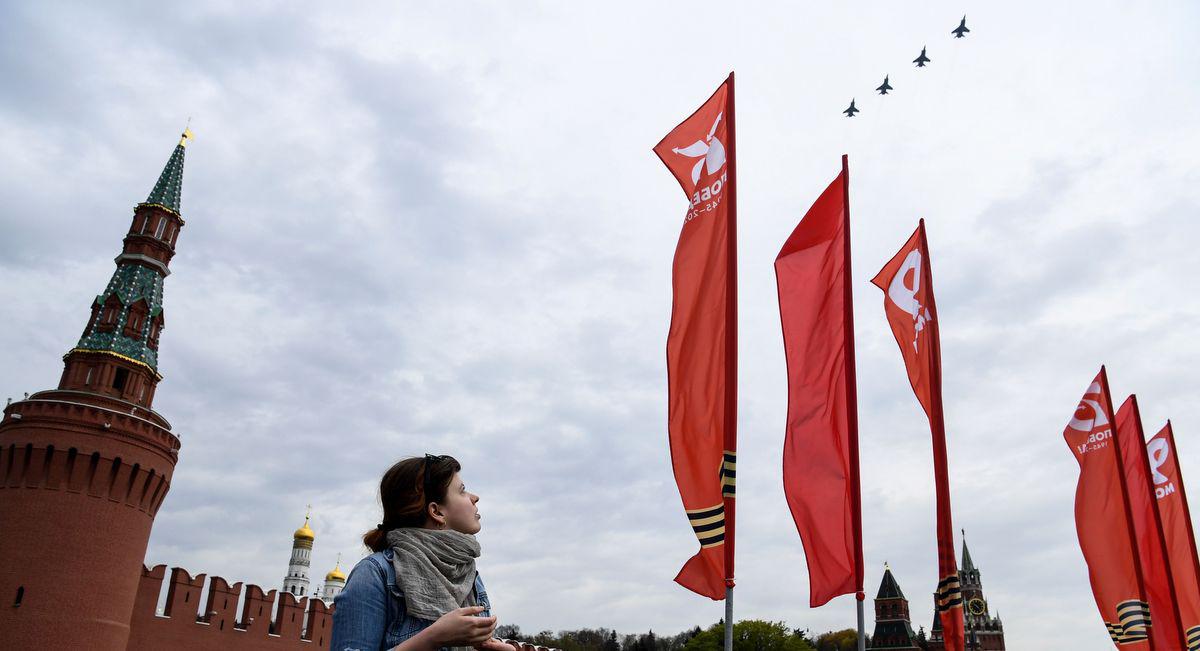
The foundation of the current Kremlin ideology is a defensive narrative: that we have always been attacked and forced to defend ourselves. Another line of defense is history.
Andrei Kolesnikov
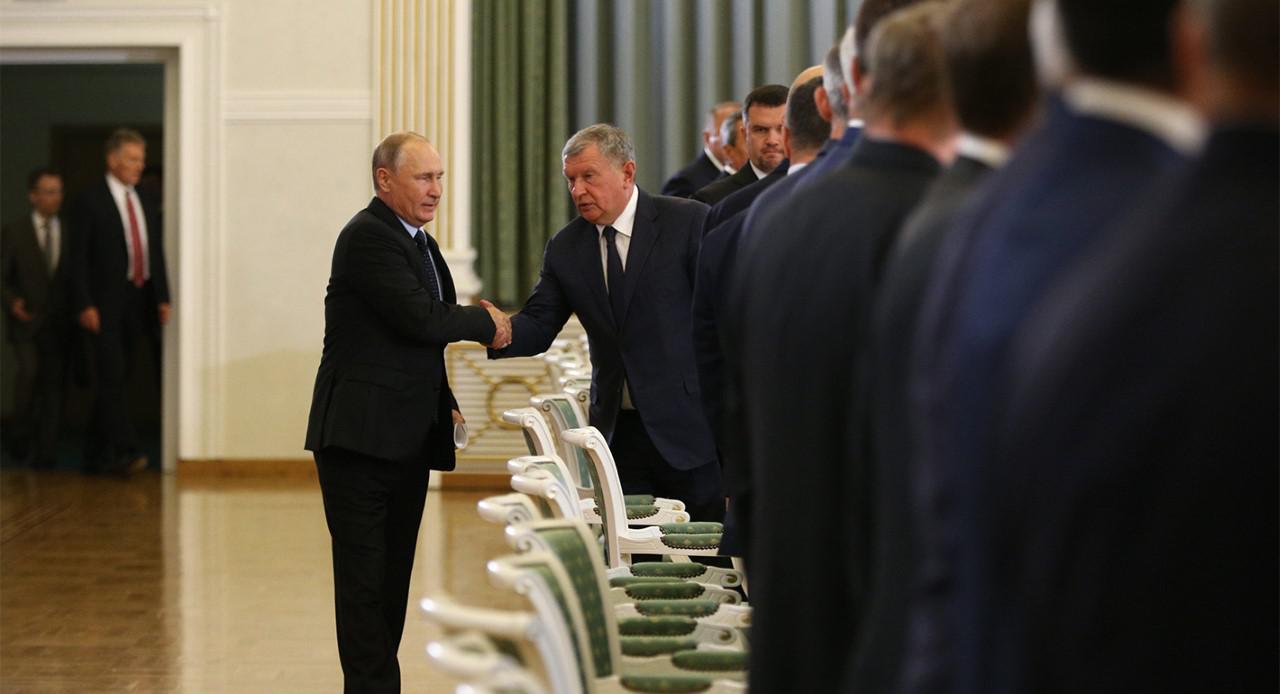
The pandemic has revealed a truth of the Russian government. Vladimir Putin has become increasingly disengaged from routine matters of governing and prefers to delegate most issues.

Tatiana Stanovaya
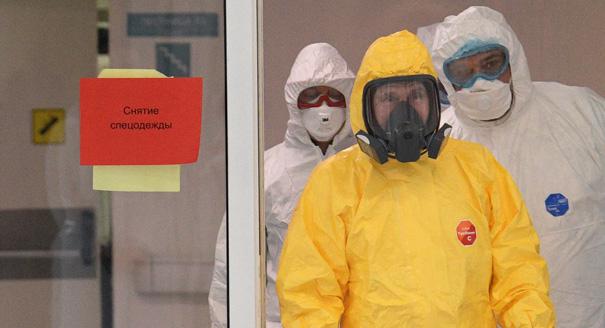
The fight against the new coronavirus in Russia is being led not by politicians oriented on the public mood, but by managers serving their boss. This is why the authorities’ actions appear first insufficient, then excessive; first belated, then premature.
Tatiana Stanovaya
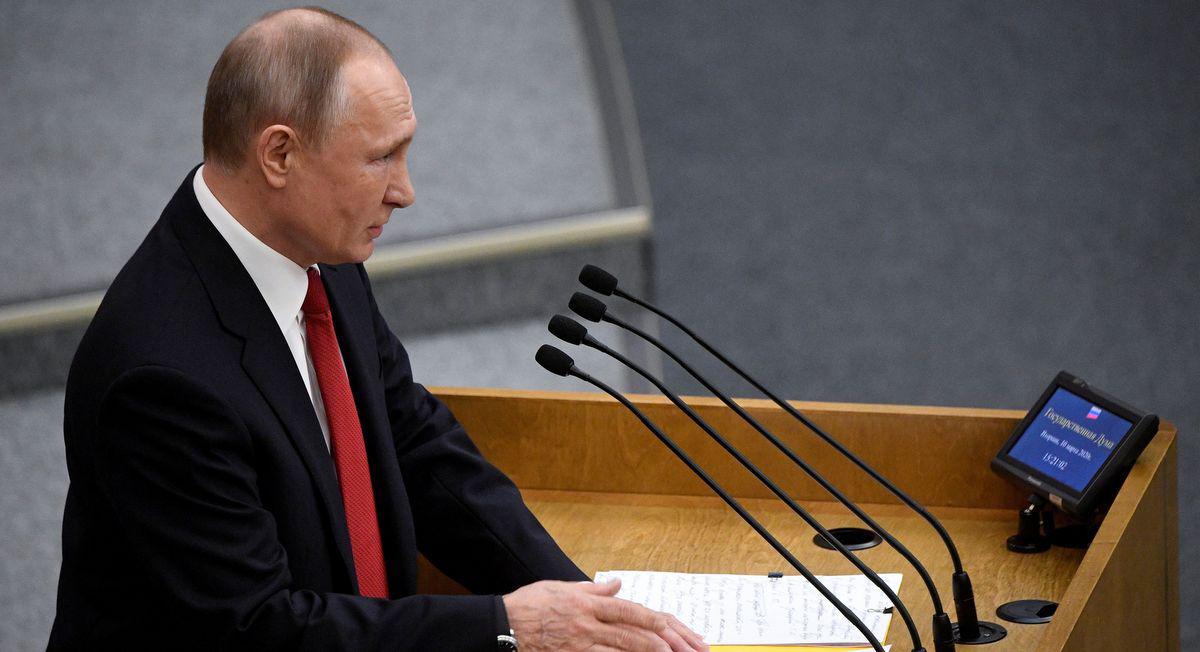
Amid a coronavirus pandemic and looming global economic crisis, Russian President Vladimir Putin has suddenly revealed how he intends to remain in power beyond 2024, when what should be his final term in office ends. In doing so, Putin seems to have bet – not incorrectly – that there is simply no one who can stop him.
Andrei Kolesnikov