

Research
- +4
Milan Vaishnav, Rahul Verma, Rukmini S., …
{
  "authors": [
    "Christophe Jaffrelot"
  ],
  "type": "legacyinthemedia",
  "centerAffiliationAll": "dc",
  "centers": [
    "Carnegie Endowment for International Peace"
  ],
  "collections": [],
  "englishNewsletterAll": "ctw",
  "nonEnglishNewsletterAll": "",
  "primaryCenter": "Carnegie Endowment for International Peace",
  "programAffiliation": "SAP",
  "programs": [
    "South Asia"
  ],
  "projects": [],
  "regions": [
    "North America",
    "United States",
    "South Asia",
    "India",
    "Afghanistan",
    "Pakistan"
  ],
  "topics": [
    "Security",
    "Military"
  ]
}
Source: Getty
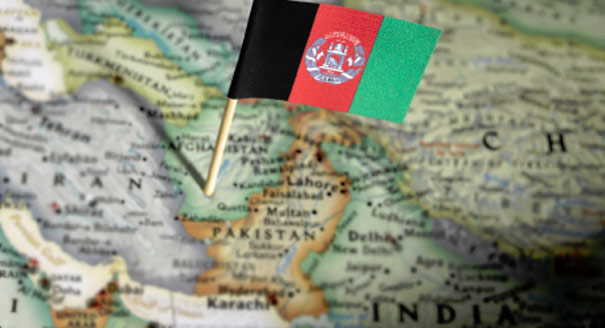
Hostilities between Pakistan and Afghanistan have risen due to several factors over the last twelve months.
Source: Indian Express
Last month, the Pakistan-Afghanistan relations took a violent turn when both the countries deployed tanks and armoured personnel along their border at Torkham (Khyber pass), one of the busiest Durand Line crossings. The escalation resulted as Islamabad attempted to build a new fence and a gate for checking passports and inspecting cargo vehicles. Last month’s tensions, which culminated in the firing of mortars and several casualties, hark back to the structural bones of contention: Afghanistan has never recognised the Durand Line and is not prepared to accept it as the proper border. But this has never generated so much acrimony in the past.
Hostilities between the two countries have precipitated due to several factors over the last 12 months. Till then, the relations between Islamabad and Kabul were improving, largely because of the attitude of the new Afghan president, Ashraf Ghani. In contrast to his predecessor Hamid Karzai, who was seen to be close to India, Ghani had made overtures to Pakistan after assuming office. Soon after meeting Raheel Sharif in November 2014, Ghani had ordered action against some Tehrik-e-Taliban Pakistan (TTP) militants suspected to have orchestrated the Peshawar tragedy of December 2014. He had also sent Afghan National Army cadets to study in Pakistan and turned down the Indian offer to supply Kabul with weapons — something made possible by the India-Afghanistan Strategic Partnership. Ghani had hoped that Islamabad would reciprocate by fighting against the irreconcilable Taliban, which had found refuge in Pakistan, and by bringing the others to the negotiating table. Pakistan government somewhat delivered by bringing the TTP to the Murree meeting in July 2015 for peace talks in a new format called the Quadrilateral Coordination Group. The QCG, comprising Afghanistan, Pakistan, China and the US, recognised Pakistan’s key role.However, this initiative was short-lived. In late July, peace talks broke down after the Afghan government revealed that Mullah Omar had died two years ago in Karachi. After this episode, the new Taliban chief, Mullah Mansour could not be persuaded to come to the negotiation table. The Pakistanis consider that by making the death of Mullah Omar public, some Afghan elements, including Karzai and members of the security apparatus that had remained anti-Pashtun because of its Tajik majority, sabotaged the peace process. The Afghan authorities had a different explanation. For them, the peace talks in the QCG did not go anywhere because Islamabad tried to use them for re-establishing some of its lost influence over Afghanistan. By making the demise of Mullah Omar public, the Afghans tried to weaken the Taliban and deprive Pakistan of one of the bargaining chips it had over the Taliban.
The second factor of hostility has much to do with India and Iran. Besides the recognition of the Durand Line, the other priority of Pakistan is to contain the Indian presence on its western border. In December 2015, Narendra Modi not only visited Kabul to inaugurate the parliament built by India but also handed over three Mi-25 attack helicopters to Ghani. And in May, Modi, Iranian President Hassan Rouhani and Ghani met in Tehran to sign a three-way transit agreement on Iran’s Chabahar port. This agreement may affect the bargaining power of Islamabad vis-à-vis Kabul by further shifting some of its trade through Iran instead of Pakistan.
Thirdly, trans-border terrorism has become a major source of tension between Afghanistan and Pakistan. Traditionally, Kabul has accused Islamabad (and Rawalpindi) of welcoming Taliban. Groups paying allegiance to Mullah Omar (including the Haqqani network) and close to Pakistan’s Inter-Services Intelligence (ISI) since the anti-Soviet jihad days, used the safe havens in Pakistan to attack the Afghan National Army and the NATO forces. This has continued even after the demise of Mullah Omar and the withdrawal of most of the foreign troops.
In April, Kabul cancelled its participation in the QCG meeting — to which Islamabad had invited the Qatar-based Taliban — and protested against a massive terrorist attack in Kabul, attributed to the Haqqani network.
But trans-border terrorism has become a two-way traffic after operations in the North Waziristan region pushed TTP operatives to the Afghan side. Fazlullah, the TTP chief, had found refuge in Afghanistan after a Swat operation in 2009. Kabul had also welcomed Hafiz Saeed Khan. Drug trafficking was the other reason why Pakistan wanted to manage its border more effectively, in Torkham and elsewhere.
While Islamabad and Kabul have many reasons to fight each other, there is one reason for collaboration: The Islamic State, which is making inroads on both sides of the border, but particularly in Afghan districts bordering Pakistan like Nangarhar. The IS has attracted some Taliban and some TTP commanders not only because of the crisis in the leadership of these groups but also because some Taliban leaders were seen to be too close to Pakistan. Few Afghans like their big neighbour because of its international agenda. The IS has affinities with the TTP and its vision is in stark contrast to the limited, territorial objectives of the Taliban.
Interestingly, two of the IS Afghan leaders — Mullah Abdul Rauf Khadim and Abdul Rahim Muslim Dost — have transformed into trans-national terrorists after their years in Guantanamo (where they learnt Arabic among other things). While both countries have a common enemy in the IS, it may not be a big enough threat as of now to persuade Kabul and Islamabad to resume talks.
Such negotiations will happen anyway because Afghanistan cannot ignore Pakistan — they share a 2,250 km long border. But mutual suspicion may further undermine the peace process already complicated by external actors. While the US cannot be part of the solution anymore — there are only 10,000 American soldiers left in Afghanistan — they have become a part of the problem according to Islamabad. Pakistan saw a contradiction in the drone attack that killed Mansour and told Washington DC that if the US wanted an interlocutor for peace talks, it should be spared.
This article was originally published in the Indian Express.

Former Nonresident Scholar, South Asia Program
Jaffrelot’s core research focuses on theories of nationalism and democracy, mobilization of the lower castes and Dalits (ex-untouchables) in India, the Hindu nationalist movement, and ethnic conflicts in Pakistan.
Recent Work

Milan Vaishnav, Rahul Verma, Rukmini S., …
Christophe Jaffrelot
Carnegie does not take institutional positions on public policy issues; the views represented herein are those of the author(s) and do not necessarily reflect the views of Carnegie, its staff, or its trustees.

With the growth in points of friction between the great powers, organizations like the SCO will continue to play a role in the strategic adaptation of the smaller powers caught between them.

Temur Umarov

Two divergent trends—Putin’s hardline vision of how to prosecute the war in Ukraine, and a growing desire for change in Russia—could tear the regime apart.

Tatiana Stanovaya
Andrey Melnichenko’s essay offers no answer to the fundamental question of how, under any kind of negotiated settlement, Europe can protect itself from the Russian ressentiment that is inevitable in all scenarios except for an outright victory for Putin.

Leonid Bershidsky
The recent damage inflicted by Ukrainian drones and missiles on Russia has made Belarus aware of its own vulnerabilities—and surprisingly amenable to Kyiv’s demands.

Artyom Shraibman
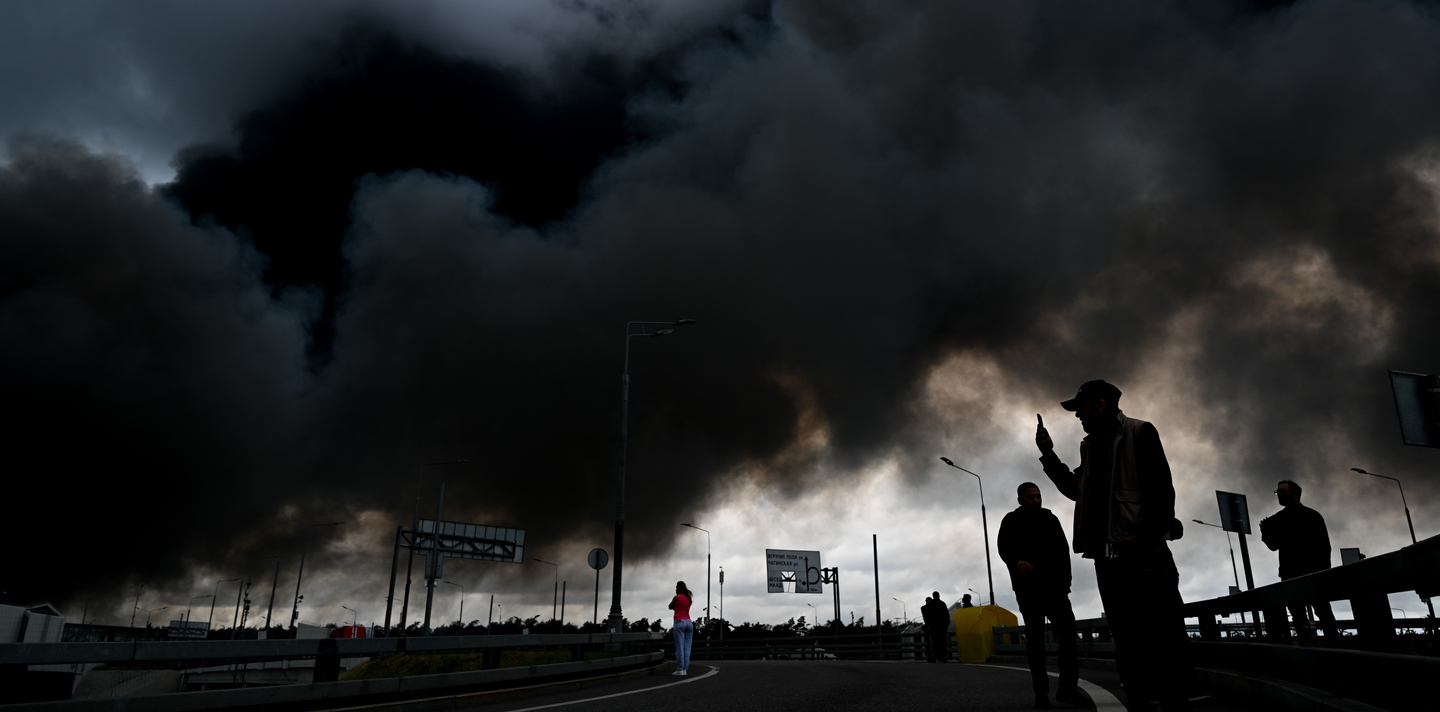
It is not a phenomenon unique to Russia that the public of a country at war (even the aggressor) enduring airstrikes will not overturn its government but rather show solidarity with it and blame its woes on the enemy.
Vladislav Gorin