

Paper
Douglas H. Paal
{
  "authors": [
    "Douglas H. Paal"
  ],
  "type": "legacyinthemedia",
  "centerAffiliationAll": "dc",
  "centers": [
    "Carnegie Endowment for International Peace"
  ],
  "collections": [],
  "englishNewsletterAll": "asia",
  "nonEnglishNewsletterAll": "",
  "primaryCenter": "Carnegie Endowment for International Peace",
  "programAffiliation": "AP",
  "programs": [
    "Asia"
  ],
  "projects": [],
  "regions": [
    "North America",
    "United States",
    "East Asia",
    "South Korea",
    "China",
    "Russia",
    "North Korea"
  ],
  "topics": [
    "Security",
    "Military",
    "Foreign Policy",
    "Nuclear Policy",
    "Arms Control"
  ]
}
Source: Getty
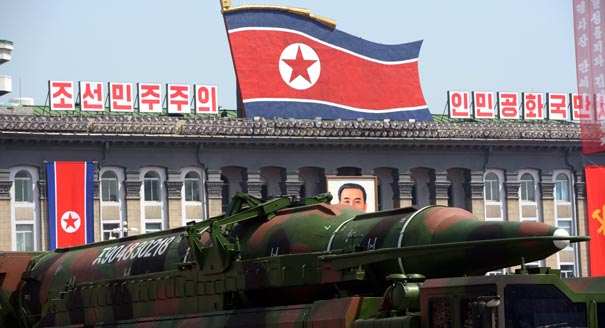
An advanced missile defense system, commonly called THAAD, is heading to South Korea, to counter threats from the DPRK. Neighboring China opposes the system.
Source: CCTV America
Doug Paal suggests that the United States is a long way from upsetting the strategic balance in Northeast Asia by deploying THAAD, but that there is an incipient security dilemma. The democratic leaders of South Korea and the United States must take measures to protect their peoples from rogue sources of missile threat. North Korea has been exponentially developing its missile capability and the threat has been growing exponentially. The American and South Korean leaders have agreed to deploy THAAD to provide some means of protection. China and Russia see what the United States regards as defensive as purely offensive, and then take measures of their own, which these countries see as purely defensive but the United States sees as offensive. This is when leadedrs have to convene and prevent the constant escalation of security dilemma type of dynamics. China also made some tactical mistakes in this by openly requiring South Korea to not do certain things. For a democratic society, this means that South Korea has to do these things to show that it is not dictated by China.One Chinese concern is that China is worried about the radars that will look at China and dissect the difference between real Chinese missile warheads and decoys, and that will give the U.S. an advantage in a nuclear conflict. Another Chinese concern is U.S. integration of Korea, Japan, and Taiwan into an advanced missile detection system in Northeast Asia. This will create a serious political and military threat for China in the longer run.

Distinguished Fellow, Asia Program
Paal previously served as vice chairman of JPMorgan Chase International and as unofficial U.S. representative to Taiwan as director of the American Institute in Taiwan.
Recent Work
Douglas H. Paal

Douglas H. Paal, Tong Zhao, Chen Qi, …
Carnegie does not take institutional positions on public policy issues; the views represented herein are those of the author(s) and do not necessarily reflect the views of Carnegie, its staff, or its trustees.

Russia’s ruling party would have benefited from Putin appearing as its distant patron, but as an active frontman imposing his views on the public, he has done nothing but harm both the party’s election campaign and the ruling system overall.

Andrey Pertsev

Depleted financial reserves and a shrinking tax base mean it is no longer possible to simultaneously deliver high defense spending, price stability, and economic growth.

Alexandra Prokopenko
Blurring the line between humans and animals is a long-standing tradition in social utopian prose. In his latest novel, Leonid Bershidsky reminds us that in social experiments, people are often treated no differently than animals.

Alexander Baunov
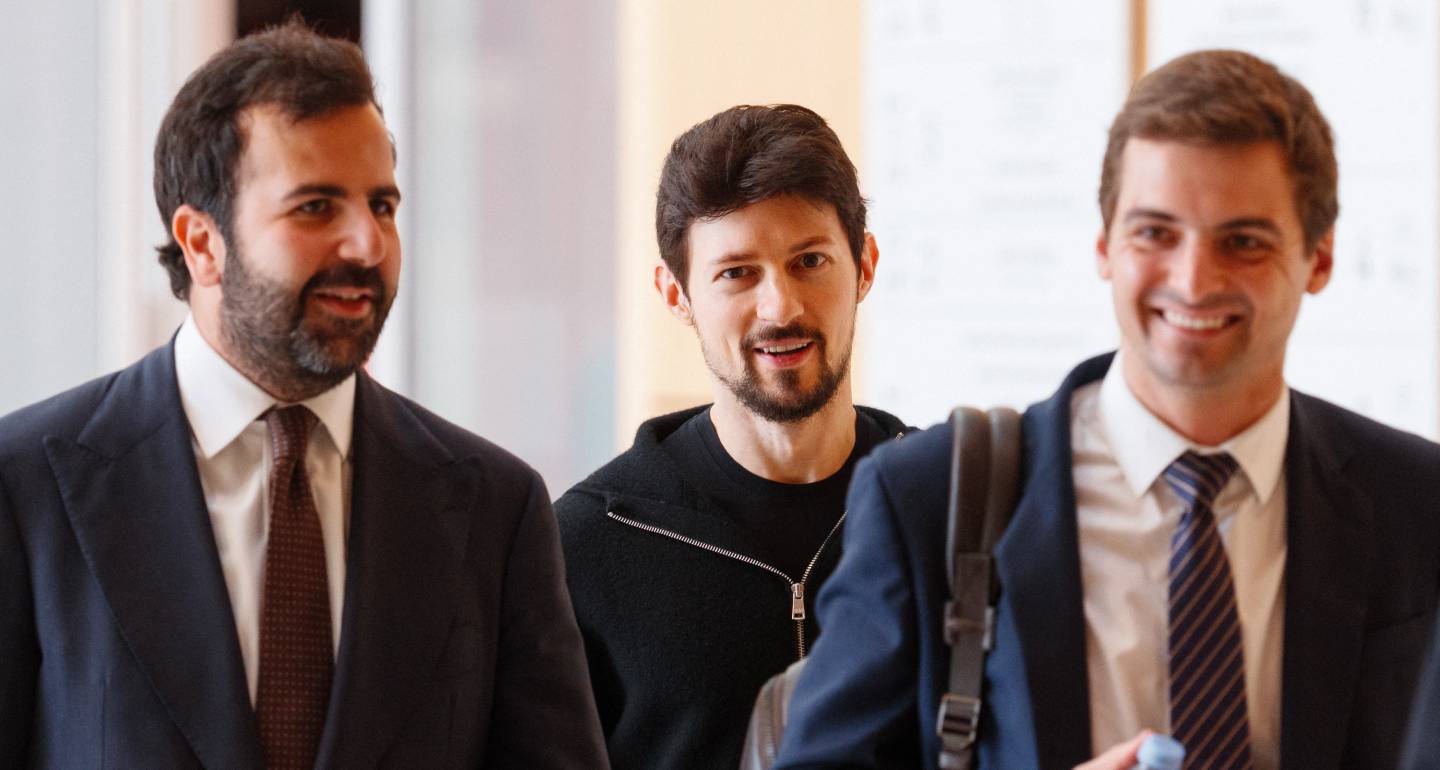
While France and Australia are seeking to establish the legal obligations of messaging apps like Telegram, Russia wants total subordination.

Maria Kolomychenko

The recent uncovering of Dmitry Donskoy’s relics in the Cathedral of the Archangel is yet another attempt by the Russian Orthodox Church to help the state solve its problems. However, parroting the state’s version of Russian history leaves the Church with no message except “patriotism.”

Alexander Zanemonets