

Commentary
The European far right might fail to steer EU policy in the direction Russia wants, but they will create enough chaos inside Europe to benefit the Kremlin.
Dimitar Bechev
{
  "authors": [
    "R. Shashank Reddy",
    "Tarun Krishnakumar"
  ],
  "type": "legacyinthemedia",
  "centerAffiliationAll": "",
  "centers": [
    "Carnegie Endowment for International Peace",
    "Carnegie India"
  ],
  "collections": [],
  "englishNewsletterAll": "",
  "nonEnglishNewsletterAll": "",
  "primaryCenter": "Carnegie India",
  "programAffiliation": "",
  "programs": [],
  "projects": [],
  "regions": [
    "South Asia",
    "India"
  ],
  "topics": [
    "Technology",
    "Security"
  ]
}
Source: Getty
The draft circular, if implemented in its current form, will stifle innovation, raise operational risks, and create substantial uncertainty.
Source: Wire
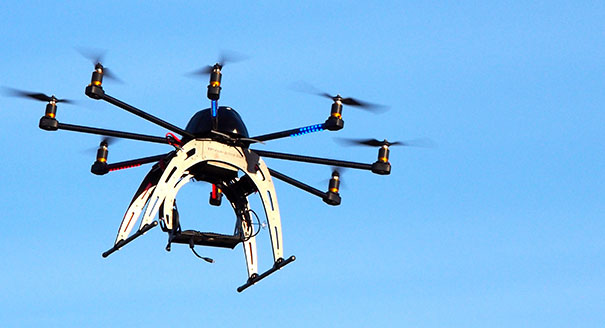
Policy formulation for emerging technology is a complex process. The dangers of inadequate regulation are matched by the potential harms of a heavy-handed approach. While the present government has oft been accused of the latter, the Directorate General of Civil Aviation’s (DGCA) draft circular on the regulation of unmanned aerial systems (UAS, a.k.a. drones) suffers from both ailments in equal measure. The circular was first released for comments in April-May 2016 and we currently await the final notification.
While most naturally associated with military applications, drones today are as common for civilian purposes ranging from aerial photography and mapping to delivery of products and recreation. This proliferation of uses raises a number of regulatory issues including safety – both in the air and on the ground – privacy, and security. While the DGCA’s recent efforts to initiate a public consultation on these aspects are a welcome step, the draft circular, if implemented in its current form, will stifle innovation, raise operational risks, and create substantial uncertainty for organisations, individuals and enforcement agencies alike. We highlight four of the numerous issues with the draft.
At the outset, the very regulatory basis of the circular is misguided and difficult to implement. While most UAS regulations around the world use weight (of the drone) as the primary basis for regulation (as there is a clear nexus between weight and risk in the air and on the ground), the DGCA attempts to use altitude of the drone as the primary criterion. While weight is constant, altitude of the drone is a constantly changing variable which the DGCA has no ability to monitor in flight. Going forward, the DGCA’s proposed framework requires obtaining of a permit based on the altitude at which a drone is to be flown prior to the operation. In other words, drone operators could simply claim to not require a permit on the assumption that would not fly above a certain threshold (200ft under the present draft) – ensuring exclusion from oversight to a large extent. In addition, by ignoring the weight of drones, the DGCA equates the smallest of recreational drones with much larger devices potentially weighing hundreds of kilos and with much starker safety implications.
Second, the draft tends to over-regulate. For example, users of all drones – including micro drones (under 2kgs) – are subject to the same compliances required of larger drones including the obligation to intimate the local administration before every flight in addition to a complete ban on flights in Delhi, and most parts of Gurgaon and Noida. This treatment is incongruous with internationally-accepted practices. The assumption across the world is that smaller drones pose less severe operational risks and warrant lighter (if any) regulation. The circular however assumes that smaller drones pose the same security risks as larger drones, an assumption belied by common sense.
Third, the circular suffers from a number of drafting flaws. For instance, the application for a UAS operator’s permit requires applicants to specify drone landing or take-off areas as well as obtain permission from all property owners whose land the drone may fly over. At the same time, the circular provides that each permit would be valid for a period of two years. This is internally inconsistent and overly onerous as the locations of drone operations are likely to constantly vary – especially over a two-year period.
The regulations also fail to elaborate on issues of privacy and enforcement. Apart from a cursory statement that “privacy and protection of personnel/ property/ data shall be given due importance“, no further guidance is provided. Given the patchwork privacy protection in India, it cannot be easily assumed that existing frameworks will be adequate to address issues of privacy raised by the use of drones. The draft circular proposes suspension and revocation of operators permits as an enforcement measure. However, it is silent on penalties for operators failing to obtain a license in the first place.
Lastly, the DGCA seems to have grossly miscalculated the administrative overhead that would be required to implement the present framework. Every aspect of drone use from registration, to loss, to accidents and application for permits require DGCA clearance while most even the most mundane drone operations require clearances from a minimum of three other government entities. In the absence of a single-window clearance system with time-bound processing, the proposed framework will bring the fledgling industry to a standstill.
With the commercial and recreational use of drones becoming ubiquitous, it is necessary to have in place balanced, comprehensive and robust regulations that govern their use. The draft circular is far from adequate in this regard. While the date for public comments on the draft has elapsed, it can only be hoped that the DGCA will use this intervening period to consider all inputs carefully and come out with a framework that is not only robust and practical but also internally consistent and well-drafted.
R. Shashank Reddy
Former Research Analyst
R. Shashank Reddy was a research analyst at Carnegie India. His research focuses on the implications of emerging technologies and their governance for international and Indian security.
Tarun Krishnakumar
Tarun Krishnakumar is a lawyer working on issues relating to technology law and policy.
Carnegie does not take institutional positions on public policy issues; the views represented herein are those of the author(s) and do not necessarily reflect the views of Carnegie, its staff, or its trustees.

The European far right might fail to steer EU policy in the direction Russia wants, but they will create enough chaos inside Europe to benefit the Kremlin.

Dimitar Bechev

While France and Australia are seeking to establish the legal obligations of messaging apps like Telegram, Russia wants total subordination.

Maria Kolomychenko

With the growth in points of friction between the great powers, organizations like the SCO will continue to play a role in the strategic adaptation of the smaller powers caught between them.

Temur Umarov

The war in Ukraine and a change in ownership led VK to neglect its commercial ventures in favor of implementing the Kremlin’s online agenda. Now it’s been sanctioned by the EU.
Maria Kolomychenko
When political power is concentrated in the hands of a small circle of people, a country invariably ends up with technological stagnation.

Aleksei Kiselev