

Commentary
Tatiana Stanovaya
{
  "authors": [
    "Tatiana Stanovaya"
  ],
  "type": "commentary",
  "centerAffiliationAll": "",
  "centers": [
    "Carnegie Endowment for International Peace",
    "Carnegie Russia Eurasia Center"
  ],
  "collections": [
    "Inside Russia"
  ],
  "englishNewsletterAll": "",
  "nonEnglishNewsletterAll": "",
  "primaryCenter": "Carnegie Endowment for International Peace",
  "programAffiliation": "",
  "programs": [],
  "projects": [],
  "regions": [],
  "topics": []
}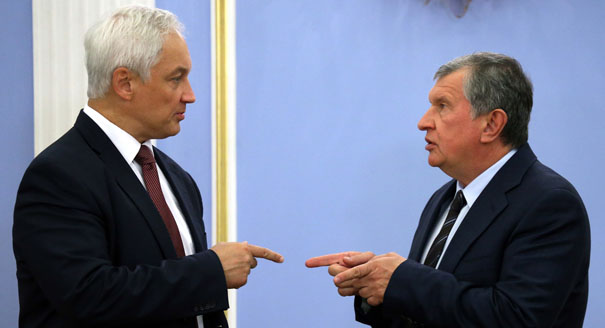
Source: Getty
In the past, business deals could be secured if Putin endorsed them personally. Now, the Russian president seems to have stopped making promises to anyone; no deal is ironclad anymore.
In recent months, Bashneft, a Bashkortostan-based oil company controlled by the Russian government, has been at the center of a major political drama: Rosneft, Russia’s largest oil company, has set its sights on buying Bashneft, but the government can’t seem to make up its mind about whether Rosneft has the right to privatize the company. Putin has not taken a side and postponed the privatization, leaving the oil elite—and the entire industry—in limbo.
Bashneft has a turbulent history dating back to the early 2000s, when Murtaza Rakhimov, the former president of Bashkortostan, began privatizing the company. Rakhimov’s son, Ural, ran Bashneft for several years, but was forced to sell it when his father fell out of favor with the Kremlin. Putin seems to have allowed Rakhimov to have an easy transition into retirement under the condition that he sell Bashneft.
Enter Vladimir Yevtushenkov, one of Russia’s most powerful businessmen, whose Sistema conglomerate bought a controlling stake in the company from the Rakhimovs between 2005 and 2009. Although the deal seemed to go smoothly, it wasn’t clear whether Putin’s request that the company be sold meant that the president wanted it to be returned to the government or sold to a private buyer.
Either way, the company became property of the state before long: in the fall of 2014, the Investigative Committee launched an investigation into Yevtushenkov. As news broke that Bashneft was coming under pressure from the siloviki—the hardline security faction in the Kremlin—the Prosecutor General moved to seize the company’s stocks. Yevtushenkov was put under house arrest and released only after his company’s shares were transferred to the Russian government.
Yevtushenkov’s personal relationship with former president (and current Prime Minister) Dmitry Medvedev may have been a factor in his downfall. In 2010, rumors spread about the close ties between Sistema and Medvedev. Rosneft chief Igor Sechin began to see Bashneft as a threat to his company, all the more so because Bashneft had started cooperating on projects with Rosneft’s competitor Lukoil: the companies began working on developing deposits in Trebs and Titov, and were even considering a secondary public offering.
The pressure on Bashneft certainly increased after Medvedev left office. At the start of Putin’s third term as president, Alexander Popov, a friend of Sechin’s who headed the Federal Agency for Subsoil Use, challenged the legality of the Trebs and Titov ventures. A series of arduous court proceedings targeting minority shareholders soon followed.
By 2013, it was rumored that Rosneft was trying to buy both Bashneft and Lukoil because it was worried that it wouldn’t be able to meet Chinese demand for oil. Rosneft denied this, and Sechin later brushed aside rumors that he was interested in the federal case against Sistema. This was an obvious lie; Yevtushenkov wasn’t arrested and tried for no reason, after all.
А new chapter in the Bashneft drama began to unfold this summer. On July 21, the news website RBC announced that Putin had forbidden government agencies to get involved in the privatization of businesses. The next day, Putin’s spokesperson Dmitry Peskov said that there was an “understanding” that state-owned companies should not participate in privatization.
Almost immediately thereafter, television pundit Mikhail Leontyev claimed that Rosneft was not a government company because the government officially owns less than 1 percent of the company’s shares. On July 26, Peskov, as if following Leontyev’s lead, softened his position, agreeing that Rosneft was not “formally” a government company. A few hours later, news broke that Rosneft was filing a request to purchase Bashneft.
But on July 28, Andrey Belousov, the Economic Presidential Assistant, objected to the purchase publicly: “It’s nonsense for Rosneft to participate, for one government company to participate in the privatization of another.” On August 9, Bloomberg News reported that Putin had rejected Sechin’s moves on Bashneft. The next day, however, Vedomosti wrote that Rosneft would participate “despite everything.”
“Despite everything”—does that mean despite Putin? Does Putin no longer control his friends? The same question can be asked another way: why can’t the president put an end to the confusion and confirm that Rosneft will not acquire Bashneft?
The problem is that Putin is busy with Syria, Turkey, the Federal Security Service, September’s parliamentary elections, and a host of other issues. For now, Putin’s court has been reduced to reading the president’s “signals” rather than receiving explicit orders from above. To borrow a phrase from the poet Marshak, “the firefighters search, the police search...search for a long time, but cannot discover” Putin’s opinion on Bashneft. And it’s likely they never will.
The Bashneft situation highlights the main risks that investors—both foreign and domestic—face in contemporary Russia. In the past, business deals could be secured if Putin endorsed them personally. Now, the Russian president seems to have stopped making promises to anyone; no deal is ironclad anymore.
Whoever ends up buying Bashneft must remember that Putin’s approval can be interpreted in any number of ways. Putin is very busy, and when the head of state is preoccupied, people who are used to the status quo make decisions for themselves. It’s every man for himself.

Senior Fellow, Carnegie Russia Eurasia Center
Tatiana Stanovaya is a senior fellow at the Carnegie Russia Eurasia Center.
Recent Work
Tatiana Stanovaya
Tatiana Stanovaya
Carnegie does not take institutional positions on public policy issues; the views represented herein are those of the author(s) and do not necessarily reflect the views of Carnegie, its staff, or its trustees.
Rather than consolidating Russian society, the conflict in Ukraine has exacerbated existing divisions on a diverse array of issues, including support for the regime. Put another way, the impression that Putin now has the full support of the Russian public is simply incorrect.
Denis Volkov, Andrei Kolesnikov
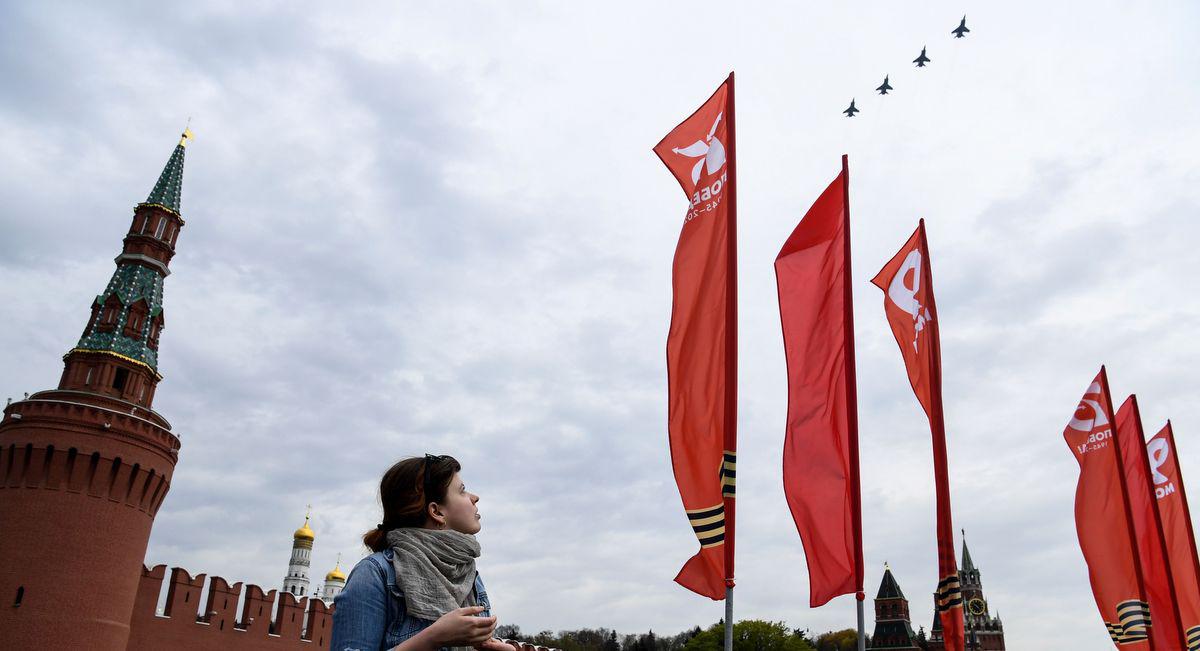
The foundation of the current Kremlin ideology is a defensive narrative: that we have always been attacked and forced to defend ourselves. Another line of defense is history.
Andrei Kolesnikov
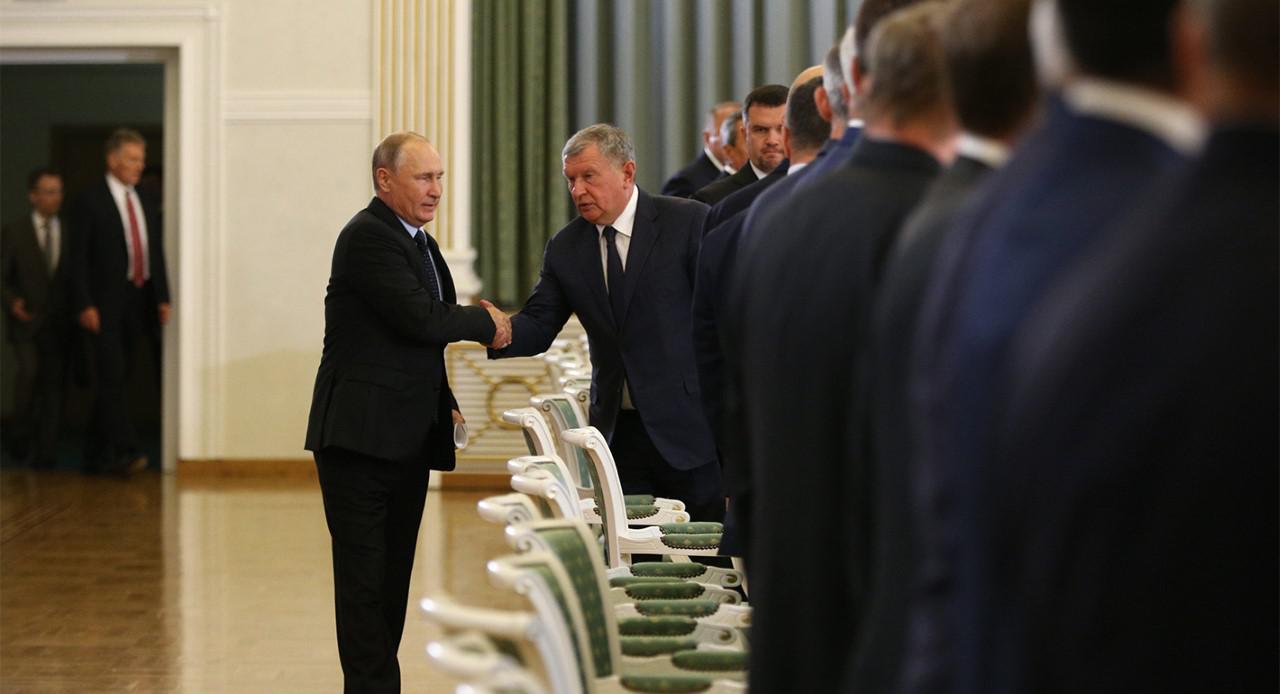
The pandemic has revealed a truth of the Russian government. Vladimir Putin has become increasingly disengaged from routine matters of governing and prefers to delegate most issues.
Tatiana Stanovaya
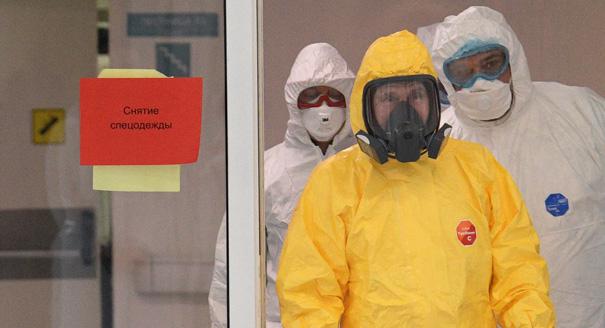
The fight against the new coronavirus in Russia is being led not by politicians oriented on the public mood, but by managers serving their boss. This is why the authorities’ actions appear first insufficient, then excessive; first belated, then premature.
Tatiana Stanovaya
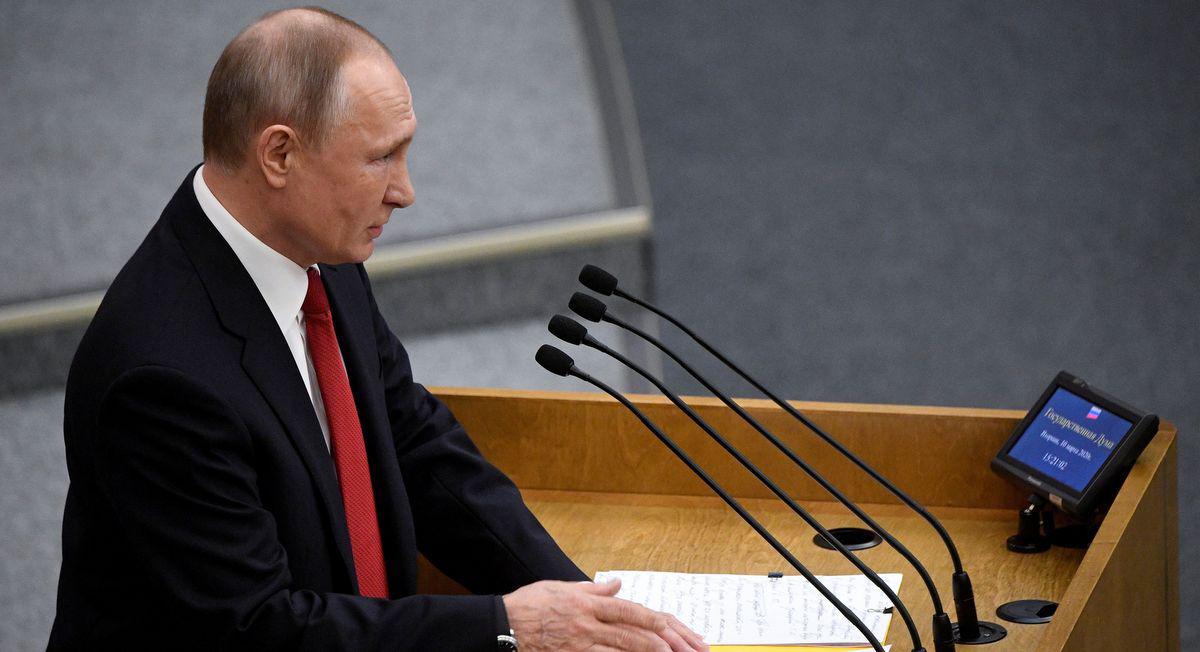
Amid a coronavirus pandemic and looming global economic crisis, Russian President Vladimir Putin has suddenly revealed how he intends to remain in power beyond 2024, when what should be his final term in office ends. In doing so, Putin seems to have bet – not incorrectly – that there is simply no one who can stop him.
Andrei Kolesnikov