

Q&A
Eugene Rumer
{
  "authors": [
    "Eugene Rumer"
  ],
  "type": "legacyinthemedia",
  "centerAffiliationAll": "dc",
  "centers": [
    "Carnegie Endowment for International Peace"
  ],
  "collections": [],
  "englishNewsletterAll": "ctw",
  "nonEnglishNewsletterAll": "",
  "primaryCenter": "Carnegie Endowment for International Peace",
  "programAffiliation": "russia",
  "programs": [
    "Russia and Eurasia"
  ],
  "projects": [],
  "regions": [
    "North America",
    "United States",
    "Russia"
  ],
  "topics": [
    "Foreign Policy"
  ]
}
Source: Getty
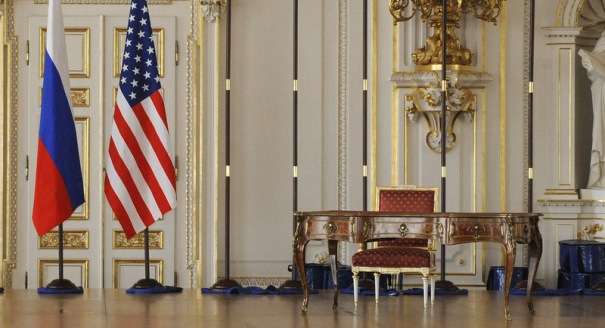
The United States should strike a “middle path” in its policy toward Russia: standing up for core U.S. principles and values but also cooperating with Russia where necessary.
Source: C-SPAN’s Washington Journal
The Trump administration faces both challenges and opportunities in its relations with Russia. In a recent joint task force report, Eugene Rumer, Andrew S. Weiss, and Richard Sokolsky argued that the United States must “skillfully manage, rather than permanently resolve, tension with Moscow,” striking a middle path in its policy toward Russia.
Eugene Rumer, director of the Russia and Eurasia Program at the Carnegie Endowment, expanded on the concept of a middle path in an interview with Steve Scully on C-SPAN’s Washington Journal:
“The middle path is the path of standing up for our core principles and core values that have been guiding our foreign policy for a long time, but also cooperating with Russia where necessary and working to diffuse the situation in a number of very tense global hot spots; one of course being in Syria... and the other in Europe, where we see a military confrontation standoff between Russia and NATO in a way we haven’t seen since the end of the Cold War.”
This interview was originally broadcast on C-SPAN’s Washington Journal.
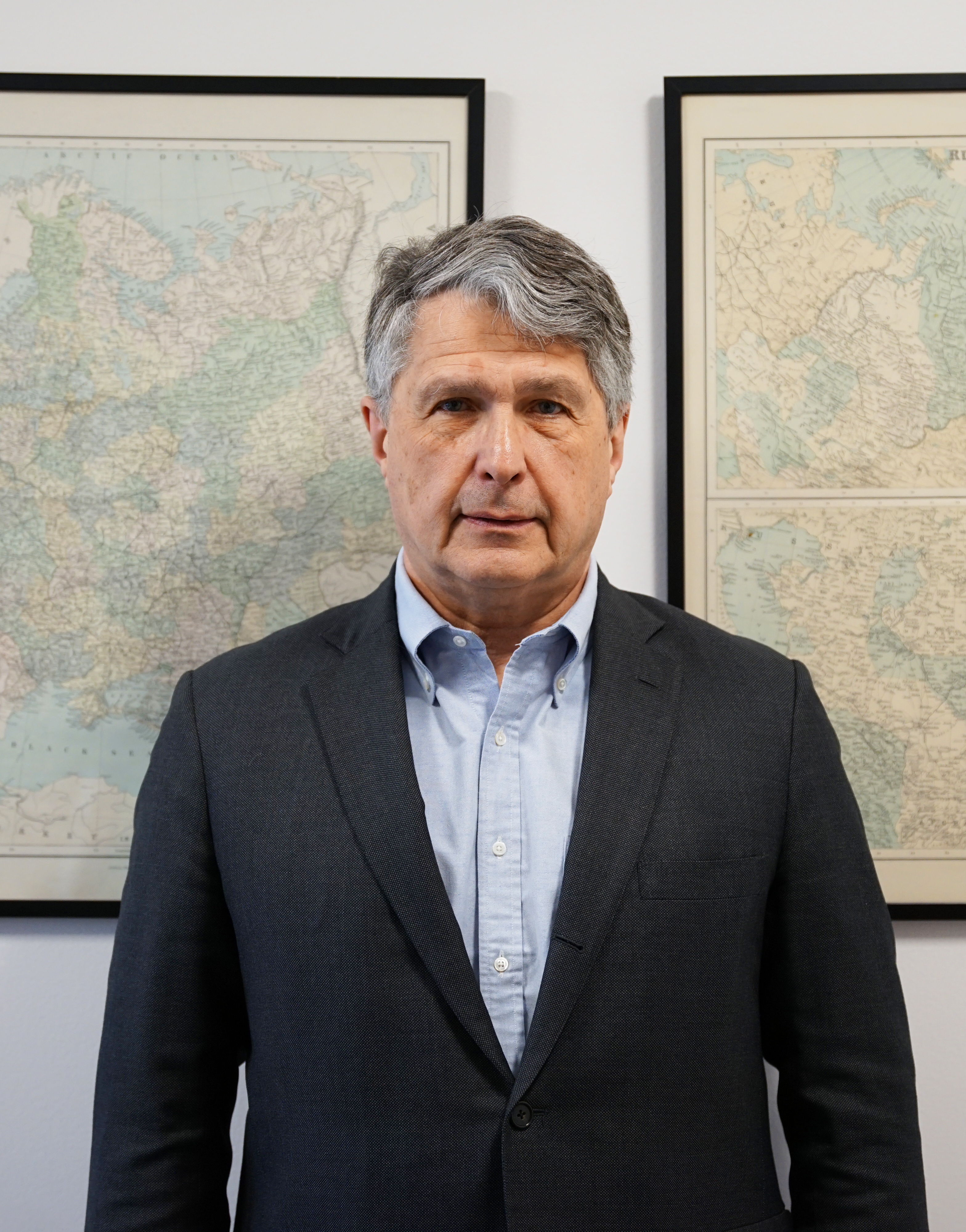
Director and Senior Fellow, Russia and Eurasia Program
Rumer, a former national intelligence officer for Russia and Eurasia at the U.S. National Intelligence Council, is a senior fellow and the director of Carnegie’s Russia and Eurasia Program.
Recent Work
Eugene Rumer
Eugene Rumer
Carnegie does not take institutional positions on public policy issues; the views represented herein are those of the author(s) and do not necessarily reflect the views of Carnegie, its staff, or its trustees.

Depleted financial reserves and a shrinking tax base mean it is no longer possible to simultaneously deliver high defense spending, price stability, and economic growth.

Alexandra Prokopenko

Blurring the line between humans and animals is a long-standing tradition in social utopian prose. In his latest novel, Leonid Bershidsky reminds us that in social experiments, people are often treated no differently than animals.
Alexander Baunov
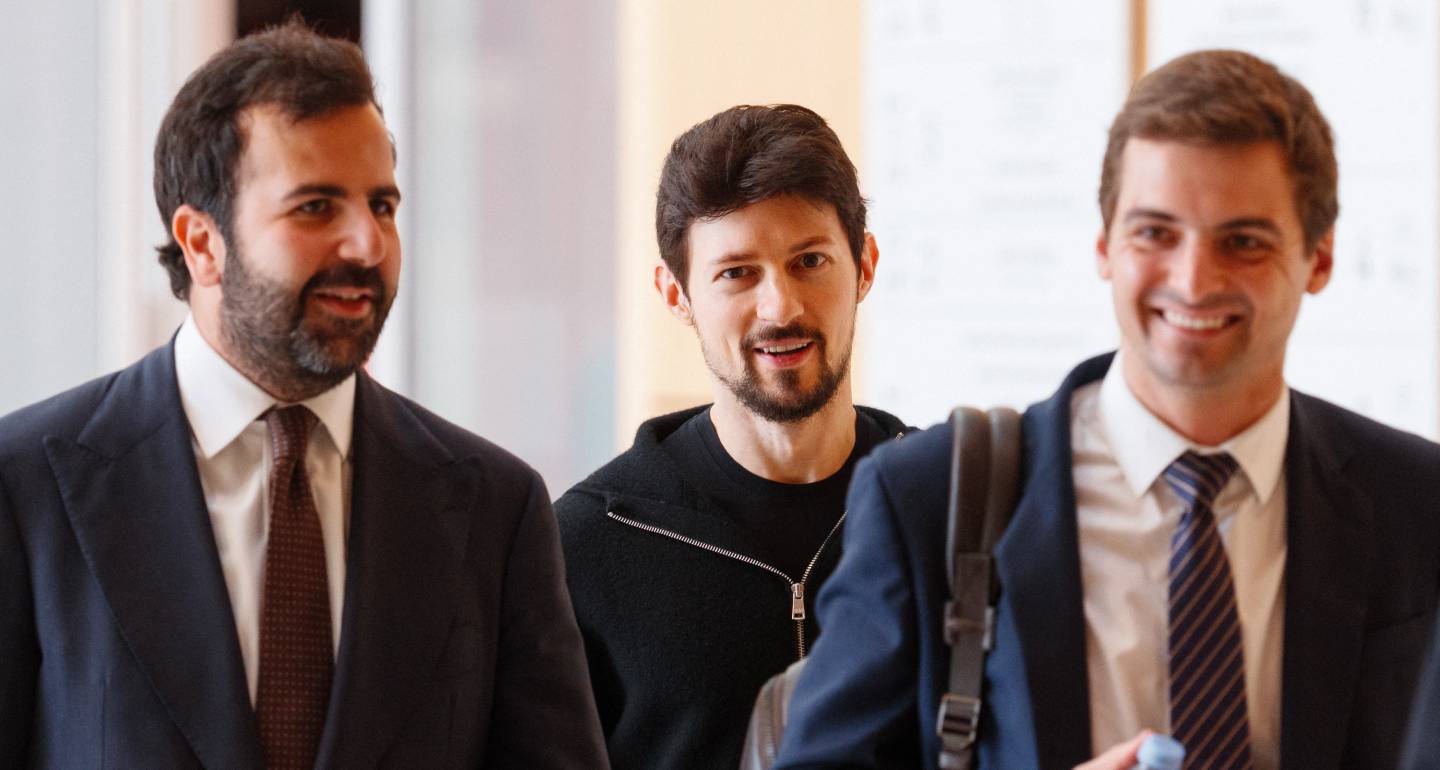
While France and Australia are seeking to establish the legal obligations of messaging apps like Telegram, Russia wants total subordination.

Maria Kolomychenko

The recent uncovering of Dmitry Donskoy’s relics in the Cathedral of the Archangel is yet another attempt by the Russian Orthodox Church to help the state solve its problems. However, parroting the state’s version of Russian history leaves the Church with no message except “patriotism.”
Alexander Zanemonets

With the growth in points of friction between the great powers, organizations like the SCO will continue to play a role in the strategic adaptation of the smaller powers caught between them.

Temur Umarov