

Research
- +10
Jarrett Blanc, Thomas de Waal, Karim Sadjadpour, …
{
  "authors": [
    "Jarrett Blanc"
  ],
  "type": "legacyinthemedia",
  "centerAffiliationAll": "dc",
  "centers": [
    "Carnegie Endowment for International Peace"
  ],
  "collections": [],
  "englishNewsletterAll": "americanStatecraft",
  "nonEnglishNewsletterAll": "",
  "primaryCenter": "Carnegie Endowment for International Peace",
  "programAffiliation": "ASP",
  "programs": [
    "American Statecraft"
  ],
  "projects": [],
  "regions": [
    "North America",
    "United States"
  ],
  "topics": [
    "Economy",
    "Trade",
    "Security",
    "Foreign Policy"
  ]
}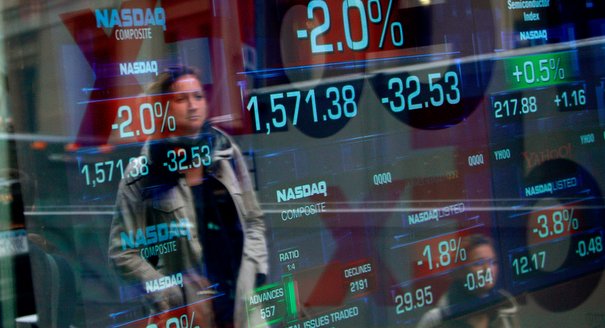
Source: Getty
The influence of U.S. sanctions derives from America’s central position in international finance—particularly its control over the invisible plumbing that allows money to move around the world.
Source: Wall Street Journal
Since taking office President Trump has not hesitated to threaten or implement sanctions against countries like Venezuela and North Korea. Sanctions are useful tools, but Mr. Trump and bipartisan majorities in Congress run the risk of making them less effective.
The U.S. economy’s size is not the primary reason its sanctions are so powerful: Countries without a significant trade relationship with the U.S. can still be severely damaged by bilateral sanctions. Though the European Union’s gross domestic product almost matches America’s, EU sanctions are much less devastating. This influence derives from America’s central position in international finance—particularly its control over the invisible plumbing that allows money to move around the world.
Recognizing how much of their work touches the U.S., major foreign banks will often go so far as to treat themselves as “U.S. persons” for legal and regulatory purposes. Countries or entities subject to U.S. sanctions thus have a very difficult time with even simple banking transactions, which is catastrophic for trade.
Yet America’s dominant place in international banking, like its position in the broader international system, can be lost. The international financial plumbing can be changed with the investment of time and resources by banks, governments and regulators. So far there have not been sufficient incentives to make those changes, but governments and banks will reconsider if the U.S. abuses its position.
Policy makers and regulators in the U.S. have long been sensitive to this risk. They have taken it into account in the application of new sanctions and have worked closely with foreign banks to ensure they’re doing permissible business—even business barred to their American competitors. For example, outreach surrounding the Iran deal was designed to assure foreign businesses and regulators that remaining U.S. sanctions were tailored and not a back door to enforcing the sanctions lifted by the deal. Thanks to these efforts, major foreign banks working with Iran have largely chosen to work with U.S. officials and stay in careful compliance.
The U.S. government’s caution seems to have been lost with the latest sanctions against Iran, Russia and North Korea—legislation that passed with overwhelming support from both parties and was signed into law by a hesitant Mr. Trump. The new sanctions will do little to change the kinds of commerce allowed with the target countries. The law’s main function is to shift influence over lifting sanctions from the White House to Capitol Hill.
Congress has historically found it more attractive to levy sanctions than to lift them. Sanctions generally target adversaries, so that even if a country changes the policy that prompted sanctions, it likely will have other problems with the U.S. Some members of Congress will be tempted to promote these remaining issues as new reason to keep sanctions in place. That’s why the 1974 Jackson-Vanik restrictions on most-favored-nation status for Russia stayed in place for a generation after Russia opened up emigration restrictions, the legislation’s original aim. Mr. Trump is right to say the shift in power toward Congress will make it harder to use sanctions as a chit in international negotiations.
For those who are deeply concerned by Russian meddling in other countries’ elections—and by Mr. Trump’s apparent nonchalance—congressional authority over sanctions may feel like progress. For banks, governments and regulators abroad, it looks as if the U.S. is turning sanctions from means of achieving particular ends into permanent stigmas. That makes it more attractive to find ways to leave the U.S. banking system.
Mr. Trump also is threatening loudly to trash the Joint Comprehensive Plan of Action, better known as the Iran deal. Never mind that America’s international partners and the intelligence community agree that Iran is fulfilling its commitments. The U.S. built an international consensus that Iran’s nuclear program was a problem. European and Asian partners took appropriate action, suffering real economic harm by ratcheting back oil purchases and other commerce with Iran and then working to negotiate the deal. If the U.S. cannot take “yes” for an answer, those same partners likely will be at least as concerned about the threat posed by America’s financial power as the threat of Iran’s nuclear program.
In a time when U.S. consistency and reliability is openly questioned by some of America’s closest allies, threats of permanent sanctions will draw more attention to the risks of being dependent on the U.S. financial system. America’s importance as an international financial hub will not disappear overnight, and neither will the reach of U.S. sanctions. If the U.S. comes to be seen as an untrustworthy custodian, there will be a slow and inexorable erosion of America’s role and influence.
Sanctions compare favorably with any other tool the U.S. has—and certainly very favorably to military action. Sanctions can help address real problems in the world, which is why the U.S. should not fritter them away.
This article was originally published in the Wall Street Journal.
Former Senior Fellow, Geoeconomics and Strategy Program
Jarrett Blanc was a senior fellow in the Geoeconomics and Strategy Program at the Carnegie Endowment for International Peace.
Recent Work


Jarrett Blanc, Thomas de Waal, Karim Sadjadpour, …

Dan Baer, Rosa Balfour, Jarrett Blanc, …
Carnegie does not take institutional positions on public policy issues; the views represented herein are those of the author(s) and do not necessarily reflect the views of Carnegie, its staff, or its trustees.

Minsk clearly expected the dialogue with Washington to yield more results, in particular the lifting of EU sanctions and permission to export potash.

Artyom Shraibman

Depleted financial reserves and a shrinking tax base mean it is no longer possible to simultaneously deliver high defense spending, price stability, and economic growth.

Alexandra Prokopenko

With the growth in points of friction between the great powers, organizations like the SCO will continue to play a role in the strategic adaptation of the smaller powers caught between them.

Temur Umarov

When faced with fuel shortages in the past, Central Asian governments could always count on additional supplies from Moscow. That safety net no longer exists.

Galiya Ibragimova

Two divergent trends—Putin’s hardline vision of how to prosecute the war in Ukraine, and a growing desire for change in Russia—could tear the regime apart.

Tatiana Stanovaya