

Commentary
Ulrich Kühn
{
  "authors": [
    "Ulrich Kühn"
  ],
  "type": "other",
  "centerAffiliationAll": "dc",
  "centers": [
    "Carnegie Endowment for International Peace"
  ],
  "collections": [],
  "englishNewsletterAll": "ctw",
  "nonEnglishNewsletterAll": "",
  "primaryCenter": "Carnegie Endowment for International Peace",
  "programAffiliation": "NPP",
  "programs": [
    "Nuclear Policy"
  ],
  "projects": [],
  "regions": [
    "Russia"
  ],
  "topics": [
    "Nuclear Policy"
  ]
}
Source: Getty
Even though arms control cannot prevent deliberate escalation, at least confidence-and-security-building measures could diminish the risk of unintended escalation. But the political realities in Moscow and Washington are not promising for conventional arms control in Europe.
Source: War on the Rocks
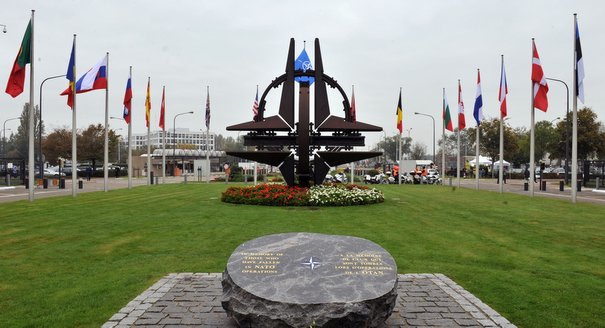
Perhaps like no other exercise since the Russian annexation of Crimea in 2014, Russia’s recently concluded Zapad (West) exercise was of serious concern to NATO’s easternmost members. It provided ample opportunity for pundits to engage in hysteria about Russian intentions.
No seasoned NATO official expected the exercise to be the not-so-secret cover for a Russian invasion of the Baltic States – which could easily become the overture to World War III. Rather, the real problem with Zapad is that it underscored once more the precarious state of security in Europe.
Since Crimea, much has been written about NATO’s unpreparedness for potential Russian aggression and the need for a deterrence-by-denial approach to prevent deliberate escalation by Moscow. But an essential ingredient of NATO defense policy remains strangely absent from the debate―how to address insecurity by means of arms control.
Arms control on its own cannot prevent deliberate escalation. If a nation decides to go to war, it will go to war regardless of what arms control arrangement is in place. This is why NATO has, quite correctly, put the onus on deterrence, assurance, and defense in its initial response to the Ukraine crisis. But arms control, and in particular transparency and crisis communication channels, can help to limit the risk of unintended escalation. This may take the form of inadvertent escalation through general misunderstanding of the other party’s intention, or of accidental escalation through lower-grade military incidents that gradually become more severe.
Because NATO also decided at its 2016 Warsaw Summit to remain open to dialogue with Russia, and since Germany, in particular, has only recently made a renewed push for conventional arms control in Europe, it makes sense to ask whether a novel conventional arms control arrangement could provide for more security in addition to NATO’s deterrence and assurance approach. At the same time, to add a much-needed reality check, we must ask whether the political level of U.S.-Russian relations allows for a new approach.
This article was originally published in War on the Rocks

Former Nonresident Scholar, Nuclear Policy Program
Ulrich Kühn was a nonresident scholar at the Carnegie Endowment for International Peace, and the head of the arms control and emerging technologies program at the Institute for Peace Research and Security Policy at the University of Hamburg.
Recent Work
Ulrich Kühn
Ulrich Kühn
Carnegie does not take institutional positions on public policy issues; the views represented herein are those of the author(s) and do not necessarily reflect the views of Carnegie, its staff, or its trustees.

Putin’s conservative staffing policies and search for ever greater control have cemented parliament’s transformation into a bureaucratic appendage of the executive branch.

Andrey Pertsev

Russia’s AI-driven propaganda campaigns operate in a fragmented, chaotic, and often illogical manner. That’s not necessarily a problem for the Kremlin, though: It’s much easier to mimic genuine public debate that way.

Ilya Klishin

Russian strikes are weakening the economy sustaining Ukraine’s war effort. Closing the growing funding gap will require more European support and politically contentious reforms in Kyiv.

Balázs Jarábik

Despite a new textbook, an influx of Russian teachers and managers, and an end to the teaching of Ukrainian, the Kremlin is unlikely to have “reprogrammed” locals.

Konstantin Skorkin

For every ruble allocated to social policy, health, and education in 2027, double that amount is earmarked for the army, the police, and the security services.

Alexandra Prokopenko