

Commentary
Andrey Pertsev
{
  "authors": [
    "Andrey Pertsev"
  ],
  "type": "commentary",
  "blog": "Carnegie Politika",
  "centerAffiliationAll": "",
  "centers": [
    "Carnegie Endowment for International Peace",
    "Carnegie Russia Eurasia Center"
  ],
  "englishNewsletterAll": "",
  "nonEnglishNewsletterAll": "",
  "primaryCenter": "Carnegie Russia Eurasia Center",
  "programAffiliation": "",
  "regions": [
    "Russia"
  ],
  "topics": [
    "Domestic Politics",
    "Political Reform"
  ]
}
Source: Getty
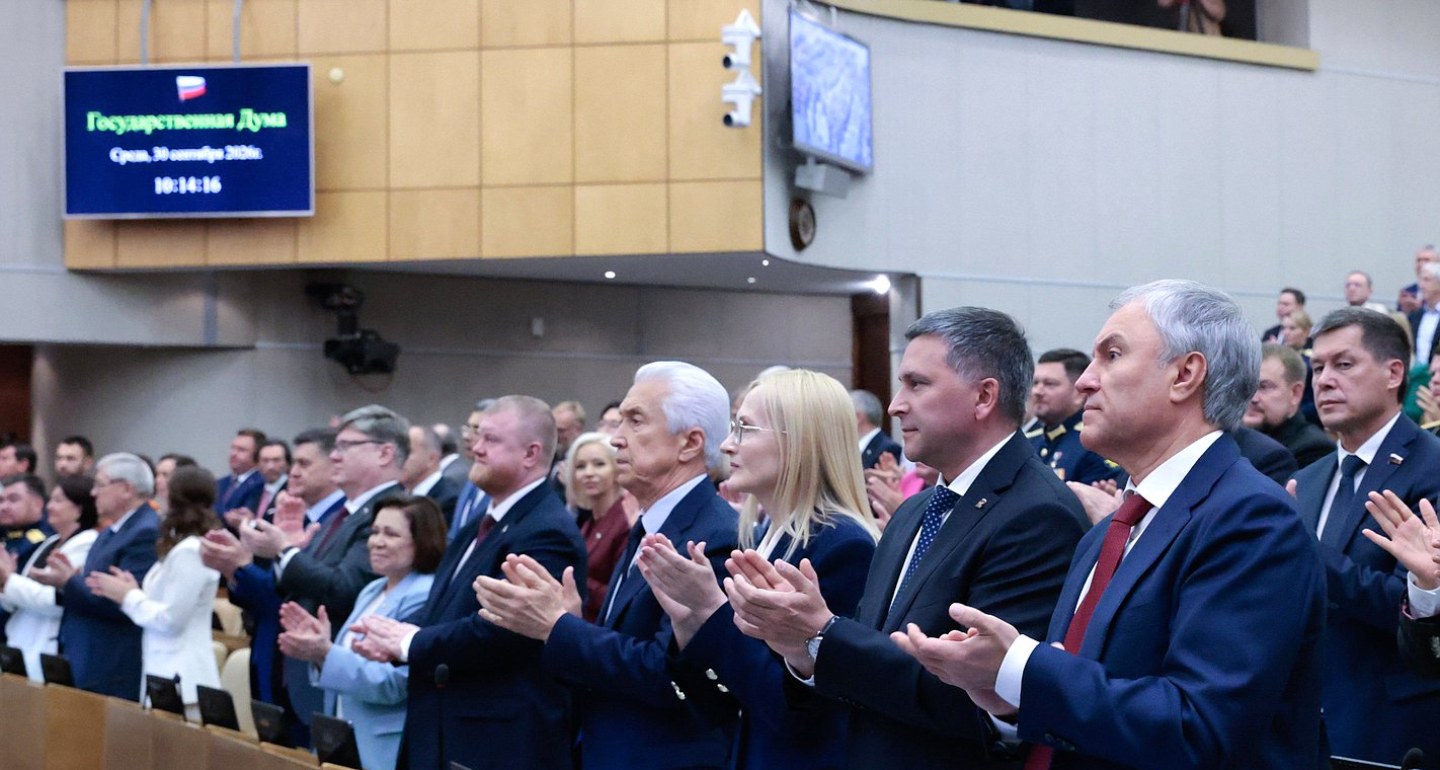
Putin’s conservative staffing policies and search for ever greater control have cemented parliament’s transformation into a bureaucratic appendage of the executive branch.
While almost 40 percent of the men and women elected to Russia’s 450-strong State Duma in September were newcomers to parliament, that does not herald any significant change. Even President Vladimir Putin’s demand for a “new elite” of Ukraine war veterans has done nothing to halt the country’s political stagnation.
Few of the 184 first-timers in the State Duma have received leadership positions—indeed, there have barely been any changes to the parliament’s leadership.
Speaker Vyacheslav Volodin is embarking on his third term (a record in post-Soviet history), despite rumors he would be replaced. Over the decade of his speakership, Volodin—a shrewd bureaucrat with experience in public politics—has become the immutable leader of the State Duma for the late-Putin era. He can enforce discipline (making sure, for example, that no photos of empty chairs or sleeping deputies appear in the media) and—in coordination with the government and presidential administration—guarantee that all decisions are enacted seamlessly.
At the same time, Volodin makes statements carefully calculated to please Putin (Volodin has acquired a good read on his boss during their sixteen years working together). It was back in 2014 that Volodin came up with the phrase: “If there is no Putin, there is no Russia.” And at the final session of the last State Duma, he led a chant of “Russia! Putin! Victory!” It’s difficult to imagine another official being able to fill his shoes.
Of the eleven deputy speakers in the current State Duma, only two are new appointments: former deputy prime minister Vitaly Savelyev and Maria Voropayeva, a politician from the nationalist Liberal Democrats (LDPR) close to the party’s new leader Leonid Slutsky. Most of the other deputy speakers are embarking on their fourth terms and, in one case (Communist Ivan Melnikov), their fifth.
There has been some change when it comes to parliamentary committees, but it is insignificant. In the last State Duma, there were thirty-two committees; now there are thirty-four—and twenty-two are led by the same people as before. United Russia deputy Andrei Makarov is embarking on his fourth term as head of the budget committee and fellow United Russia deputy Pavel Krasheninnikov has headed the legislative committee in its various iterations since 1999.
The few changes are easy to explain. The international affairs committee was taken away from Slutsky because he has become immersed in party intrigue. It was given to United Russia’s Pyotr Tolstoy, who is already involved in so-called “parliamentary diplomacy.” Andrei Kartapolov was not reappointed to the defense committee because of his close ties to ex-defense minister Sergei Shoigu, who was removed in 2024.
Against all expectations, there are relatively few Ukraine war veterans in the new parliament. While officials said that forty-six “veterans” had been elected, independent media outlet Faridaily reported there were thirty-eight deputies with combat experience. Only one of these veterans was appointed to lead a committee: Vladislav Golovin, who became head of the youth policy committee.
It’s clear that the Kremlin was seeking to get rid of eccentric and unruly deputies who had made statements without clearing them with the Kremlin’s political bloc or even their own parties. Such figures from the previous convocation failed to make it into the new parliament.
Meanwhile, veteran deputies such as United Russia’s Valentina Tereshkova (the first woman in space) and anti-gay crusader Vitaly Milonov retained their seats. Most of the ruling party’s changes were linked to the appointment of new governors, who prefer to have their own local representatives in parliament, rather than those of their predecessors.
Following a lengthy campaign against the Communist Party by the Kremlin’s political bloc, the total number of Communist deputies shrank from fifty-seven to thirty-seven, and the party lost its charismatic regional politicians. It’s now mostly made up of party apparatchiks (like Vladimir Kashin, Nikolai Kharitonov, and Dmitry Novikov) and influential sponsors (such as Vadim Kumin and Sergei Kazankov).
Similarly, A Just Russia party, which only passed the 5 percent of votes threshold required to enter parliament thanks to its leader’s personal ties to Putin, also lost more than a third of its seats, along with charismatic regional figures like Fedot Tumusov and Galina Khovanskaya.
In contrast, the LDPR (which has in effect been managed by the Kremlin since the death of its founder Vladimir Zhirinovsky in 2022) increased its number of deputies, who include those unquestionably loyal to Slutsky, a few Ukraine war veterans, and a notorious pair representing the interests of the security services (Andrei Lugovoi and Viktor Bout).
While the liberal New People party (established with the support of the presidential administration) gained 50 percent more deputies, there were some surprising choices. More than a third of its deputies have no previous affiliation with the party, such as Alexander Skorobogatko, the son of a tycoon close to the billionaire brothers Arkady and Boris Rotenberg.
An analysis of the makeup of Russia’s new parliament highlights two linked trends. The first is extreme bureaucratization. The long-serving speaker, deputy speakers, and heads of committees have mostly stopped being parliamentarians and have morphed into compliant functionaries. This is the inevitable result of Putin’s ultra-conservative staffing policy and the personnel stagnation across all branches of the Russian government.
Second is the “de-partyfication” of parliament: the growing dominance of United Russia and the reduced number of seats afforded to the other political parties. This is a direct consequence of Kremlin political managers’ drive to set more and more records.
The main victims of “de-partyfication” are the Communist Party and A Just Russia, which have lost their most charismatic deputies in their leaders’ bid to secure their own seats, and now risk becoming nothing more than platforms for party apparatchiks and individuals who enjoy Kremlin favor—in other words, replicating the fate of New People, whose deputies are mostly chosen by the Kremlin or powerful lobbyists.
Russia’s State Duma has never embraced classic parliamentarism, but its newest iteration cements its transformation into nothing more than a bureaucratic appendage of the executive branch. In an authoritarian-totalitarian regime, this sort of body would seem to be superfluous. That it continues to exist is likely thanks to Putin’s specific brand of legalism (his actions often correspond to at least some interpretation of the letter of the law, not its spirit), Putin’s preference for keeping aging officials in their posts, and the interests of other significant players in the system.
For some, the State Duma is a way to retain high-status positions; for others, a chance to underscore their indispensability by shaping its composition; and for still others, an opportunity to maintain their lobbying power. The only interests left unrepresented are those of Russian voters.
Andrey Pertsev is a journalist with Meduza website.
Recent Work
Andrey Pertsev
Andrey Pertsev
Carnegie does not take institutional positions on public policy issues; the views represented herein are those of the author(s) and do not necessarily reflect the views of Carnegie, its staff, or its trustees.

Russia’s AI-driven propaganda campaigns operate in a fragmented, chaotic, and often illogical manner. That’s not necessarily a problem for the Kremlin, though: It’s much easier to mimic genuine public debate that way.
Ilya Klishin

Russian strikes are weakening the economy sustaining Ukraine’s war effort. Closing the growing funding gap will require more European support and politically contentious reforms in Kyiv.

Balázs Jarábik
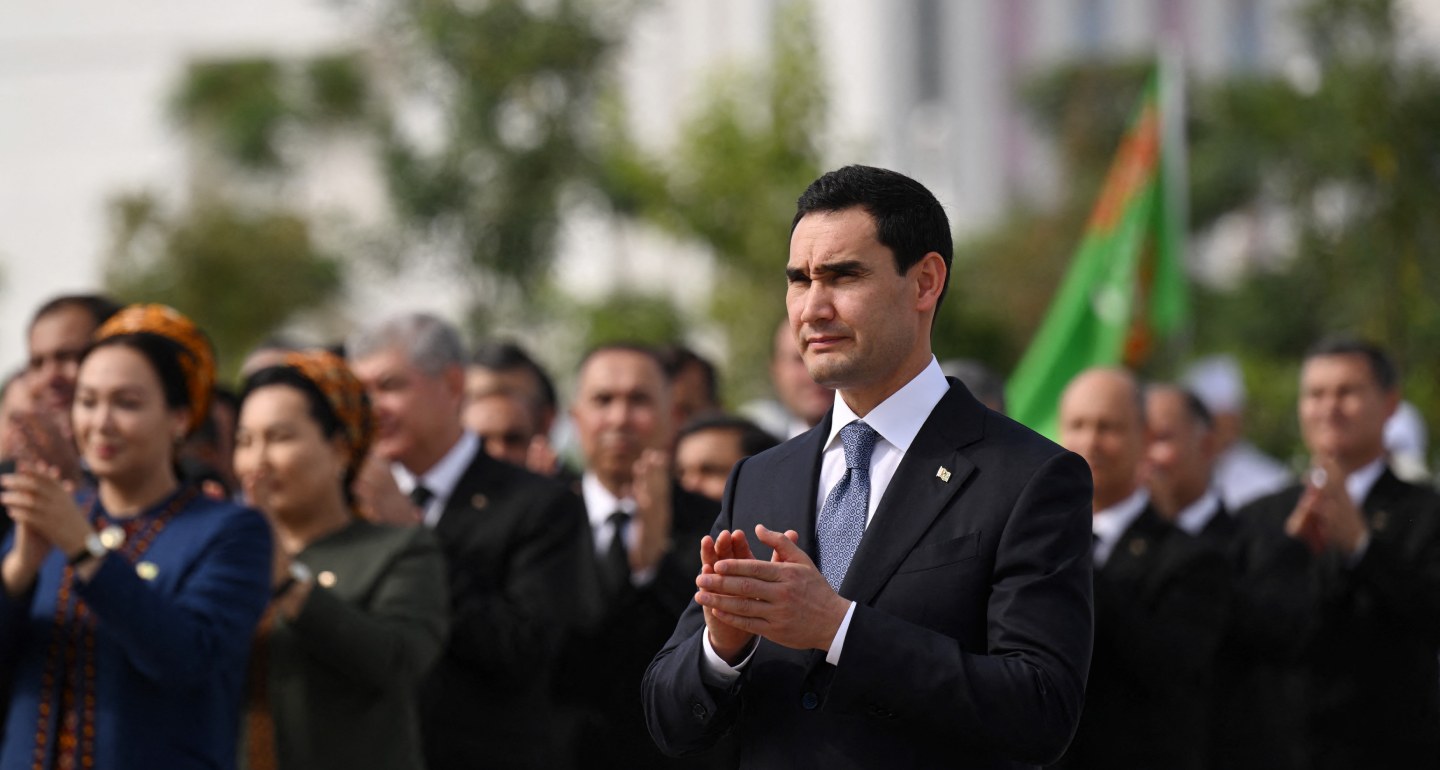
Ex-president Gurbanguly Berdimuhamedov remains interested in politics, but his son Serdar, Turkmenistan’s current president, is becoming increasingly independent and willing to break with his father’s legacy. If their covert rivalry goes too far, both risk losing power.
Galiya Ibragimova
Despite a new textbook, an influx of Russian teachers and managers, and an end to the teaching of Ukrainian, the Kremlin is unlikely to have “reprogrammed” locals.
Konstantin Skorkin
For every ruble allocated to social policy, health, and education in 2027, double that amount is earmarked for the army, the police, and the security services.
Alexandra Prokopenko