

Commentary
Putin’s conservative staffing policies and search for ever greater control have cemented parliament’s transformation into a bureaucratic appendage of the executive branch.
Andrey Pertsev
{
  "authors": [
    "Jen Psaki"
  ],
  "type": "legacyinthemedia",
  "centerAffiliationAll": "",
  "centers": [
    "Carnegie Endowment for International Peace"
  ],
  "collections": [],
  "englishNewsletterAll": "",
  "nonEnglishNewsletterAll": "",
  "primaryCenter": "Carnegie Endowment for International Peace",
  "programAffiliation": "",
  "programs": [],
  "projects": [],
  "regions": [
    "North America",
    "United States"
  ],
  "topics": [
    "Political Reform"
  ]
}
Source: Getty
In remarks that seemed as bookends, former Presidents George W. Bush and Barack Obama reminded the United States of what the country and its values are based on, regardless of who is occupying the Oval Office.
Source: CNN
We spent this week debating whether or not past presidents of the United States reached out to the families of the men and women who bravely lost their lives serving our country. That is how low our politics have sunk.
But on Thursday we had a break from this: we saw an uncoordinated moment of unity from the last two men who served as president -- two men who have had their share of differences on policy issues from Iraq to health care. On this day, they reminded us that everything isn't about politics. That the division that has been stoked along racial lines, the personal attacks, the lies and venom coming from the current President are not normal. And we can't forget that.
In remarks that seemed as bookends, Presidents George W. Bush and Barack Obama reminded us of who we are and what this country and our values are based on, regardless of who is occupying the Oval Office.
President Donald Trump wasn't actually mentioned by name in either of the past presidents' remarks. Their addresses weren't complicated or policy heavy. They were about human decency.
They were about the American values that we have begun to feel slipping away. Bush said in his speech -- at an event in New York dubbed "The Spirit of Liberty: At Home, In The World"-- Bigotry seems emboldened. Our politics seems more vulnerable to conspiracy theories and outright fabrication."
He talked about what moral leadership should look like, about the values we have woven into the fabric of our national identity for centuries now -- tolerance, acceptance, understanding, the capacity to reach not just across the aisle, but across the oceans.
"We know, deep down, that repression is not the wave of the future. We know that the desire for freedom is not confined to, or owned by, any culture; it is the inborn hope of our humanity."
And later in the afternoon, during a campaign appearance for Lt. Gov. Ralph Northam, the Democratic nominee running against Republican Ed Gillespie in the Virginia governor's race, Obama sounded similar themes. "We are rejecting a politics of division," he told the crowd. "We are rejecting a politics of fear. We are embracing a politics that says everybody deserves a chance, a politics that says everybody has dignity and worth; a politics of hope."
These are ideas both men have been talking about for years, ones that -- regardless of our political leanings -- we must hold tight to even in a time of turmoil.
In the final section of his speech, Bush spoke about activism of citizens, "Our identity as a nation -- is not determined by geography or ethnicity, by soil or blood. Being an American involves the embrace of high ideals and civic responsibility."
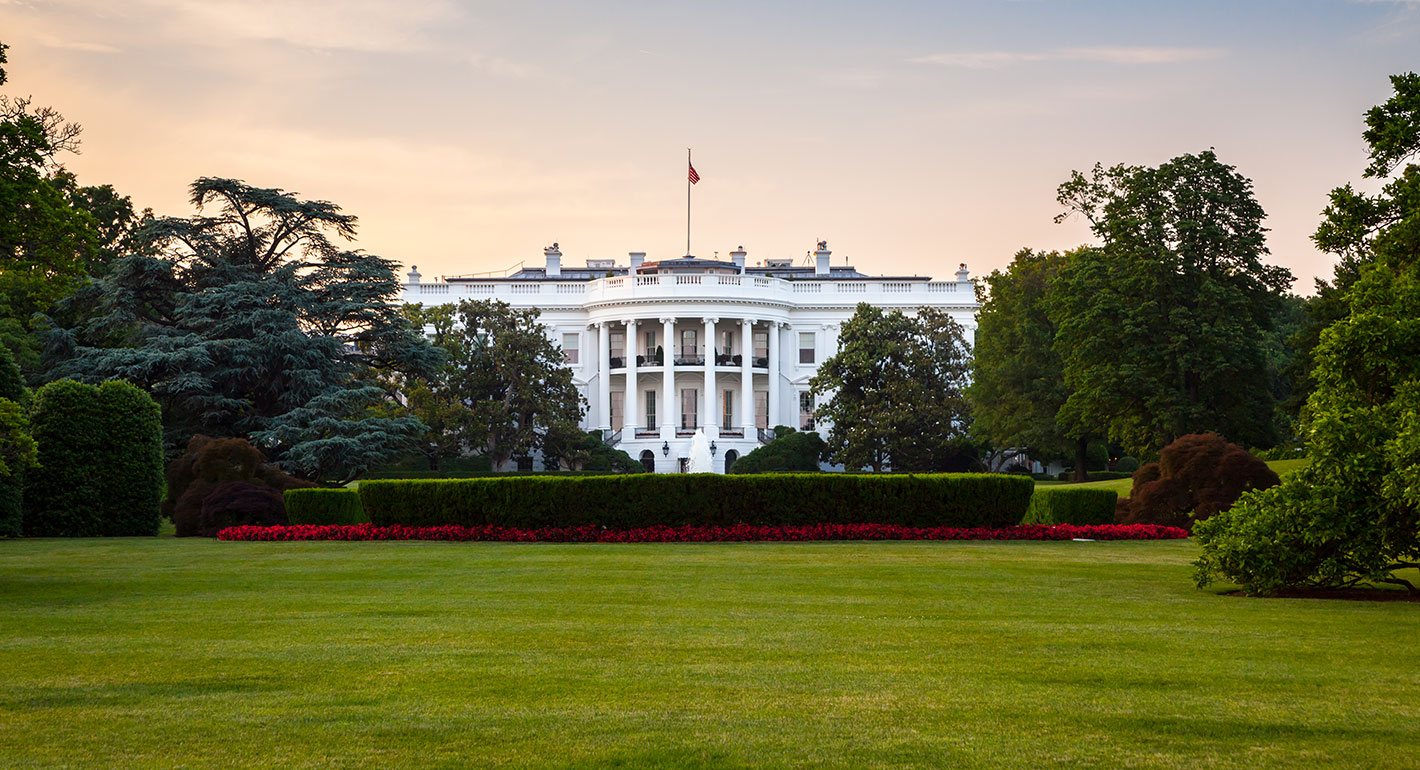
The remarks of these two were a sobering reminder of how far our leadership has fallen, because as long as we continue looking for a moral compass, for tolerance, for comfort in times of need, for empathy from this White House, we will continue to be disappointed.
There will be other times when President Bush, President Obama, President Bill Clinton and others will come out of retirement from public office to remind us of who we are, but the remarks we heard today should resound as an early and stirring reminder that we have more in common than not -- and that we are living in an uncommon time when language and political passion are being used to divide us.
And it is not normal.

Jen Psaki
Former Nonresident Scholar
Jen Psaki was a nonresident scholar at the Carnegie Endowment for International Peace.
Carnegie does not take institutional positions on public policy issues; the views represented herein are those of the author(s) and do not necessarily reflect the views of Carnegie, its staff, or its trustees.

Putin’s conservative staffing policies and search for ever greater control have cemented parliament’s transformation into a bureaucratic appendage of the executive branch.

Andrey Pertsev

Ex-president Gurbanguly Berdimuhamedov remains interested in politics, but his son Serdar, Turkmenistan’s current president, is becoming increasingly independent and willing to break with his father’s legacy. If their covert rivalry goes too far, both risk losing power.

Galiya Ibragimova

Sergei Kiriyenko used Russia’s parliamentary vote to further hone his strategy of corporate mobilization that is designed to maximize votes for United Russia.
Andrey Pertsev

Trump has promised Belarus a massive potash deal. But Minsk is seeking something greater: restored Western transit and greater room for maneuver from Russia.

Balázs Jarábik

The European far right might fail to steer EU policy in the direction Russia wants, but they will create enough chaos inside Europe to benefit the Kremlin.

Dimitar Bechev