

• Research
  • Politika
  • About
Carnegie Russia Eurasia center logoCarnegie lettermark logo
  • Donate
{
  "authors": [
    "Richard Youngs",
    "Michael H. Smith"
  ],
  "type": "other",
  "centerAffiliationAll": "dc",
  "centers": [
    "Carnegie Endowment for International Peace",
    "Carnegie Europe"
  ],
  "collections": [
    "Democracy and Governance"
  ],
  "englishNewsletterAll": "ctw",
  "nonEnglishNewsletterAll": "",
  "primaryCenter": "Carnegie Europe",
  "programAffiliation": "EP",
  "programs": [
    "Europe"
  ],
  "projects": [],
  "regions": [
    "Europe",
    "Western Europe",
    "Iran"
  ],
  "topics": [
    "Foreign Policy",
    "Democracy"
  ]
}

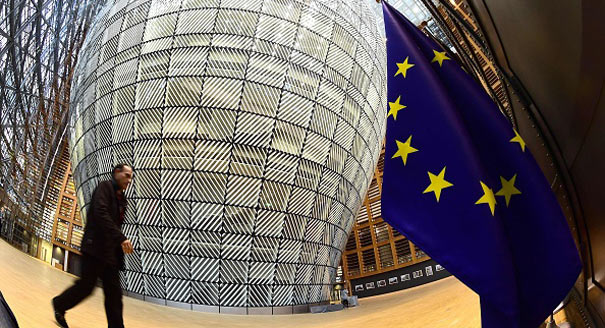
Source: Getty

Other
Carnegie Europe

The EU and the Global Order: Contingent Liberalism

The EU’s approaches to global order and international challenges are increasingly more selective.

Link Copied
By Richard Youngs and Michael H. Smith
Published on Mar 6, 2018

Source: The International Spectator

The European Union has gained a reputation for being the strongest proponent and defender of the liberal global order. It is widely presumed that the EU defends liberal order almost reflexively, as part of its core identity and beyond rationalised cost-benefit calculation. This ostensibly involves firm support for multilateral institutions and norms; open markets and trade liberalisation; cooperative approaches to security; and human rights and democratic values. With the United States and other actors increasingly ambivalent towards the liberal global order, the EU’s commitment to these norms is of unprecedented importance. In some areas of policy, however, the EU’s record in defending the liberal order looks increasingly mixed. Compared to the other actors covered in this special issue, the EU’s trade, foreign and security policies are indeed relatively strongly imbued with liberal principles. Yet, in recent years the EU’s own approaches to global order and international challenges have adopted a more selective or contingent liberalism.

The 2016 EU Global Strategy (EUGS1) contains standard commitments to “rules-based order” but also gestures towards a more flexible or “principled pragmatism” in foreign policy. The strategy does not specify what this might mean in practice, although it does not talk of an especially thick form of liberal order. Instead of trying to second guess the meaning of the Global Strategy’s still largely unimplemented text, we look at actual EU policy changes and assess how ‘liberal’ these are in the way they approach concrete order-related challenges.

We demonstrate the shift to a more contingent liberalism by examining the EU’s recent record in relation to four different challenges: international trade; US leadership; Russian actions in the eastern neighbourhood; and security in the Middle East. We speculate on what this may portend for the EU’s self-identity, European interests and the integrity of the prevailing global order. . . .

Read Full Text

This article was originally published by The International Spectator, vol 53, no. 1 (2018)

About the Authors

Richard Youngs

Senior Fellow, Democracy, Conflict, and Governance Program

Richard Youngs is a senior fellow in the Democracy, Conflict, and Governance Program, based at Carnegie Europe. He works on EU foreign policy and on issues of international democracy.

Michael H. Smith

Authors

Richard Youngs
Senior Fellow, Democracy, Conflict, and Governance Program
Richard Youngs
Michael H. Smith
Foreign PolicyDemocracyEuropeWestern EuropeIran

Carnegie does not take institutional positions on public policy issues; the views represented herein are those of the author(s) and do not necessarily reflect the views of Carnegie, its staff, or its trustees.

More Work from Carnegie Russia Eurasia Center

  • Commentary
    Carnegie Politika
    Will Hungary’s New Leader Really Change EU Policy on Russia and Ukraine?

    Orbán created an image for himself as virtually the only opponent of aid to Ukraine in the entire EU. But in reality, he was simply willing to use his veto to absorb all the backlash, allowing other opponents to remain in the shadows.

      Maksim Samorukov

  • Commentary
    Carnegie Politika
    Power, Pathways, and Policy: Grounding Central Asia’s Digital Ambitions

    Central Asia’s digital ambitions are achievable, but only if policy is aligned with the region’s physical constraints.

      Aruzhan Meirkhanova

  • Commentary
    Carnegie Politika
    The Afghanistan–Pakistan War Poses Awkward Questions for Russia

    Not only does the fighting jeopardize regional security, it undermines Russian attempts to promote alternatives to the Western-dominated world order.

      Ruslan Suleymanov

  • Commentary
    Carnegie Politika
    Moldova Floats a New Approach to Its Transnistria Conundrum

    Moldova’s reintegration plan was drawn up to demonstrate to Brussels that Chișinău is serious about the Transnistria issue—and to get the West to react.

      Vladimir Solovyov

  • Commentary
    Carnegie Politika
    Lukashenko’s Bromance With Trump Has a Sell-By Date

    Lukashenko is willing to make big sacrifices for an invitation to Mar-a-Lago or the White House. He also knows that the clock is ticking: he must squeeze as much out of the Trump administration as he can before congressional elections in November leave Trump hamstrung or distracted.

      Artyom Shraibman

Get more news and analysis from
Carnegie Russia Eurasia Center
Carnegie Russia Eurasia logo, white
  • Research
  • Politika
  • About
  • Experts
  • Events
  • Contact
  • Privacy
  • For Media
Get more news and analysis from
Carnegie Russia Eurasia Center
© 2026 Carnegie Endowment for International Peace. All rights reserved.








