

Commentary
Andrei Kolesnikov
{
  "authors": [
    "Andrei Kolesnikov"
  ],
  "type": "commentary",
  "centerAffiliationAll": "",
  "centers": [
    "Carnegie Endowment for International Peace",
    "Carnegie Russia Eurasia Center"
  ],
  "collections": [],
  "englishNewsletterAll": "",
  "nonEnglishNewsletterAll": "",
  "primaryCenter": "Carnegie Endowment for International Peace",
  "programAffiliation": "",
  "programs": [],
  "projects": [],
  "regions": [],
  "topics": [
    "Economy"
  ]
}
Source: Getty
There are several misperceptions about Russia that make relations with Europe worse than they need to be. Acknowledging these illusions is the first step to Russia and Europe being able to understand each other.
Source: La Liberté
Why is it so difficult for Russia and Europe to understand each other?
Personally, I have no illusions: Russian President Vladimir Putin’s irrational politics have caused a deep mutual misunderstanding that now risks becoming a perpetual conflict. The elements of the misperception are as follows:
1. Putin’s Russia is not the same thing as Russia itself. Putin is a classic autocrat who behaves like any other autocrat in the world. The fact that he belongs to the nation of Tolstoy and Dostoyevsky doesn’t change anything; it is simply part of the mythology.
The nature of the support Putin enjoys in Russia is no enigma either: the so-called 80 percent approval rating stems from the answer to the question “Do you support the activity of the Russian president?” The answer is “yes” because Putin—having now outlasted Leonid Brezhnev, who had been in power for eighteen years when he died—is an eternal leader, a symbol of the country, a flag around which to rally.
2. For the average Russian, it is more rational not to participate in the protest movement and to accept an informal social contract: anticipatory obedience to the state in exchange for some crumbs from the oil and gas pie. The essence of the mass support for Putin is total indifference—and fear of a worse life under a different leader.
3. Sanctions can’t change Putin’s policy. They can only mobilize his core and periphery supporters. This is the “besieged fortress” phenomenon: when a nation is under attack, it rallies around its commander, developing something akin to Stockholm syndrome for the leader. The average Russian perceives Western sanctions not as sectoral and/or personal, provoked by various and very concrete reasons, but as an attack on Russia and its people.
4. Reform is not possible in Russia. Putin understands perfectly that he can’t touch the political foundations of his system, because if he does, it will collapse.
5. Putin is not a strong leader. In economic and military terms, the West is much stronger. The role of a global spoiler is not equal to that of a real global player.
6. Alexei Navalny is certainly the most prominent opposition politician in Russia. He is not, however, the voice of the entire opposition movement, and he doesn’t represent all of Russia. The most vocal protest movement in Russia is not politicized; it is driven by pragmatic issues such as infill construction in local neighborhoods and the expansion of landfills.
Finally, for now, Putin is most concerned about his own security. He needs the same kind of successor that he was for Boris Yeltsin. Putin was chosen primarily to ensure the security of Yeltsin, his family, and his political family. He proved more than capable on this front. So what Putin needs is just that: another Putin.
The article was originally published in French in La Liberté.
Former Senior Fellow, Carnegie Russia Eurasia Center
Kolesnikov was a senior fellow at the Carnegie Russia Eurasia Center.
Recent Work
Andrei Kolesnikov
Andrei Kolesnikov
Carnegie does not take institutional positions on public policy issues; the views represented herein are those of the author(s) and do not necessarily reflect the views of Carnegie, its staff, or its trustees.

Depleted financial reserves and a shrinking tax base mean it is no longer possible to simultaneously deliver high defense spending, price stability, and economic growth.

Alexandra Prokopenko

A much-discussed disagreement over internet restrictions in Russia was never an existential threat for Putin: It was about elite groups protecting their interests.
Alexandra Prokopenko

The demands of the Kremlin’s war in Ukraine, demographic problems, and public hostility toward Central Asians mean Russia does not have enough workers.
Salavat Abylkalikov
Minsk’s faith in the future of its larger neighbor’s economy is fading as Belarusian firms in Russia see record losses.
Olga Loiko
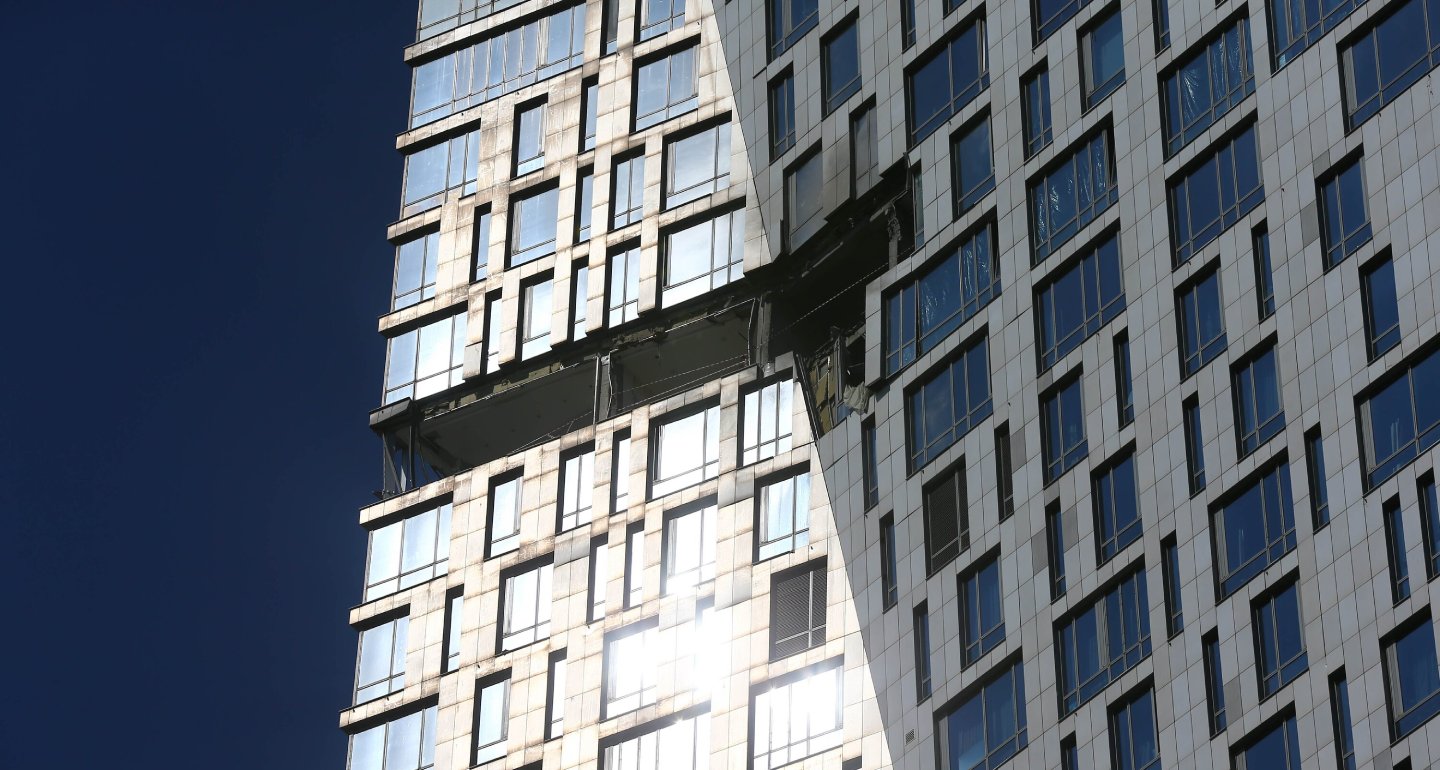
The cost of air defense has become an unregistered tax on revenue for businesses. While military rents are consolidated in the federal budget, the costs of defense are being spread across the balance sheets of companies and regional governments.
Alexandra Prokopenko