

Article
Marc Pierini
{
  "authors": [
    "Marc Pierini"
  ],
  "type": "legacyinthemedia",
  "centerAffiliationAll": "dc",
  "centers": [
    "Carnegie Endowment for International Peace",
    "Carnegie Europe",
    "Malcolm H. Kerr Carnegie Middle East Center"
  ],
  "collections": [
    "Turkey’s Transformation"
  ],
  "englishNewsletterAll": "ctw",
  "nonEnglishNewsletterAll": "",
  "primaryCenter": "Carnegie Europe",
  "programAffiliation": "EP",
  "programs": [
    "Europe"
  ],
  "projects": [],
  "regions": [
    "Europe",
    "Türkiye",
    "Middle East",
    "Iran"
  ],
  "topics": [
    "Foreign Policy",
    "Political Reform"
  ]
}
Source: Getty
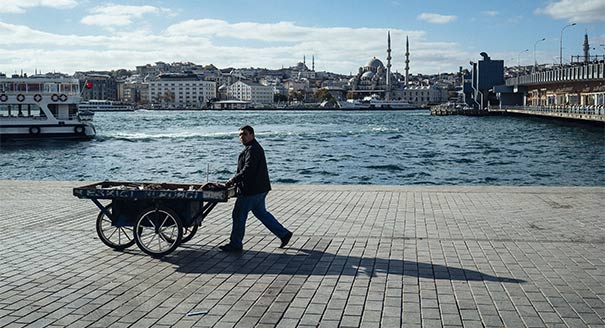
For the citizens of Turkey, the upcoming elections boil down to a choice between a one-man-rule system with no checks and balances and a possible return to a more liberal and parliamentary system of governance.
Source: Axios
Turkey is slated to hold presidential and parliamentary elections on June 24. The current leadership has moved the vote forward by 16 months in the hopes of avoiding fallout from a badly deteriorating economy.
Why it matters: For Erdoğan, the combined elections are a matter of political survival after more than 15 years in power. For the opposition, they represent the first serious opportunity to send the incumbent president into retirement. For the citizens of Turkey, this boils down to a choice between a one-man-rule system with no checks and balances and a possible return to a more liberal and parliamentary system of governance.Turkey’s dual elections on Sunday are deeply flawed:
The possible outcomes:
The big picture: Most polls predict that Erdoğan will carry the presidency. In that event, liberties and tolerance in Turkey's diverse society would fall even further, followed by Turkey’s alliance with the West.

Senior Fellow, Carnegie Europe
Marc Pierini is a senior fellow at Carnegie Europe, where his research focuses on developments in the Middle East and Turkey from a European perspective.
Recent Work
Marc Pierini
Marc Pierini
Carnegie does not take institutional positions on public policy issues; the views represented herein are those of the author(s) and do not necessarily reflect the views of Carnegie, its staff, or its trustees.

If the Russian-speaking community in Latvia cannot articulate their interests without being seen as disloyal, they could end up embracing a pro-Kremlin agenda.

Sergejs Potapkins

Russia’s ruling party would have benefited from Putin appearing as its distant patron, but as an active frontman imposing his views on the public, he has done nothing but harm both the party’s election campaign and the ruling system overall.

Andrey Pertsev

In the tenth year of his presidency, President Mirziyoyev’s system is becoming even more personalized than that of his predecessor Karimov.

Galiya Ibragimova

With the growth in points of friction between the great powers, organizations like the SCO will continue to play a role in the strategic adaptation of the smaller powers caught between them.

Temur Umarov

The greater threat to Zelensky comes not from Fedorov alone, but from the convergence between the former defense minister’s political campaign and the anti-corruption investigations moving ever closer to the presidential administration.

Balázs Jarábik