

Commentary
While France and Australia are seeking to establish the legal obligations of messaging apps like Telegram, Russia wants total subordination.
Maria Kolomychenko
{
  "authors": [
    "Denis McDonough"
  ],
  "type": "other",
  "centerAffiliationAll": "dc",
  "centers": [
    "Carnegie Endowment for International Peace"
  ],
  "collections": [],
  "englishNewsletterAll": "ctw",
  "nonEnglishNewsletterAll": "",
  "primaryCenter": "Carnegie Endowment for International Peace",
  "programAffiliation": "TIA",
  "programs": [
    "Technology and International Affairs"
  ],
  "projects": [],
  "regions": [
    "Iran"
  ],
  "topics": [
    "Security",
    "Technology"
  ]
}
Source: Getty
Encryption policy has long been a contentious topic for cybersecurity experts, law enforcement officials, and privacy advocates dating back to the Crypto Wars of the 1990s.
Encryption policy has long been a contentious topic for cybersecurity experts, law enforcement officials, and privacy advocates dating back to the Crypto Wars of the 1990s. In 2016, matters came to a head when the FBI confronted Apple over access to the encrypted data on an iPhone after the San Bernadino shooting, provoking a polarizing national debate about such law enforcement access.
It is vital to have a constructive dialogue on this important issue. This issue isn’t only a concern to law enforcement and privacy groups but to society as a whole. For these reasons, the Carnegie Endowment for International Peace and Princeton University convened a small group of experts last year to form an Encryption Working Group to discuss this issue and study options, bringing together former senior government officials, business representatives, privacy and civil rights advocates, law enforcement experts, and computer scientists. With members from these diverse backgrounds, the group held a series of conversations that combine technical rigor with in-depth policy discussions to address the matters at stake.
Part of the group’s deliberations focused on looking ahead to identify trends, and discussing how those trends will impact the encryption debate. Two stood out: the growth of user-controlled encryption and quantum computing. Carnegie, along with Princeton University, is releasing two papers studying these topics in depth: “Likely Future Adoption of User-Controlled Encryption” and “Implications of Quantum Computing for Encryption Policy.”
The group also recognizes that this is not merely a domestic issue. In the past few years, numerous governments around the world have announced new legislation or policies to regulate the use of encryption. In addition, global technology companies have implemented encryption in more and more of their products and services.
Going forward, the group will turn to other aspects of the encryption debate, including its international dimensions, and will release short briefing papers about the state of the encryption debate in several countries soon. The group hopes that these papers and its future work will enhance the public discourse about encryption and contribute to a nuanced, constructive debate about the future of encryption policy.
For more details about the Encryption Working Group visit: https://carnegieendowment.org/Encryption/.

Former Nonresident Scholar, Technology and International Affairs Program
Denis McDonough was a nonresident scholar in Carnegie’s Technology and International Affairs Program.
Carnegie does not take institutional positions on public policy issues; the views represented herein are those of the author(s) and do not necessarily reflect the views of Carnegie, its staff, or its trustees.
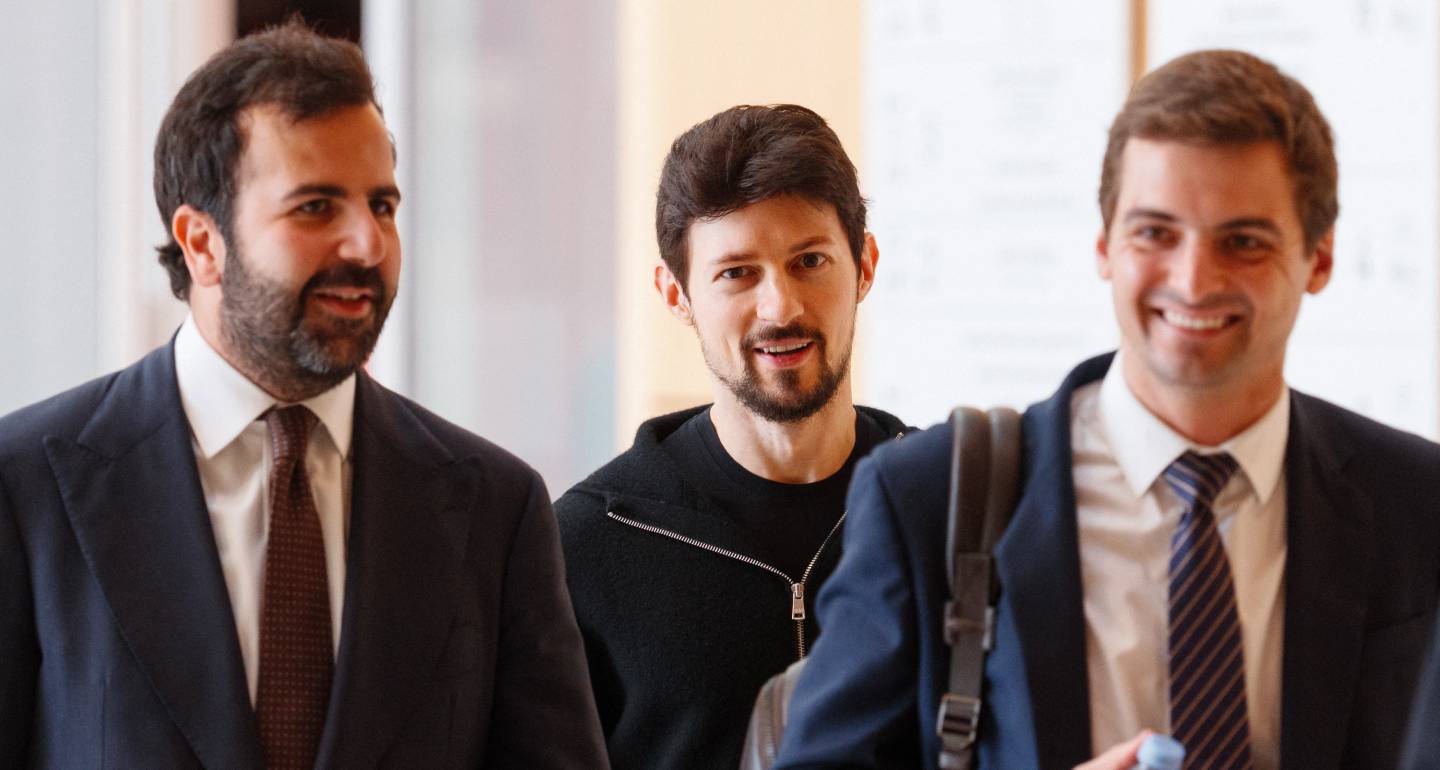
While France and Australia are seeking to establish the legal obligations of messaging apps like Telegram, Russia wants total subordination.

Maria Kolomychenko

With the growth in points of friction between the great powers, organizations like the SCO will continue to play a role in the strategic adaptation of the smaller powers caught between them.

Temur Umarov

The war in Ukraine and a change in ownership led VK to neglect its commercial ventures in favor of implementing the Kremlin’s online agenda. Now it’s been sanctioned by the EU.
Maria Kolomychenko

When political power is concentrated in the hands of a small circle of people, a country invariably ends up with technological stagnation.

Aleksei Kiselev

Two divergent trends—Putin’s hardline vision of how to prosecute the war in Ukraine, and a growing desire for change in Russia—could tear the regime apart.

Tatiana Stanovaya