

Paper
- +4
George Perkovich, Ariel (Eli) Levite, Lyu Jinghua, …
{
  "authors": [
    "Lyu Jinghua"
  ],
  "type": "commentary",
  "centerAffiliationAll": "",
  "centers": [
    "Carnegie Endowment for International Peace",
    "Carnegie China"
  ],
  "collections": [
    "China’s Foreign Relations",
    "China and the Developing World",
    "Carnegie China Commentaries"
  ],
  "englishNewsletterAll": "",
  "nonEnglishNewsletterAll": "",
  "primaryCenter": "Carnegie Endowment for International Peace",
  "programAffiliation": "",
  "programs": [],
  "projects": [],
  "regions": [
    "East Asia",
    "China"
  ],
  "topics": [
    "Economy"
  ]
}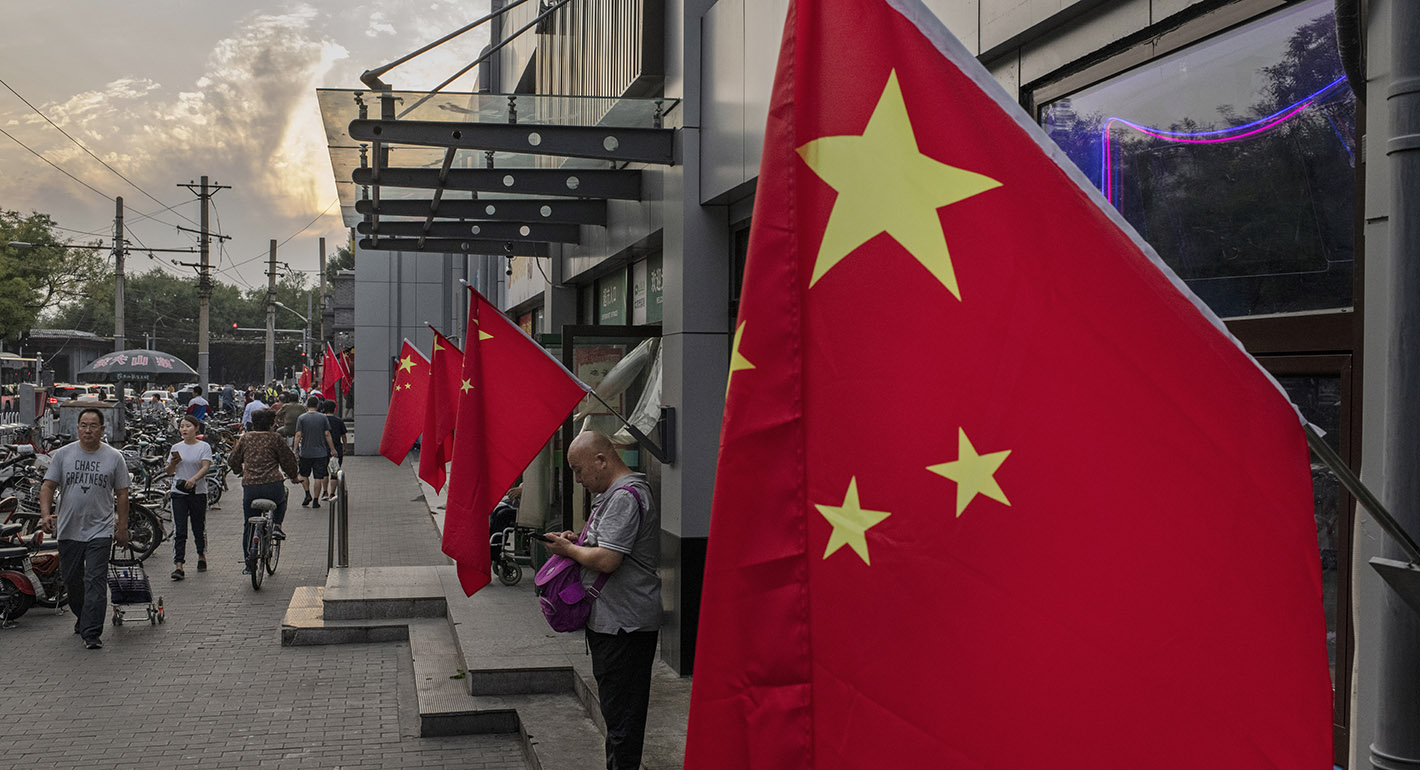
Source: Getty
How has Beijing’s approach to multilateral institutions evolved in the seventy years since the founding of the People’s Republic of China?
During the 70 years since the founding of the People’s Republic of China, Beijing has evolved from a challenger to a contributor to global governance. Such an evolution is the result of the changing international system, China’s growing strength, and the need to accommodate it in the international order.
China’s approach has been influenced by three lessons that it has learned over the past 70 years:
These lessons have served as the logic behind how China’s global governance has evolved and will continue to develop.
This quick take is part of a series authored by scholars from across the Carnegie Endowment’s global network, in advance of the seventieth anniversary of the founding of the People’s Republic of China.
Former Visiting Scholar, Cyber Policy Initiative
Lyu Jinghua was a visiting scholar with Carnegie’s Cyber Policy Initiative. Her research focuses primarily on cybersecurity and China-U.S. defense relations.
Recent Work


George Perkovich, Ariel (Eli) Levite, Lyu Jinghua, …

Jon Bateman, Lyu Jinghua

Russian strikes are weakening the economy sustaining Ukraine’s war effort. Closing the growing funding gap will require more European support and politically contentious reforms in Kyiv.

Balázs Jarábik

For every ruble allocated to social policy, health, and education in 2027, double that amount is earmarked for the army, the police, and the security services.

Alexandra Prokopenko

Depleted financial reserves and a shrinking tax base mean it is no longer possible to simultaneously deliver high defense spending, price stability, and economic growth.
Alexandra Prokopenko

With the growth in points of friction between the great powers, organizations like the SCO will continue to play a role in the strategic adaptation of the smaller powers caught between them.

Temur Umarov

A much-discussed disagreement over internet restrictions in Russia was never an existential threat for Putin: It was about elite groups protecting their interests.
Alexandra Prokopenko