

Q&A
Dara Massicot, Aaron David Miller, Andrew S. Weiss
{
  "authors": [
    "Aaron David Miller"
  ],
  "type": "legacyinthemedia",
  "centerAffiliationAll": "",
  "centers": [
    "Carnegie Endowment for International Peace"
  ],
  "collections": [],
  "englishNewsletterAll": "",
  "nonEnglishNewsletterAll": "",
  "primaryCenter": "Carnegie Endowment for International Peace",
  "programAffiliation": "",
  "programs": [],
  "projects": [],
  "regions": [
    "United States",
    "Middle East",
    "Iran"
  ],
  "topics": [
    "Political Reform",
    "Security",
    "Foreign Policy",
    "Nuclear Policy"
  ]
}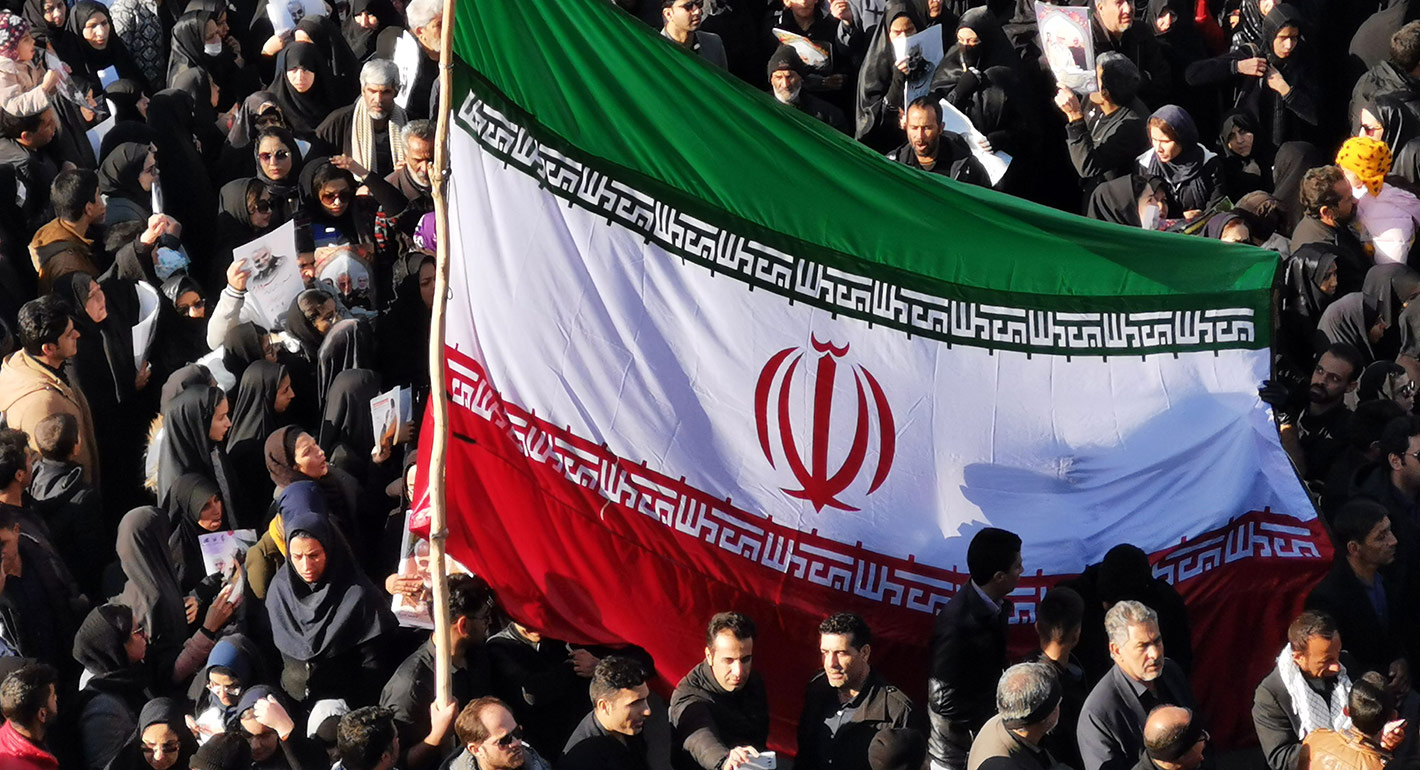
Source: Getty
In the absence of a Tehran-Washington diplomatic off-ramp, it would be foolish to rule out uncontrolled escalation.
Source: Los Angeles Times
Listening to experts, analysts and the 24/7 nonstop media in the days since President Trump ordered a drone strike on Iranian Gen. Qassem Suleimani, one could be forgiven for concluding that we were right on the brink of a major war with Iran.
As a longtime State Department analyst and negotiator specializing in the Middle East, I’m conditioned to assume the worst. The U.S. is without a doubt in for a tough time with Tehran. Sources close to Iran’s supreme leader, Ayatollah Ali Khamenei, have told reporters he is demanding direct and open retaliation against American targets. In the absence of a Tehran-Washington diplomatic off-ramp, it would be foolish to rule out uncontrolled escalation. But a major war is not inevitable.
So far in his presidency, Trump has been cautious when it comes to using military power against Iran, as his unwillingness to retaliate for the Iranian attacks against an American drone in June and Saudi oil facilities in September suggests. What prompted Trump to take out Suleimani is still not clear. News reports suggest he was angered by the attacks on the U.S. Embassy in Baghdad, worried that he’d allowed Tehran to think it could act with impunity and egged on by hard-liners like Secretary of State Michael R. Pompeo, who has been arguing for a military response for months.
Now, judging by Trump’s tweets, he’s prepared to retaliate militarily and directly if Tehran strikes Americans or American targets. This may be a serious threat, an attempt to spook Iran or just Trumpian bluster. But one thing is clear: Beyond acting as a momentary distraction from his impeachment trial, war with Iran is not to the president’s advantage.
Trump has only one strategic imperative in 2020, and that’s vindication in an impeachment trial and reelection. A messy, all-out — and if the past is any guide unwinnable — war that results in skyrocketing oil prices, a meltdown in financial markets, economic dislocation and a surge in U.S. deaths at Iranian hands will not help him at the ballot box. George W. Bush didn’t risk his political future by starting a war with Iraq after 9/11 because he was perceived to be responding to a major attack on the United States. Trump would be the perpetrator of war with Iran.
Like Trump, Khamenei in Tehran wants to stay in power. He’s a crafty leader committed to expanding Iran’s regional reach, but his main objective is survival of the Islamic Republic and regime maintenance.
Khamenei isn’t suicidal, and he knows that Iran has been seriously weakened economically by the Trump administration sanctions — the “maximum pressure campaign” — and by the recent massive protests inside Iran. More importantly, Iran’s generals know that in a military confrontation with the U.S., the preponderance of force rests with Washington. Khamenei cannot be sure how a sustained U.S. campaign of air, missile and cyber strikes would affect the stability of his government and his power base.
And yet, Khamenei has promised “severe revenge” for the killing of Suleimani, and the supreme leader’s chief military advisor has promised a military attack against military targets. Trump’s tweeted red line doesn’t leave a lot of room for the Iranians to maneuver in. If Khamenei wants to avoid the risks of all-out war with the U.S., he must craft a response that demonstrates that Iran will not back down in the face of American military threats but that stays below the threshold that would trigger more U.S. strikes.
Operationally, this means we should not expect quick retaliation from Tehran. Again, if the past is any guide, Iran will choose a careful, calibrated and at least somewhat indirect response, most likely a serious cyberattack or the greenlighting of action by proxy forces against U.S. military personnel or American partners in the region — Israel, Saudi Arabia or the United Arab Emirates. However, should Khamenei make good on his threat of a frontal attack — Iranian forces firing missiles or drones against U.S. military bases or U.S. naval assets — the escalatory cycle will begin.
It would be a boon to world stability if the Trump administration and the Islamic Republic stepped back from the brink and considered talking rather than taking more revenge. Unfortunately that’s not very likely. There’s just too much mistrust on both sides.
But there is at least a chance that the mutual fear and uncertainty of war will preempt a major conflict. Should the U.S. avoid a full-scale conflict with Iran over Suleimani’s killing, that does not mean his death comes at no cost. The drone attack on the second most powerful man in Iran and in a third country was an act untethered from any coherent, long-term strategy. The killing has not made Americans more secure or limited Iran’s regional influence. What it has done is cripple the U.S.-Iraqi relationship, strengthen Iran’s power in the region and undermine the fight against Islamic State.
The best Americans can hope for in the current crisis is a return to the grinding competition that has marked the relationship between Iran and the U.S. during the Trump years. Given the alternative of severe and sustained regional escalation, I’d take it in a Washington-Tehran minute.
This article was originally published by the Los Angeles Times.

Senior Fellow, American Statecraft Program
Aaron David Miller is a senior fellow at the Carnegie Endowment for International Peace, focusing on U.S. foreign policy.
Recent Work


Dara Massicot, Aaron David Miller, Andrew S. Weiss


Sophia Besch, Eric Ciaramella, Steve Feldstein, …
Carnegie does not take institutional positions on public policy issues; the views represented herein are those of the author(s) and do not necessarily reflect the views of Carnegie, its staff, or its trustees.

Despite a new textbook, an influx of Russian teachers and managers, and an end to the teaching of Ukrainian, the Kremlin is unlikely to have “reprogrammed” locals.

Konstantin Skorkin

Cargo traffic through Russia’s Northern Sea Route has increased because of the disruption caused by the conflict in the Middle East, the Ukraine war, and U.S.-China tensions.

Mikhail Korostikov

Sergei Kiriyenko used Russia’s parliamentary vote to further hone his strategy of corporate mobilization that is designed to maximize votes for United Russia.

Andrey Pertsev

Trump has promised Belarus a massive potash deal. But Minsk is seeking something greater: restored Western transit and greater room for maneuver from Russia.

Balázs Jarábik

The European far right might fail to steer EU policy in the direction Russia wants, but they will create enough chaos inside Europe to benefit the Kremlin.

Dimitar Bechev