

Q&A
Paul Haenle, Philippe Le Corre
{
  "authors": [
    "Philippe Le Corre"
  ],
  "type": "other",
  "centerAffiliationAll": "dc",
  "centers": [
    "Carnegie Endowment for International Peace"
  ],
  "collections": [],
  "englishNewsletterAll": "ctw",
  "nonEnglishNewsletterAll": "",
  "primaryCenter": "Carnegie Endowment for International Peace",
  "programAffiliation": "EP",
  "programs": [
    "Europe"
  ],
  "projects": [],
  "regions": [
    "East Asia",
    "China",
    "Western Europe",
    "Iran"
  ],
  "topics": [
    "Economy",
    "Trade",
    "Foreign Policy"
  ]
}
Source: Getty
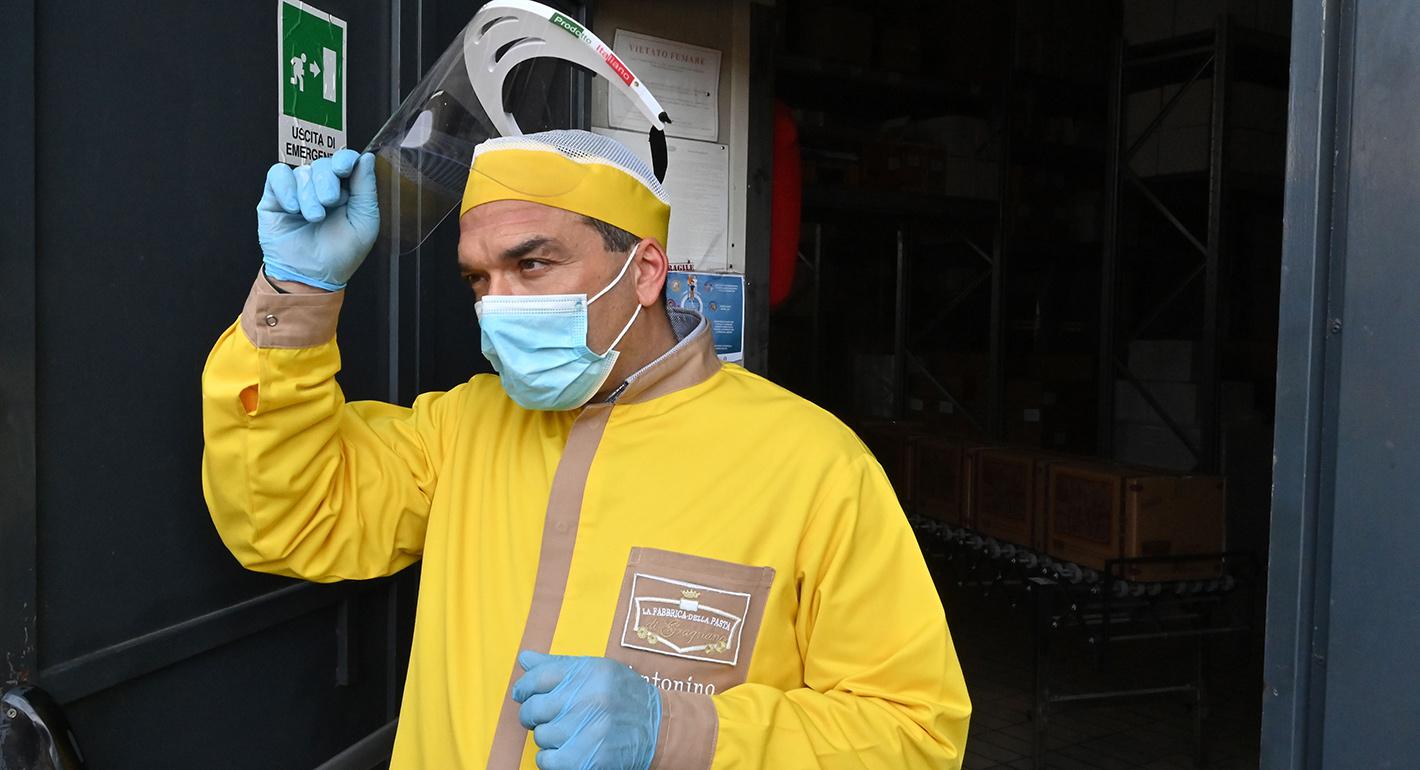
Italy was one of the countries that are keeping the Chinese authorities most busy through a vast operation involving sending masks, respirators, diagnostic tests as well as visits by Chinese experts to Italy.
Source: Fondation pour la Recherche stratégique
With more than 102,000 cases and the sad record of 12,000 deaths as of March 31, 2020, Italy was the European country most affected by Covid-19 at that time. It is also one of the countries that are keeping the Chinese authorities most busy through a vast operation involving sending masks, respirators, diagnostic tests as well as visits by Chinese experts to Italy, including the vice-president of the Chinese Red Cross, Sun Shuopeng, who in March advised Italian people to ”work harder” to stop the epidemic. For his part, Jack Ma, the founder of e-commerce giant Alibaba, offered a million masks and tests through his foundation. All these actions are relayed by a propaganda campaign via the Chinese embassy in Rome and the official press.
This article was originally published by Fondation pour la Recherche Stratégique
Former Nonresident Senior Fellow, Europe Program
Philippe Le Corre was a nonresident senior fellow in the Europe Program at the Carnegie Endowment for International Peace.
Recent Work

Paul Haenle, Philippe Le Corre
Erik Brattberg, Philippe Le Corre, Paul Stronski, …
Carnegie does not take institutional positions on public policy issues; the views represented herein are those of the author(s) and do not necessarily reflect the views of Carnegie, its staff, or its trustees.

Despite a new textbook, an influx of Russian teachers and managers, and an end to the teaching of Ukrainian, the Kremlin is unlikely to have “reprogrammed” locals.

Konstantin Skorkin

For every ruble allocated to social policy, health, and education in 2027, double that amount is earmarked for the army, the police, and the security services.

Alexandra Prokopenko

Cargo traffic through Russia’s Northern Sea Route has increased because of the disruption caused by the conflict in the Middle East, the Ukraine war, and U.S.-China tensions.

Mikhail Korostikov

Trump has promised Belarus a massive potash deal. But Minsk is seeking something greater: restored Western transit and greater room for maneuver from Russia.

Balázs Jarábik

Minsk clearly expected the dialogue with Washington to yield more results, in particular the lifting of EU sanctions and permission to export potash.

Artyom Shraibman