

Commentary
Russian strikes are weakening the economy sustaining Ukraine’s war effort. Closing the growing funding gap will require more European support and politically contentious reforms in Kyiv.
Balázs Jarábik
{
  "authors": [
    "Igor Ivanov"
  ],
  "type": "legacyinthemedia",
  "centerAffiliationAll": "",
  "centers": [
    "Carnegie Endowment for International Peace"
  ],
  "collections": [],
  "englishNewsletterAll": "",
  "nonEnglishNewsletterAll": "",
  "primaryCenter": "Carnegie Endowment for International Peace",
  "programAffiliation": "",
  "programs": [],
  "projects": [],
  "regions": [],
  "topics": [
    "Security"
  ]
}
Source: Getty
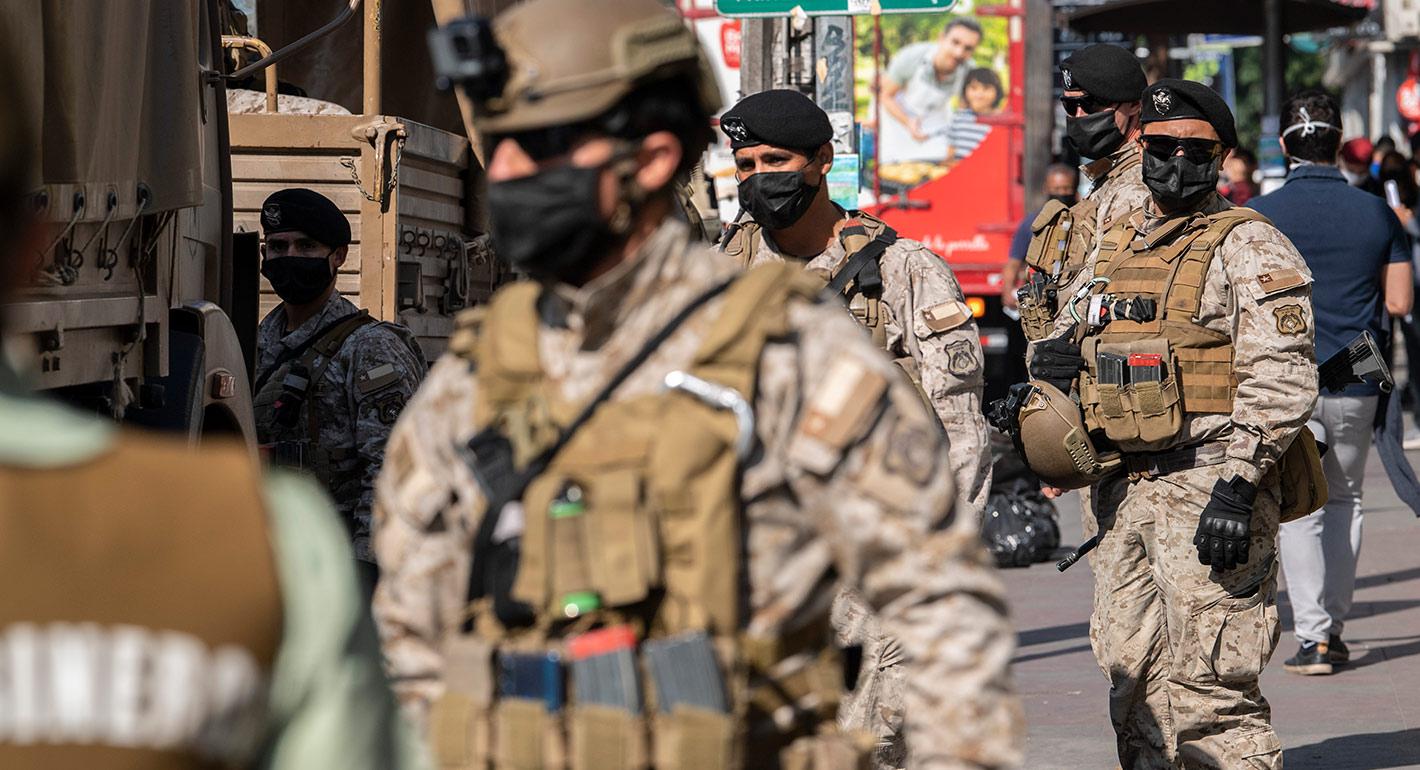
For the first time in living memory, humanity is confronting a common threat that it must defeat collectively. It is time to start planning for when the eventual victory comes.
The coronavirus pandemic has overturned many assumptions about the current world order. As a matter of urgency, it is time to revisit the principles of international security.
In the pandemic, for the first time in living memory, humanity is confronting a common threat that it must defeat collectively. Most arguments currently revolve around the cost of that victory in terms of loss of life and economic damage. The disruption will indeed be huge, comparable only to that wrought by major global conflicts.
But, it is already time to start planning for the moment when that eventual victory comes. Like the end of other global conflicts, such as World War II, the end of this conflict will be a watershed moment.
The virus teaches us that the hierarchy of global security threats is changing rapidly, and we are dealing with radically new enemies. That calls for a fundamental change in our security priorities. National security should no longer be defined solely by a country’s military capabilities. Nuclear arms and other modern weapons are unable to combat pandemics, climate change, uncontrollable migration, and other challenges faced both by humanity as a whole and each country individually. Now we see clearly that many of the old instruments we inherited from previous times for ensuring security are all but useless, merely consuming huge resources that could be redirected into developing science, education, and medicine.
Many have already woken up to the global challenge. UN Secretary General António Guterres has called for a ceasefire in all conflicts in the world today. The pope has also called for an end to all wars so that we can pool our efforts to combat the pandemic. The Saudi Arabia–led Arab coalition has already announced a suspension of its military operation against the Houthis in Yemen to “combat the spread of the COVID-19 pandemic” there. Israel and Hamas have begun negotiations on a prisoner swap.
These developments show that many are already recognizing that the coronavirus, as Guterres said, is “our common enemy.” And we can confidently assert that there will be more such “common enemies” in the future.
We are also of course witnessing another trend that is also characteristic of a crisis such as this one: the traditional tendency of nation-states to use a time of turmoil to seek to win comparative advantage over their traditional rivals. The coronavirus has fueled information wars and finger-pointing about which country bears responsibility for the spread of the virus. There is fierce debate as to whether authoritarian states or democracies are better equipped to fight the pandemic and on which kind of economic model will prove more effective.
These petty fights show that, as it combats the virus itself, humanity is facing an equally hard political struggle (one that has essentially already begun) over the shape of the new world order. Each country will have advocates of both old and new ways of thinking. The front lines in this new fight will run primarily within states, not between states or alliances.
A positive outcome in this struggle will depend on the ability of politicians to prioritize global security over their personal political ambitions, subjugate tactics to strategy, and give up on traditionally prioritizing national interests to the detriment of the interests of the international system as a whole.
In August 1944, when victory in World War II was near, members of the Allied powers met at Dumbarton Oaks to discuss the establishment of a global organization that would promote peace and security. A year later in San Francisco, they signed the Charter of the United Nations. The winning parties managed to come to an agreement despite the fact that their views on the most fundamental issues in international relations and even on the future of human civilization overall were very different, and sometimes even diametrically opposed.
Right now, we have no idea how long it will take before humanity can declare victory over the coronavirus. Yet even now, the permanent members of the UN Security Council could launch a joint initiative to start negotiations on bringing the entire system of international relations back under shared control. A global initiative of this kind would both bring our common victory over the virus that much closer and give humanity a reason to have greater confidence in the post-pandemic world.
This piece was published originally in Russian at Kommersant.
Igor Ivanov
Igor Ivanov is president of the Russian International Affairs Council and a former foreign minister (1998–2004).
Carnegie does not take institutional positions on public policy issues; the views represented herein are those of the author(s) and do not necessarily reflect the views of Carnegie, its staff, or its trustees.

Russian strikes are weakening the economy sustaining Ukraine’s war effort. Closing the growing funding gap will require more European support and politically contentious reforms in Kyiv.

Balázs Jarábik

The European far right might fail to steer EU policy in the direction Russia wants, but they will create enough chaos inside Europe to benefit the Kremlin.

Dimitar Bechev

With the growth in points of friction between the great powers, organizations like the SCO will continue to play a role in the strategic adaptation of the smaller powers caught between them.

Temur Umarov

Two divergent trends—Putin’s hardline vision of how to prosecute the war in Ukraine, and a growing desire for change in Russia—could tear the regime apart.

Tatiana Stanovaya
Andrey Melnichenko’s essay offers no answer to the fundamental question of how, under any kind of negotiated settlement, Europe can protect itself from the Russian ressentiment that is inevitable in all scenarios except for an outright victory for Putin.

Leonid Bershidsky