

Commentary
This year’s wars have made alternative routes to transit through Russia no less risky for Central Asian countries.
Galiya Ibragimova
{
  "authors": [
    "Christopher Hill"
  ],
  "type": "legacyinthemedia",
  "centerAffiliationAll": "dc",
  "centers": [
    "Carnegie Endowment for International Peace"
  ],
  "collections": [],
  "englishNewsletterAll": "asia",
  "nonEnglishNewsletterAll": "",
  "primaryCenter": "Carnegie Endowment for International Peace",
  "programAffiliation": "AP",
  "programs": [
    "Asia"
  ],
  "projects": [],
  "regions": [
    "North America",
    "United States",
    "East Asia",
    "North Korea"
  ],
  "topics": [
    "Security",
    "Foreign Policy"
  ]
}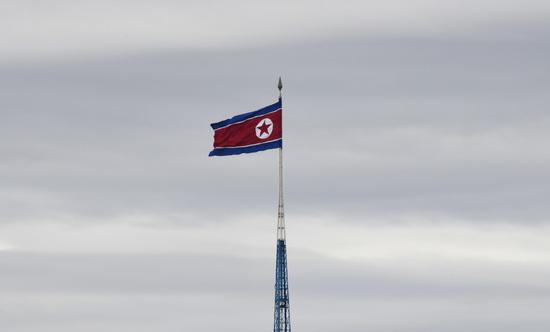
Source: Getty
President Trump, a marketer by inclination, has succeeded in convincing his followers that the North Korean problem is well on its way to being solved.
Source: Hill
Malcolm Toon, the iconic American diplomat who served in Moscow in the 1950s and ’60s, and then as ambassador in the late 1970s, famously said of working with America’s Cold War rivals: “If you’re pissing off the Soviets, you must be doing something right.”
Secretary of State Mike Pompeo must be doing something right with the North Koreans, who seem perennially upset with him. Despite President Trump’s professed love affair with Kim Jong Un, the North Koreans have come after Pompeo on numerous occasions, calling him a “gangster” even during the honeymoon period following the Trump-Kim Singapore meeting, and this week declaring that Pompeo’s “reckless remarks” have caused them to “drop their interest in dialogue with conviction.” Pompeo’s “reckless” remarks? He suggested at the recent G-7 foreign ministers’ online meeting that “all nations must remain united in calling for North Korea to return to negotiations.”
It is not at all clear what Secretary Pompeo has done to so “piss off” the North Koreans. Could he have had the temerity to insist on some actual progress in the talks? Perhaps a timeline for when North Korean might consider coming into compliance with its public statement made during the Singapore meeting with President Trump that it would abandon its weapons? Shutting down its production of fissile material? Of course, none of these steps has been taken.
There are some fundamental dynamics in the North Korean negotiations that have conspired to forestall any hopes of progress, and certainly not before the November elections.
First, President Trump has made it clear that he has no interest in following up on the approaches of his predecessors. This personalization of the process — and contempt for those who preceded him — has had some downstream dangers to it. It has meant that there can be no step-by-step denuclearization, a textbook case of the best being the enemy of the good. Thus, shutting down the Yongbyon reactor, to forestall further processing and production of plutonium, evidently has been of little interest to the president because it suffers from the mortal sin of having been done before.
Second, leading from the first point, there can be no partial lifting of the array of sanctions that the Trump administration succeeded in creating during its first year in office. Thus, sanctions are an all-or-nothing proposition rather than a source of negotiating leverage to be deployed when the North Koreans are prepared to take a step — if not a leap — in the right direction. That became abundantly clear in Hanoi in 2019, when the North Koreans offered to scuttle their main production facilities in return for sanctions relief.
Third, the president’s highly personalized concept of negotiation does not include the obvious need to empower others to engage in the give-and-take of substantive discussions that could lead to progress. Progress as such can only come from the direct participation of the leader; anyone else is merely engaged in “working level” discussions that have to do with the ultimate give-and-take required to make a deal. The corollary to this is that presidential emissaries, even Secretary Pompeo, are reduced to message-carriers with little or no scope for their own ideas. Pompeo has shown on many occasions that he understands the point about one-man leadership. But, with due respect to Pompeo’s considerable upward management skills, the North Koreans have had even more time and experience to absorb the lesson.
The excessive personalization of the issues has led to still another dysfunction: the extremely narrow diplomatic architecture of the talks. This problem is clearly related to the fact that Trump’s instincts are not to share work or credit with foreigners — but, in fairness to Trump, his secretary of state has not shown any proclivity to work with others except those he perceives as already in agreement with his every move. Working shoulder to shoulder with the Chinese or with the South Koreans involves its own set of give-and-take, something that this administration (and not just at the very top) repeatedly has shown it is not willing to deal with.
Not surprisingly, given the above, there has been zero progress with North Korea on giving up its nuclear programs. Three presidential meetings — Singapore, Hanoi and on the demilitarized zone between North and South Korea — have produced nothing. The reactor at Yongbyon continues to belch out spent fuel, while the plutonium process facility merrily continues to do its work, thus increasing the country’s nuclear stockpile. Meanwhile, although little is publicly known, it is widely believed that the North Koreans are producing fissile material in clandestine highly enriched uranium facilities.
Why no urgency in the Trump administration? Instead of urgency, President Trump has been writing to Kim Jong Un, offering assistance with the coronavirus pandemic, a statesman-like gesture even though North Korea refuses to acknowledge even a single case of the disease.
Fundamentally, and most consequentially, President Trump, a marketer by inclination, has succeeded in convincing his followers that the North Korean problem is well on its way to being solved. After all, North Korea, despite repeated threats and bluster, has not tested any long-range missiles nor any new nuclear weapons. Obviously, the North Koreans could, so to speak, blow up this falsehood on a day of its choosing — but the North Korean leadership may have concluded that, the occasional annoying utterances of the U.S. secretary of state aside, they like things pretty much just the way they are.
Former Nonresident Senior Fellow, Asia Program
Ambassador Christopher Robert Hill is currently an adjunct professor at Columbia SIPA. He is a former career diplomat, a four-time ambassador, nominated by three presidents, whose last post was as ambassador to Iraq.
Carnegie does not take institutional positions on public policy issues; the views represented herein are those of the author(s) and do not necessarily reflect the views of Carnegie, its staff, or its trustees.
This year’s wars have made alternative routes to transit through Russia no less risky for Central Asian countries.

Galiya Ibragimova
Reestablishing a dialogue with Moscow is not a goal in its own right. The goal is to guarantee the independence of Ukraine and the peace and security of Europe.
Arkady Moshes
Ukraine’s increasingly confrontational posture on Belarus reflects Kyiv’s effort to shape the emerging regional order in Eastern Europe. Kyiv wants to limit European normalization with Minsk—and any future rapprochement with Russia.

Balázs Jarábik

By fueling the arguments of both supporters and opponents of Armenian Prime Minister Nikol Pashinyan, Azerbaijan wants to ensure he is re-elected with a weaker mandate.

Bashir Kitachaev

A much-discussed disagreement over internet restrictions in Russia was never an existential threat for Putin: It was about elite groups protecting their interests.

Alexandra Prokopenko