

Commentary
Despite a new textbook, an influx of Russian teachers and managers, and an end to the teaching of Ukrainian, the Kremlin is unlikely to have “reprogrammed” locals.
Konstantin Skorkin
{
  "authors": [
    "Richard Sokolsky",
    "Steven Simon"
  ],
  "type": "other",
  "centerAffiliationAll": "",
  "centers": [
    "Carnegie Endowment for International Peace"
  ],
  "collections": [],
  "englishNewsletterAll": "",
  "nonEnglishNewsletterAll": "",
  "primaryCenter": "Carnegie Endowment for International Peace",
  "programAffiliation": "",
  "programs": [],
  "projects": [],
  "regions": [],
  "topics": [
    "Security",
    "Military",
    "Foreign Policy"
  ]
}
Source: Getty
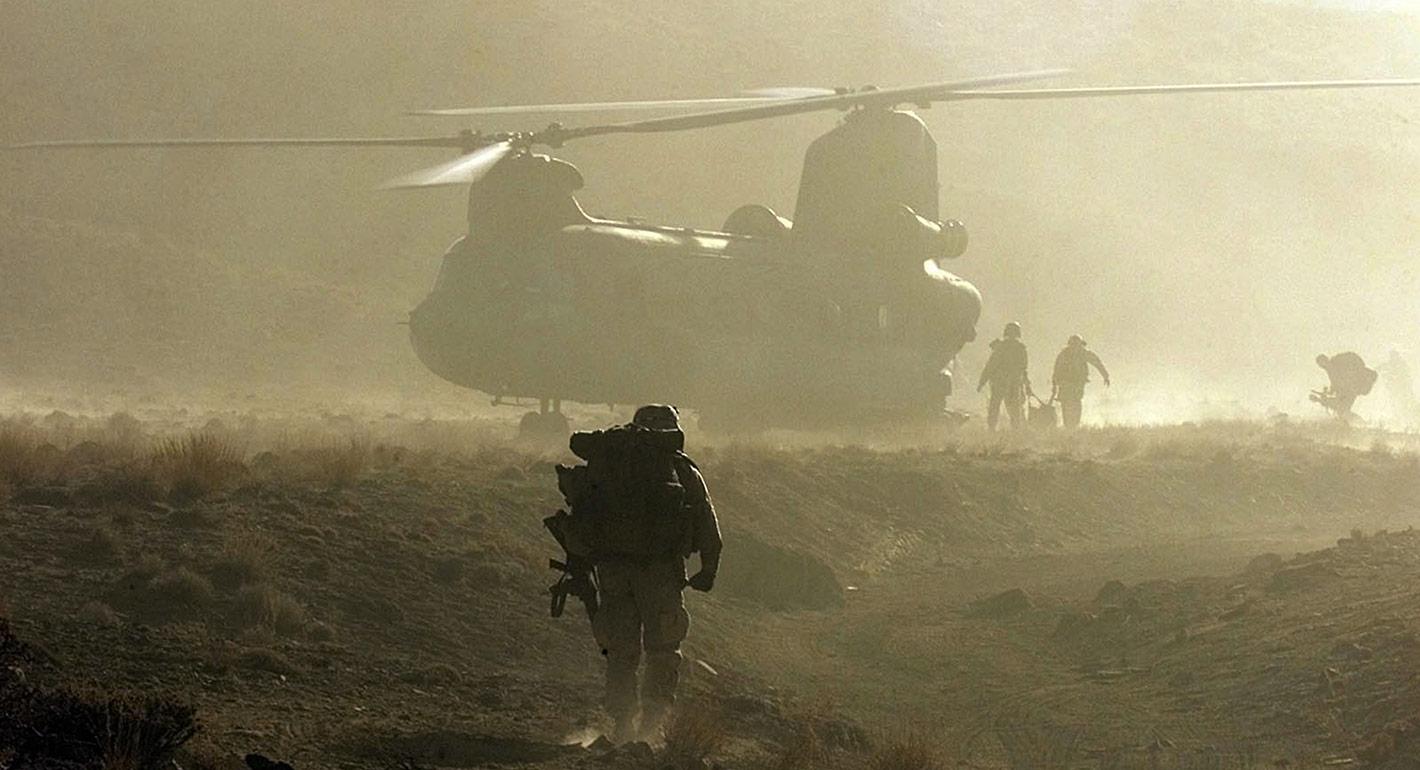
As the legacy of September 11, 2001, fades, it is time to reassess the war on terror.
Source: Quincy Institute for Responsible Statecraft
As the legacy of September 11, 2001, fades, it is time to reassess the war on terror. The United States has negotiated an Afghan withdrawal agreement with the Taliban, significantly drawn down its military presence in Iraq, and maintains only a small troop contingent in Syria. The grim innovations associated with the war on terror—indefinite detention, black sites, extraordinary renditions, torture, military trials, targeted killings—have for the most part been abandoned, although a small group of prisoners remains at Guantanamo and drones are still deployed to kill terrorism suspects. At the same time, U.S. counterterrorism (CT) operations have increased in Africa.
During this period, homeland security efforts were ramped up quickly but have remained the junior partner in the war on terror. Yet it was no doubt due to the maturation of these efforts that, since September 11, jihadists have successfully infiltrated the United States only once to carry out deadly attacks, when a Saudi aviation student deployed by the Saudi Air Force to a US naval air station in Florida murdered three U.S. sailors in December 2019. According to the FBI, the student had been in contact with al-Qaeda. The greater danger now is posed by self-radicalized individuals at home, the majority of whom are linked to white supremacist movements.
As the external terrorist threat has declined, with U.S. defenses strengthening and insurgents turning their guns on local adversaries, the U.S. has an opportunity to realign its war on terror with the realities of a new strategic dispensation. The policy departures recommended in this paper are intended to thread the needle by reducing the scope and intensity of U.S. CT operations and increasing congressional oversight while retaining an effective capacity for self-defense. Our policy proposals include the following:
This paper was originally published by the Quincy Institute for Responsible Statecraft.

Nonresident Senior Fellow, Russia and Eurasia Program
Richard Sokolsky is a nonresident senior fellow in Carnegie’s Russia and Eurasia Program. His work focuses on U.S. policy toward Russia in the wake of the Ukraine crisis.
Steven Simon
Steven Simon is visiting professor of history at Amherst College. He served on the NSC and in the State Department in five administrations and is co-author of "The Age of Sacred Terror."
Carnegie does not take institutional positions on public policy issues; the views represented herein are those of the author(s) and do not necessarily reflect the views of Carnegie, its staff, or its trustees.

Despite a new textbook, an influx of Russian teachers and managers, and an end to the teaching of Ukrainian, the Kremlin is unlikely to have “reprogrammed” locals.

Konstantin Skorkin

Cargo traffic through Russia’s Northern Sea Route has increased because of the disruption caused by the conflict in the Middle East, the Ukraine war, and U.S.-China tensions.

Mikhail Korostikov

The European far right might fail to steer EU policy in the direction Russia wants, but they will create enough chaos inside Europe to benefit the Kremlin.

Dimitar Bechev

Minsk clearly expected the dialogue with Washington to yield more results, in particular the lifting of EU sanctions and permission to export potash.

Artyom Shraibman

With the growth in points of friction between the great powers, organizations like the SCO will continue to play a role in the strategic adaptation of the smaller powers caught between them.

Temur Umarov