

Research
- +16
Stewart Patrick, Erica Hogan, Oliver Stuenkel, …
{
  "authors": [
    "Trinh Nguyen"
  ],
  "type": "commentary",
  "centerAffiliationAll": "dc",
  "centers": [
    "Carnegie Endowment for International Peace"
  ],
  "collections": [],
  "englishNewsletterAll": "asia",
  "nonEnglishNewsletterAll": "",
  "primaryCenter": "Carnegie Endowment for International Peace",
  "programAffiliation": "AP",
  "programs": [
    "Asia"
  ],
  "projects": [],
  "regions": [
    "Southeast Asia",
    "Indonesia"
  ],
  "topics": [
    "Economy"
  ]
}
Source: Getty
Now, the government should focus more on productive infrastructure investment.
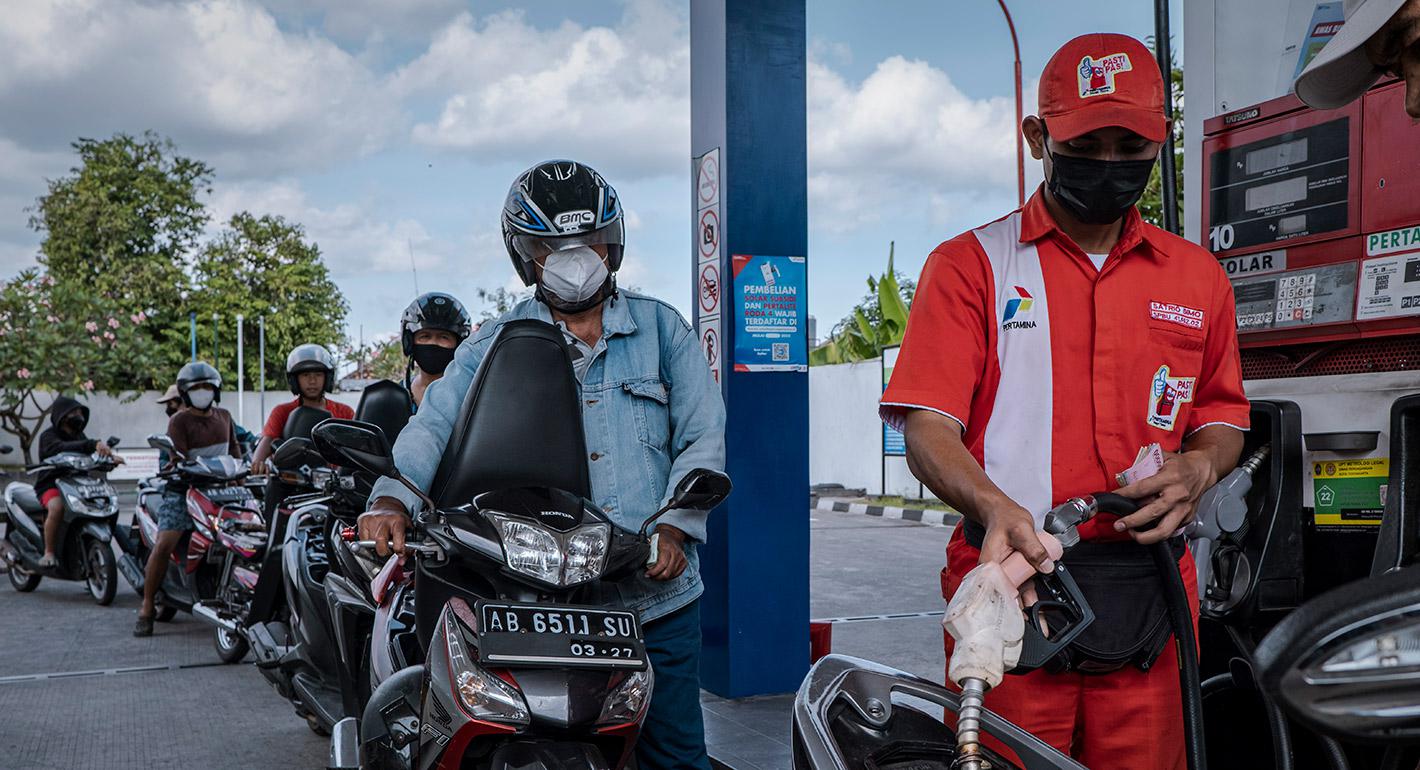
While the rest of the world has dealt with staggering inflation, Indonesians have enjoyed relatively benign price pressure thanks to government subsidies that absorb the shocks of rising costs. For instance, Indonesians paid at the pump only half of the actual price of gasoline in first half 2022, due to the government footing the difference in production costs. Indonesian leaders have been fretful of weaning the democratic country’s 270 million people off of energy subsidies: the habitual subsidies have led to higher consumption of gasoline than the global average by a staggering 13 percent, and fuel prices weigh heavily on average household consumption.
But the strategy to keep the lid on prices has become excessively costly as the energy crisis persists, prompting the government to hike its price of gasoline for the first time in eight years.

The Indonesian government was right to make this controversial move, despite protests and potentially higher inflation, and it should go further to wean the country from costly subsidies. So far this year, the government has nearly tripled the subsidy budget—from 207 trillion Indonesian rupiahs ($14 billion) to 502.4 trillion rupiahs ($34 billion)—as production costs rose above subsidized sales prices. In fact, even with the increased subsidy budget, the government estimates that the subsidy cost would rise to 653 trillion rupiahs ($44 billion) even if the price of crude oil were to drop.
This pressure on the budget crowds out much-needed government investment in projects that enhance productivity, such as those that beef up Indonesia’s woeful infrastructure. An analysis of Indonesia’s infrastructure supply shows that it is inadequate relative not just to developed markets but also to its regional peers, such as Malaysia and Vietnam, on roads, air travel, electricity, railroads, and broadband infrastructure. To make matters worse, with rising urbanization levels and a growing population, Indonesia will need to invest even more to keep up with these demographic shifts. To do so, it needs to reduce the size of spending on subsidies to expand allocation to capital spending, which is currently skewed toward subsidies of gasoline spending rather than investment.

Now is a good time for Indonesia to tackle this issue. President Joko Widodo’s ratings are high, and presidential elections are not due until 2024, meaning that even though the hike has caused unrest, it is unlikely to lead to the toppling of his government. Indonesia also is currently benefiting from the energy crisis, thanks to the increased demand for its exports of coal and other fossil fuels. The trade balance is in surplus, boosting income flows. Foreign direct investment (FDI) inflows are also at an all-time high in part because Indonesia is rich in mineral resources necessary for the energy transition—especially hydrogen and nickel, which are key for electric vehicle batteries. Income flows from these favorable trade terms should offset some of the purchasing power deterioration expected from the fuel price hike.

Finally, the fuel price hike highlights the need for Indonesia to move away from populist policy that is merely a Band-Aid for the cost-of-living crisis. Instead, the government needs to pivot to the real solution: increasing formal employment opportunities and wage growth for ordinary Indonesians. The labor force of 131 million people is underutilized, with more than 60 percent of employment occurring in the informal sector and 32 percent in farming. Such underutilization means that Indonesia is leaving most of its citizens behind, as formal employment opportunities are still limited. My calculation of quantity, quality, and regulations suggests that Indonesia is still not attractive in basic or advanced labor-intensive manufacturing. New measures like loosening restrictive FDI policies, enforcing rigid labor laws (which is in the works via the stalled Omnibus Law), upgrading workers’ skills, and improving weak infrastructure are necessary to attract more labor-intensive manufacturing sectors.
To fix these issues, Indonesia needs to make space in its budget to deploy more spending toward investment rather than tripling its subsidy budget, which is already too high. Beyond hiking prices, Indonesia needs to entirely wean the populace from costly subsidies and focus on expanding employment opportunities by investing in infrastructure to tap into its favorable demographic transition.

Former Nonresident Scholar, Asia Program
Trinh Nguyen was a nonresident scholar in the Asia Program at the Carnegie Endowment for International Peace.
Recent Work


Stewart Patrick, Erica Hogan, Oliver Stuenkel, …
Trinh Nguyen
Carnegie does not take institutional positions on public policy issues; the views represented herein are those of the author(s) and do not necessarily reflect the views of Carnegie, its staff, or its trustees.

Russian strikes are weakening the economy sustaining Ukraine’s war effort. Closing the growing funding gap will require more European support and politically contentious reforms in Kyiv.

Balázs Jarábik

For every ruble allocated to social policy, health, and education in 2027, double that amount is earmarked for the army, the police, and the security services.

Alexandra Prokopenko

Depleted financial reserves and a shrinking tax base mean it is no longer possible to simultaneously deliver high defense spending, price stability, and economic growth.
Alexandra Prokopenko
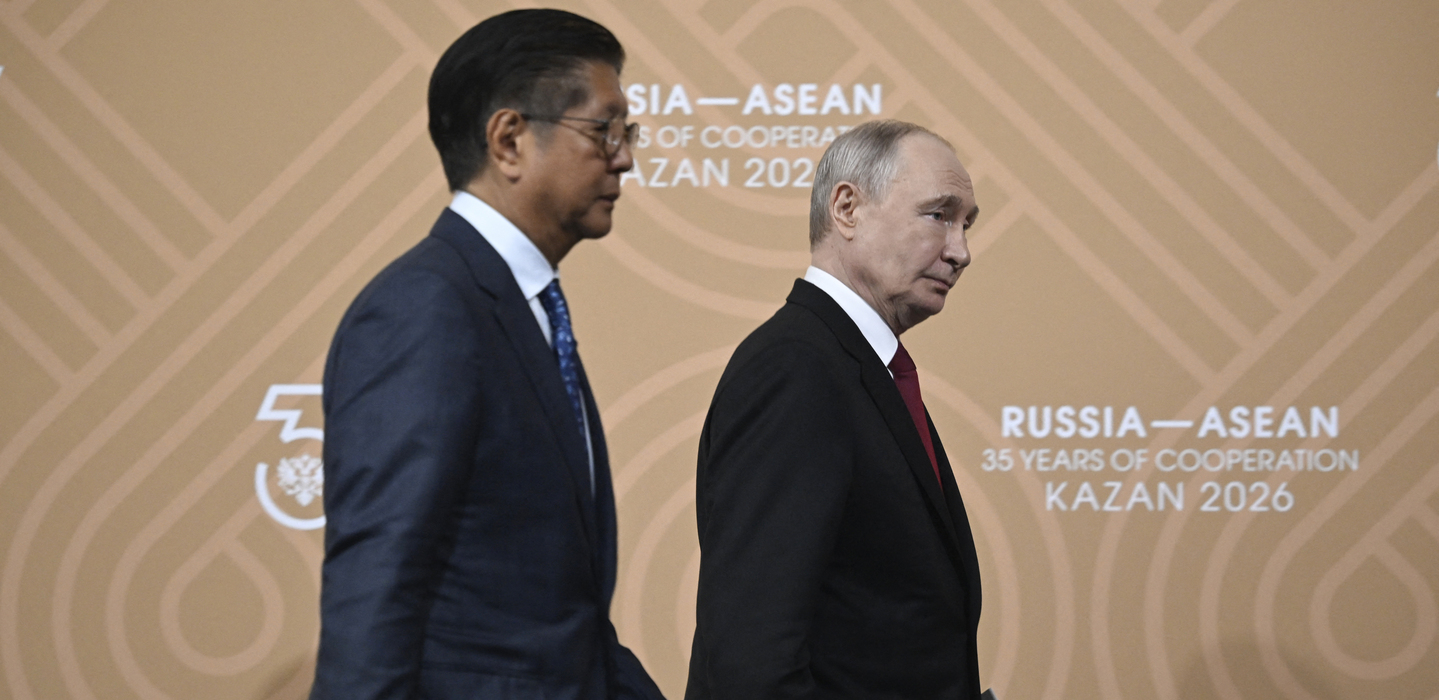
Russia looks set to reap economic benefits from closer ties with Southeast Asian countries that are keen to find reliable energy suppliers and diversify trade ties.

Alexander Gabuev
A much-discussed disagreement over internet restrictions in Russia was never an existential threat for Putin: It was about elite groups protecting their interests.
Alexandra Prokopenko