

Paper
The Islamic State’s ideology is multifaceted and cannot be traced to one individual, movement, or period. Understanding it is crucial to defeating the group.
Hassan Hassan

REQUIRED IMAGE
The Bush administration believes that a regime change in Iraq will revive the Israeli-Palestinian peace process. In his speech at the American Enterprise Institute, George W. Bush argued that toppling Saddam Hussein will deprive Palestinian suicide bombers of a wealthy patron, which will alleviate the threat of terrorism in Israel and allow for the rise of a democratic Palestinian government that strives for peace. The president promises "to seize every opportunity in pursuit of peace. And the end of the present regime in Iraq would create such an opportunity." He would be wise to start now.
The Bush administration believes that a regime change in Iraq will revive the Israeli-Palestinian peace process. In his speech at the American Enterprise Institute, George W. Bush argued that toppling Saddam Hussein will deprive Palestinian suicide bombers of a wealthy patron, which will alleviate the threat of terrorism in Israel and allow for the rise of a democratic Palestinian government that strives for peace. The president promises "to seize every opportunity in pursuit of peace. And the end of the present regime in Iraq would create such an opportunity." He would be wise to start now.
Terrorist attacks in Israel neither exist because of financial rewards for the attackers' families nor are they solely the product of undemocratic regimes. A suicide bomber does not kill dozens of Israelis and himself because it is a lucrative business, but rather because he or she sees it as resisting a colonial occupation. Nothing can justify the slaughter of innocent civilians, but if we truly want an end to terrorism, we have to trace the roots of the problem. Palestinians have been living under an often oppressive Israeli occupation for decades, and they yearn for independence. A ten-year old child does not throw rocks at Israeli soldiers because he lacks a democratic government but because he suffers from daily humiliation. When the peace process was showing positive signs of progress at the time of Rabin there was not one terrorist attack for a period of two years because the people started to feel the progress. The Palestinian public at the time did not condone such horrible crimes. Today, with Israel's re-occupation of Palestinian territories and heightened attacks on Palestinian civilians and homes, the people have lost hope and have no incentive to oppose terrorism. The results are clear in the Israeli and Palestinian body counts.
Invading Iraq may hinder some terrorist activities, but it will not eliminate the reason they exist, nor the primary sources of terrorist funding, which come from Iran, Syria and Saudi Arabia, not Iraq. The Palestinian popular uprising will not disappear, and the proof is in the first Intifadah when all they had was rocks. Moreover, the continuation of the occupation and settlement expansion will only lead to the rise of more angry terrorist cells. "An American invasion of Iraq is already being used as a recruitment tool by Al Qaeda and other groups," a senior American counterintelligence official told the New York Times on March 16, 2003. "And it is a very effective tool." This statement was confirmed by the latest suicide attack in Israel, which Islamic Jihad declared as a "gift" to the people of Iraq. Even if Palestinians finally get the democratic government they have long pursued, for them it is an issue separate and unrelated to the Israeli occupation. Many Palestinians consider the recent appointment of a Palestinian prime minister as irrelevant to the peace process.
President Bush has now conditioned Israeli withdrawal from Palestinian territories
and the end of settlement expansion on the end of suicide attacks and on a democratic
Palestinian government. But the attacks will not stop as long as the Palestinians
are denied even their basic rights and remain without hope for peace. To save
the Israeli civilians from the daily horrors of riding the bus, the Bush Administration
must apply pressure to both sides. This means convincing Israel to lift the
curfews, end the occupation and terminate the expansion of its settlements in
lands it does not own. Terrorism should not be tolerated anywhere in the world,
but to fight it we must deal with the cause, not the symptoms.
Tamer Nagy Mahmoud is a Junior Fellow at the Carnegie Endowment. He has been
a member of the Seeds of Peace program, a Middle East peace co-existence program
for Arab and Israeli youth, since 1993.
Full Disclosure: Project Director Joseph Cirincione has family in Netanya, Israel.
They had lunch on Saturday at the restaurant that was bombed on Sunday.
Carnegie does not take institutional positions on public policy issues; the views represented herein are those of the author(s) and do not necessarily reflect the views of Carnegie, its staff, or its trustees.
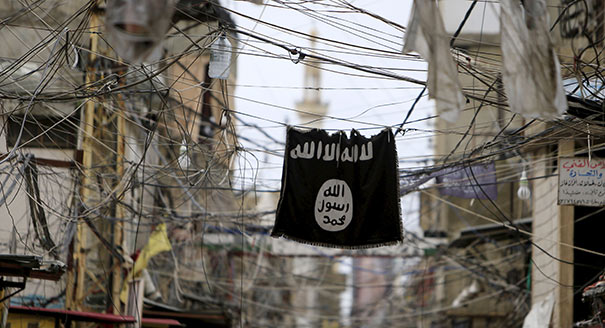
The Islamic State’s ideology is multifaceted and cannot be traced to one individual, movement, or period. Understanding it is crucial to defeating the group.
Hassan Hassan
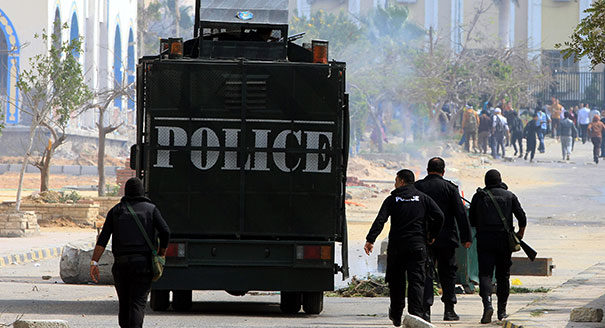
The Arab states in transition are confronted with a seemingly intractable task: rebuilding state institutions and social contracts in an era of global change. Conventional approaches to security sector reform that fail to grasp the dilemmas and challenges complicating this effort are certain to fail.

Yezid Sayigh
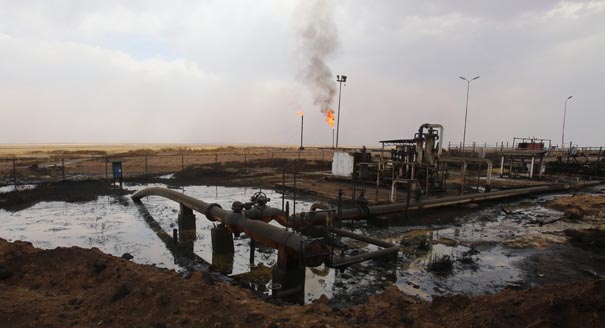
The group hasn't only recruited suicide bombers, it has also drawn technicians and engineers to manage oil fields under its control.
Carole Nakhle
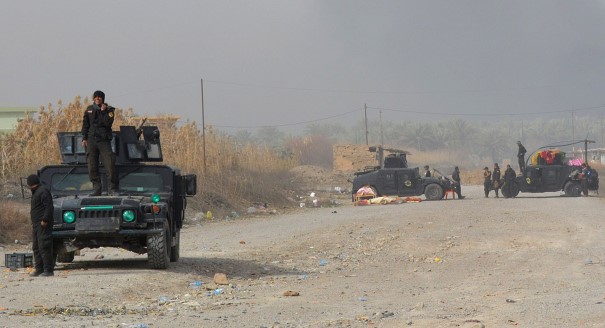
Many North Caucasus natives have joined the Islamic State, and some are returning home. If the socioeconomic and political situation in the region deteriorates and popular discontent increases, this may lead former Islamic State fighters to join the armed struggle.
Alexey Malashenko
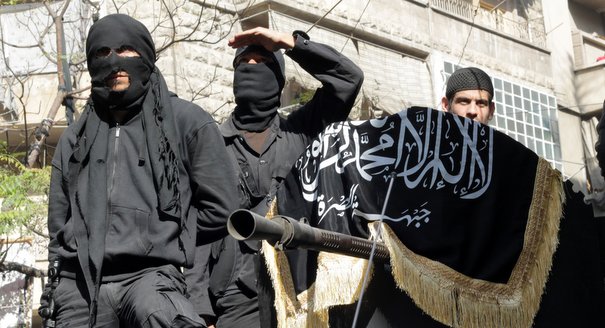
Syrian jihad will not be replicated by Central Asian combatants returning home, but fundamentalist ideals are long-established in this region and will not go away.
Timur Toktonaliev, Alexey Malashenko