

Paper
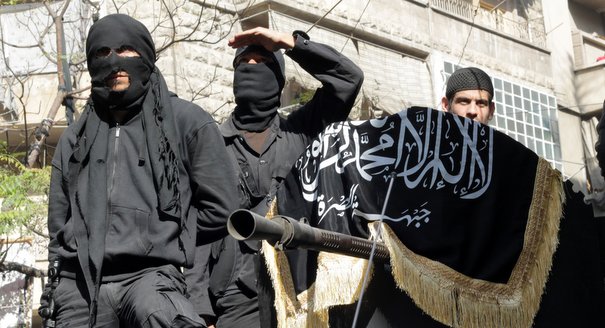
The Islamic State’s ideology is multifaceted and cannot be traced to one individual, movement, or period. Understanding it is crucial to defeating the group.
Hassan Hassan

REQUIRED IMAGE
The revelation that engineers from the Defense Intelligence Agency do not believe that two trailers found in Iraq are mobile bioweapons laboratories comes as a three-part blow to the administration. First, it is another sign of the deep divisions the prewar claims have generated within the intelligence community, a divide unprecedented in recent memory. Second, it raises serious questions about the truthfulness of earlier defense department statements that all the experts agreed the trailers could only be used to make biological weapons. Finally, by deflating the only significant piece of evidence uncovered in five months of searches by US troops, it undermines the credibility of claims that Iraq poised such a dangerous and imminent threat that UN inspections could not be allowed to proceed.
Intelligence Divide
Senior administration officials appointed by the president are standing by the May 28 white paper released by the Central Intelligence Agency and the Defense Intelligence Agency which said that two trucks found in Iraq were “the strongest evidence to date that Iraq was hiding a biological warfare program.” The trailers, the paper said, matched the description provided by Iraqi defectors and verified the dramatic claims made by Secretary of State Colin Powell to the United Nations on February 5. The paper dismissed as a “cover story” statements by Iraqi scientists that the trucks were used to chemically produce hydrogen for artillery weather balloons.
The New York Times reported August 9 that engineering experts from the DIA had concluded in June that hydrogen production was, in fact, the most likely use for the two trailers. The paper reported that these experts were angry that the CIA issued the report before their own work had been completed. State Department intelligence experts who were not allowed to examine the trailers also had disputed the white paper’s claims. There appears to be a growing backlash from professional intelligence analysts over exaggerated claims on Iraq made by politically appointed senior officials. The trucks now join internal divides on aluminum tubes, reconstitution of Iraq’s nuclear program, uranium from Niger and other issues.
True Lies
The new evidence also directly refutes official statements at the time. A senior defense official announcing the report’s release said, “The experts who have crawled over this again and again can come up with no other plausible legitimate use.” This was not true. DIA engineers, perhaps the experts most competent to judge, did come up with other plausible legitimate uses, and, in fact, believe those uses to be more plausible than bioweapons production. The white paper also states that “coalition experts on fermentation and systems engineering examined the trailer found in late April and have been unable to identify any legitimate industrial use.” This is also clearly not true.
On May 7, Undersecretary of Defense for Intelligence Stephen Cambone said in
announcing the trailer find, "U.S. and U.K. technical experts have concluded
that the unit does not appear to perform any function beyond . production of
biological weapons." The Pentagon press release that day which quoted Cambone,
began, "Coalition forces have obtained an Iraqi mobile biological weapons
production facility, defense officials confirmed today." When pressed at
the press conference that day, Cambone expressly rejected any caveats to his
definitive conclusion. "The experts have been through it. The experts have
been through it. And they have not found another plausible use for it,"
he said. The DIA engineers, however, had not reached any of the conclusions
officials claimed that they had. All of these key statements are false.
Credibility Gap
The new disclosure further weakens Secretary Powell’s seemingly powerful UN presentation, which featured dramatic drawings of the alleged mobile labs on trucks and railcars. Even before the Times disclosure, an Associated Press study by senior journalist Charles Hanley published August 10 concluded that “six months after Powell’s Feb 5 appearance, the file does look thin.”
Some evidence of previous weapons programs will almost certainly be found in Iraq. It still seems likely that Saddam Hussein could have maintained some core capabilities, such as design teams, agent stocks or weapons parts. If these are found, it is likely that US officials will present their discovery as proof of a massive threat. But US credibility is now seriously undermined by a pattern of false claims and selective intelligence. As former career intelligence official Greg Theilman told journalists last month, “The principal reason that Americans did not understand the nature of the Iraqi threat, in my view, was the failure of senior administration officials to speak honestly about what the intelligence showed.” Journalists, experts and officials in other nations may now believe that they must carefully parse every US official statement on Iraq or any other critical foreign policy issue and search for alternative explanations before trusting administration assessments.
And they will be right.
--------------------------------------------
Joseph Cirincione is the Director of the Non-Proliferation Project at the
Carnegie Endowment. He served for nine years on the professional staff of the
House Armed Services Committee and the House Government Operation Committee.
Additional Resources:
Click here to return to ProliferationNews.org
Carnegie does not take institutional positions on public policy issues; the views represented herein are those of the author(s) and do not necessarily reflect the views of Carnegie, its staff, or its trustees.
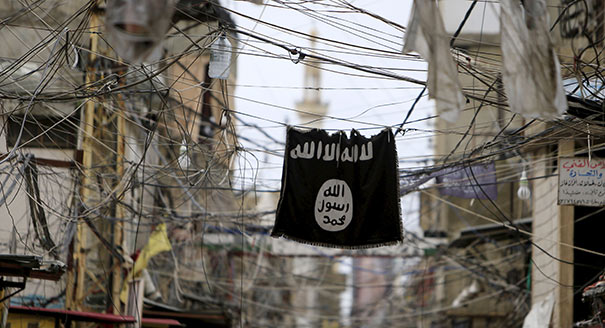
The Islamic State’s ideology is multifaceted and cannot be traced to one individual, movement, or period. Understanding it is crucial to defeating the group.
Hassan Hassan
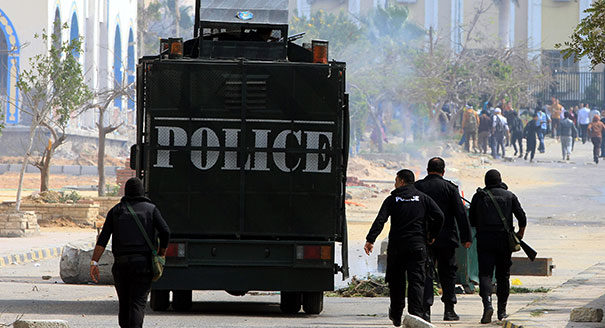
The Arab states in transition are confronted with a seemingly intractable task: rebuilding state institutions and social contracts in an era of global change. Conventional approaches to security sector reform that fail to grasp the dilemmas and challenges complicating this effort are certain to fail.

Yezid Sayigh
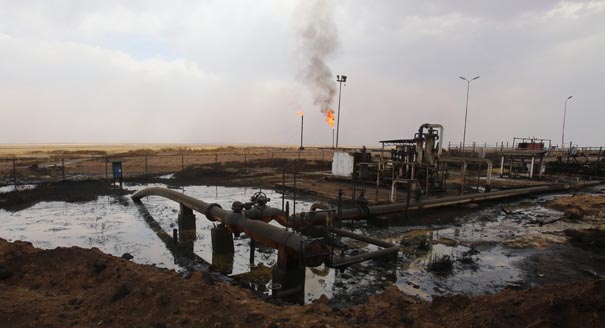
The group hasn't only recruited suicide bombers, it has also drawn technicians and engineers to manage oil fields under its control.

Carole Nakhle
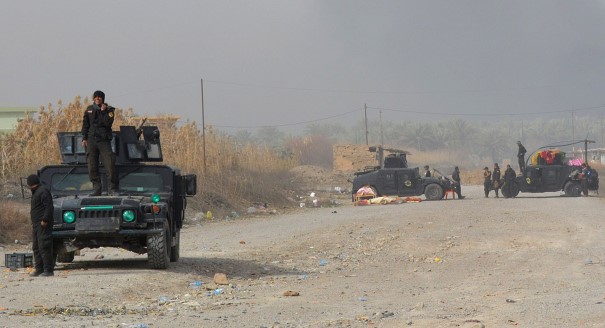
Many North Caucasus natives have joined the Islamic State, and some are returning home. If the socioeconomic and political situation in the region deteriorates and popular discontent increases, this may lead former Islamic State fighters to join the armed struggle.

Alexey Malashenko
Syrian jihad will not be replicated by Central Asian combatants returning home, but fundamentalist ideals are long-established in this region and will not go away.
Timur Toktonaliev, Alexey Malashenko