• Research
  • Politika
  • About
Carnegie Russia Eurasia center logoCarnegie lettermark logo
  • Donate
Pakistan-Afghanistan Relations in the Post-9/11 Era

Source: Getty

Paper

Pakistan-Afghanistan Relations in the Post-9/11 Era

Taliban insurgents and their Al Qaeda allies, once thought defeated in Afghanistan, are regaining strength. Frederic Grare examines the evolution of the situation in Afghanistan and takes a look at Afghanistan through Pakistan's eyes. In addition, Grare provides policy recommendations for regional relations in a post-U.S. Afghanistan.

Link Copied
By Frederic Grare
Published on Sep 29, 2006

Additional Links

Full Text (PDF)

Source: Carnegie Endowment

Taliban insurgents and their Al Qaeda allies, once thought defeated in Afghanistan, are regaining strength. Regrouped and reorganized, better equipped and financed, and more sophisticated tactically, they are threatening both the reconstruction process and the U.S.-led coalition forces on the ground. Pakistan-Afghanistan relations have been another casualty of the renewed violence. The resurgence of the Taliban movement and the growing insurgency in the provinces bordering the Pakistan-Afghan border have once again generated tensions between Kabul and Islamabad. The two countries are accusing each other of interfering in their respective domestic affairs.
 
In a new Carnegie Paper, Pakistan-Afghanistan Relations in the Post-9/11 Era, Visiting Scholar Frederic Grare examines the evolution of the situation in Afghanistan and takes a look at Afghanistan through Pakistan's eyes. In addition, Grare provides policy recommendations for regional relations in a post-U.S. Afghanistan. He suggests that only the end of military rule in Pakistan can clear the way for more stabilized relations with Afghanistan.  To achieve these ends, democratizing Pakistan is first and foremost a strategic imperative.

Click on icon above for the full text of this Carnegie Paper.

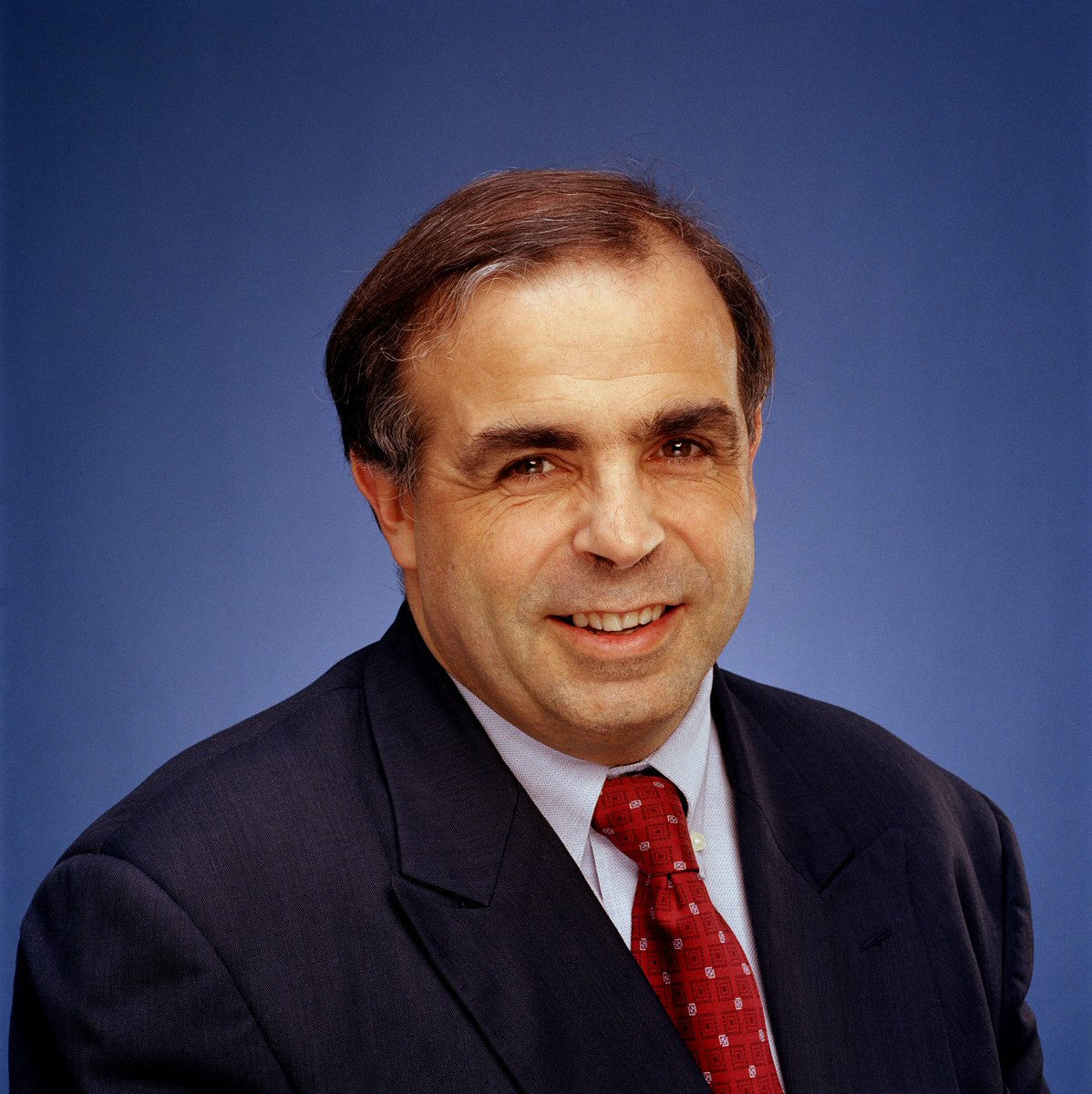
Frederic Grare is a visiting scholar in the South Asia Program at the Carnegie Endowment. He focuses on the tension between stability and democratization in Pakistan.
About the Author

Frederic Grare

Former Nonresident Senior Fellow, South Asia Program

Frédéric Grare was a nonresident senior fellow at the Carnegie Endowment for International Peace, where his research focuses on Indo-Pacific dynamics, the search for a security architecture, and South Asia Security issues.

    Recent Work

  • Article
    France, the Other Indo-Pacific Power

      Frederic Grare

  • Article
    What Sri Lanka’s Presidential Election Means for Foreign Policy

      Frederic Grare

Frederic Grare
Former Nonresident Senior Fellow, South Asia Program
Frederic Grare
North AmericaUnited StatesSouth AsiaIndiaAfghanistanPakistanPolitical ReformDemocracySecurityForeign Policy

Carnegie does not take institutional positions on public policy issues; the views represented herein are those of the author(s) and do not necessarily reflect the views of Carnegie, its staff, or its trustees.
More Work from Carnegie Russia Eurasia Center

  • Commentary
    Carnegie Politika
    The Afghanistan–Pakistan War Poses Awkward Questions for Russia

    Not only does the fighting jeopardize regional security, it undermines Russian attempts to promote alternatives to the Western-dominated world order.

      Ruslan Suleymanov

  • Commentary
    Carnegie Politika
    Moldova Floats a New Approach to Its Transnistria Conundrum

    Moldova’s reintegration plan was drawn up to demonstrate to Brussels that Chișinău is serious about the Transnistria issue—and to get the West to react.

      Vladimir Solovyov

  • Commentary
    Carnegie Politika
    After Ilia II: What Will a New Patriarch Mean for Georgia?

    The front-runner to succeed Ilia II, Metropolitan Shio, is prone to harsh anti-Western rhetoric and frequent criticism of “liberal ideologies” that he claims threaten the Georgian state. This raises fears that under his leadership the Georgian Orthodox Church will lose its unifying role and become an instrument of ultraconservative ideology.

      Bashir Kitachaev

  • Commentary
    Carnegie Politika
    Lukashenko’s Bromance With Trump Has a Sell-By Date

    Lukashenko is willing to make big sacrifices for an invitation to Mar-a-Lago or the White House. He also knows that the clock is ticking: he must squeeze as much out of the Trump administration as he can before congressional elections in November leave Trump hamstrung or distracted.

      Artyom Shraibman

  • Commentary
    Carnegie Politika
    What the Russian Energy Sector Stands to Gain From War in the Middle East

    The future trajectory of the U.S.-Iran war remains uncertain, but its impact on global energy trade flows and ties will be far-reaching. Moscow is likely to become a key beneficiary of these changes; the crisis in the Gulf also strengthens Russia’s hand in its relationships with China and India, where advantages might prove more durable.

      • Sergey Vakulenko

      Sergey Vakulenko

Get more news and analysis from
Carnegie Russia Eurasia Center
Carnegie Russia Eurasia logo, white
  • Research
  • Politika
  • About
  • Experts
  • Events
  • Contact
  • Privacy
  • For Media
Get more news and analysis from
Carnegie Russia Eurasia Center
© 2026 Carnegie Endowment for International Peace. All rights reserved.