

Commentary
Though Orban is gone, Putin can still count on some like-minded individuals in Central and Eastern Europe. However, they will seek to avoid open confrontation with EU institutions over Ukraine and their ties with Moscow.
Dimitar Bechev
Source: Getty
Iran is becoming more isolated because of its refusal to take steps to build international confidence that its nuclear program is only for peaceful purposes.

Last Saturday, for the third time in less than nine months, the UN Security Council unanimously adopted a resolution expressing its concern about the proliferation risks presented by the Iranian nuclear program and emphasizing the importance of political and diplomatic efforts to find a negotiated solution guaranteeing that
Much of
Most Iranians don't have the time or access to the most balanced and objective information that would allow them to get a full picture of
On March 8, 2007, Ambassador Soltanieh issued a statement to the IAEA Board of Governors which is so misleading that it is unjust to the Iranian people. They have a right to understand the reality of why their nation has become so isolated. The statement has been published by Fars News Agency and other prominent Iranian newspapers. Unfortunately, as we shall demonstrate, his statement is a masterpiece of disinformation. It shows disrespect to the Iranian people and can only reinforce the distrust of the international community in
It should be a matter of utmost concern that even
Both statements are clear indications that Ayatollah Khamenei is misinformed by his entourage.
“Until today what we have done has been in accordance with international regulations.”
Quite the contrary.
Iranian officials are trying to portray
The reality is that
In his report of November 2003 to the IAEA Board of Governors, Mohamed ElBaradei stated that “ it is clear that Iran has failed in a number of instances over an extended period of time to meet its obligations under its Safeguards Agreement ” and “ in the past, Iran had concealed many aspects of its nuclear activities, with resultant breaches of its obligation to comply with the provision of its Safeguards Agreement ”.
How can Ambassador Soltanieh deny the evidence by saying that “
Trying to make his point he states that “
This is both incorrect and misleading.
It is incorrect because
It is misleading because, while focusing on what may appear to be a small reporting failure, Ambassador Soltanieh forgets to remind the reader that Iran had tested centrifuges for enriching uranium between 1999 and 2002 at the undeclared Kalaye Electric Company facility using undeclared nuclear material imported in 1991.
He also forgets to recall the undeclared “import of natural uranium metal in 1994 and its subsequent transfer for use in laser enrichment experiments, including the production of enriched uranium, ” and a long list of other undeclared nuclear material and activities described in the IAEA reports. The failure to declare each of these activities and materials was a violation of
Does anyone in
Ambassador Soltanieh is arguing that the “Iranian nuclear issue has been reported to the Security Council in clear contradiction with the provision of the IAEA Statute” and that “ referring the Iranian dossier to the Security Council has been done only because of the resumption of the voluntarily suspended R&D enrichment activities. ”
This is incorrect. Indeed, Article XII.C of the IAEA Statute states that “the inspectors shall report any non-compliance to the Director General who shall thereupon transmit the report to the Board of Governors” and that “ the Board shall report the non-compliance to all members and to the Security Council and General Assembly of the United Nation.”
The November 2003 report of the IAEA Director General to the Board of Governors is clearly a report on
It is therefore quite astonishing to hear Ambassador Soltanieh saying, against all evidence, that “there is no legal, logical or even political justification for involvement of the Security Council of the United Nation on this issue. ” This mocks the IAEA Board of Governors' decisions and the UN Security Council resolutions, and cannot be regarded as a constructive way to resolve the outstanding issues. It is to
“Western governments don't agree with
Quite the contrary.
In the Tehran declaration of 21 October 2003 agreed upon by Iran and the foreign ministers of Britain, France and Germany (the E3) it is stated that the latter three “governments recognize the right of Iran to enjoy peaceful us of nuclear energy in accordance with the nuclear Non-Proliferation Treaty.”
In the
This principle is reaffirmed in the offer made by the E3/EU on 8 August 2005 as a framework for a long-term agreement with
And finally, in a letter to the President of the UN Security Council dated 13 July 2006 (S/2006/521),
The offers of cooperation “reaffirm
This right has been reaffirmed in all three UN Security Council resolutions concerning
But, considering the fact that Iran has been over an extensive period of time in breach of its safeguards undertakings, the international community is asking Iran to suspend its sensitive nuclear fuel cycle activities and in particular all uranium enrichment-related activities, in line with what Dr ElBaradei has called a “probation period to build confidence again, before you can exercise your full rights” (Newsweek, 23 January 2006).
This request is all the more justified by Article IV of the NPT, which states that it is “the inalienable right of all the Parties to develop research, production and use of nuclear energy for peaceful purposes, without discrimination and in conformity with Articles I and II of this Treaty ”.
Under Article II, each non-nuclear-weapon State Party to the Treaty undertakes “not to manufacture or otherwise acquire nuclear weapons [… ] and not to seek or receive any assistance in the manufacture of nuclear weapons or other nuclear explosive devices ”
This undertaking has not been fulfilled by
As indicated by the Agency (GOV/2004/60§46) “dual use equipment and materials have applications in the conventional military area and in the civilian sphere as well as in the nuclear military area ”.
These findings are clear indications that
Ambassador Soltalieh also claims that “
How does Ambassador Soltanieh reconcile this opinion with Dr. ElBaradei's report of February 2006 (GOV/2006/15-§54) stating that “it is regrettable, and a matter of concern, that the above uncertainties related to the scope and nature of Iran's nuclear programme have not been clarified after three years of intensive Agency verification ”?
And what about the fact, reported in April 2006, that because of the “gaps in the Agency's knowledge, including the role of the military in Iran's nuclear programme, the Agency is unable to make progress in its effort to provide assurance about the absence of undeclared nuclear material and activities in Iran” (GOV/2006/27-§33), a statement reiterated in the IAEA report of February 2007?
On the basis of the IAEA report of November 2003, the Board could have reported Iran to the UN Security Council at the time. It decided not to do so in order to provide Iran sufficient time to clarify all outstanding issues and to privilege a diplomatic course of action. It is only in February 2006, when Iran's lack of cooperation with the IAEA made impossible the necessary progress to resolve outstanding issues that the Board of Governors decided to report the case to the Security Council.
Iran's uncompromising behavior has left no choice but for the Security Council to progressively resort to sanctions, after a Presidential Statement and a first non-sanctioning resolution were ignored by Iran.
However, the last Security Council resolution contains a clause stating that the implementation of sanctions shall be suspended if and for so long as Iran suspends all enrichment-related activities (as verified by the IAEA) “to allow for negotiation in good faith in order to reach an early and mutually acceptable outcome. ”
Therefore, Iran knows exactly what to do to transform the present crisis into a great opportunity to improve the Iranian people's living conditions, while confirming Iran 's major role in the region.
The main problem is that Iran 's leadership has turned the issue of uranium enrichment into a matter of pride and strength, pretending that even suspending these activities would be tantamount to a defeat of the Islamic revolution.
Such slogans are counterproductive and make it more difficult for the Iranian leadership to change course. But with a little imagination and flexibility on both sides, solutions can be found that would lead to major security and economic advantages for the Iranian people.
* Pierre Goldschmidt, formerly deputy director general of the International Atomic Energy Agency, is a non-resident scholar at the Carnegie Endowment for International Peace, where George Perkovich is director of the nonproliferation program.
Former Nonresident Senior Associate, Nuclear Policy Program
Goldschmidt was a nonresident senior associate at the Carnegie Endowment.

Japan Chair for a World Without Nuclear Weapons, Senior Fellow
George Perkovich is the Japan Chair for a World Without Nuclear Weapons and a senior fellow in the Carnegie Endowment for International Peace’s Nuclear Policy Program. He works primarily on nuclear deterrence, nonproliferation, and disarmament issues, and is leading a study on nuclear signaling in the 21st century.
Carnegie does not take institutional positions on public policy issues; the views represented herein are those of the author(s) and do not necessarily reflect the views of Carnegie, its staff, or its trustees.
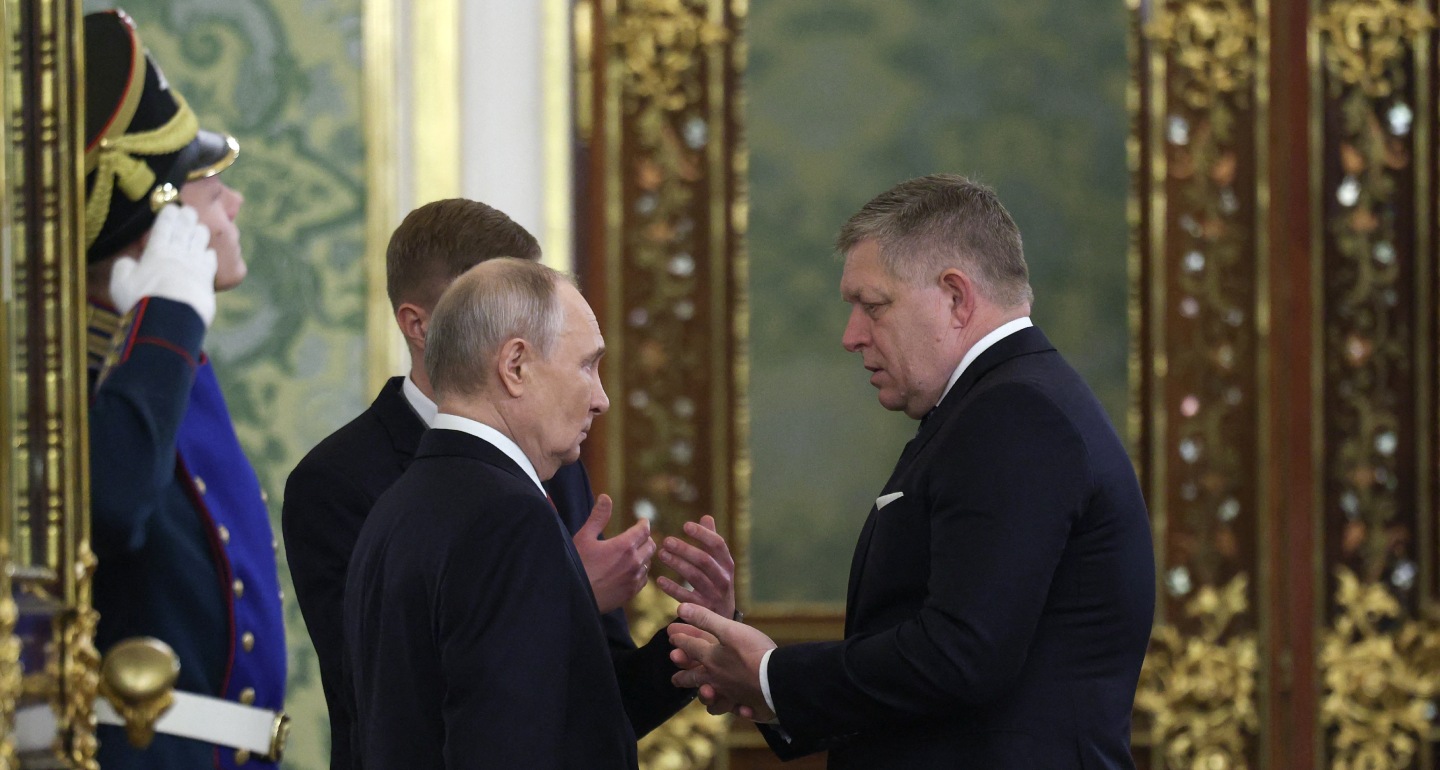
Though Orban is gone, Putin can still count on some like-minded individuals in Central and Eastern Europe. However, they will seek to avoid open confrontation with EU institutions over Ukraine and their ties with Moscow.

Dimitar Bechev

The truth is that Japan’s government is seeking a degree of reengagement but at a vastly reduced level than under Abe. Most significantly, Japan has shown no willingness to ease sanctions.

James D.J. Brown
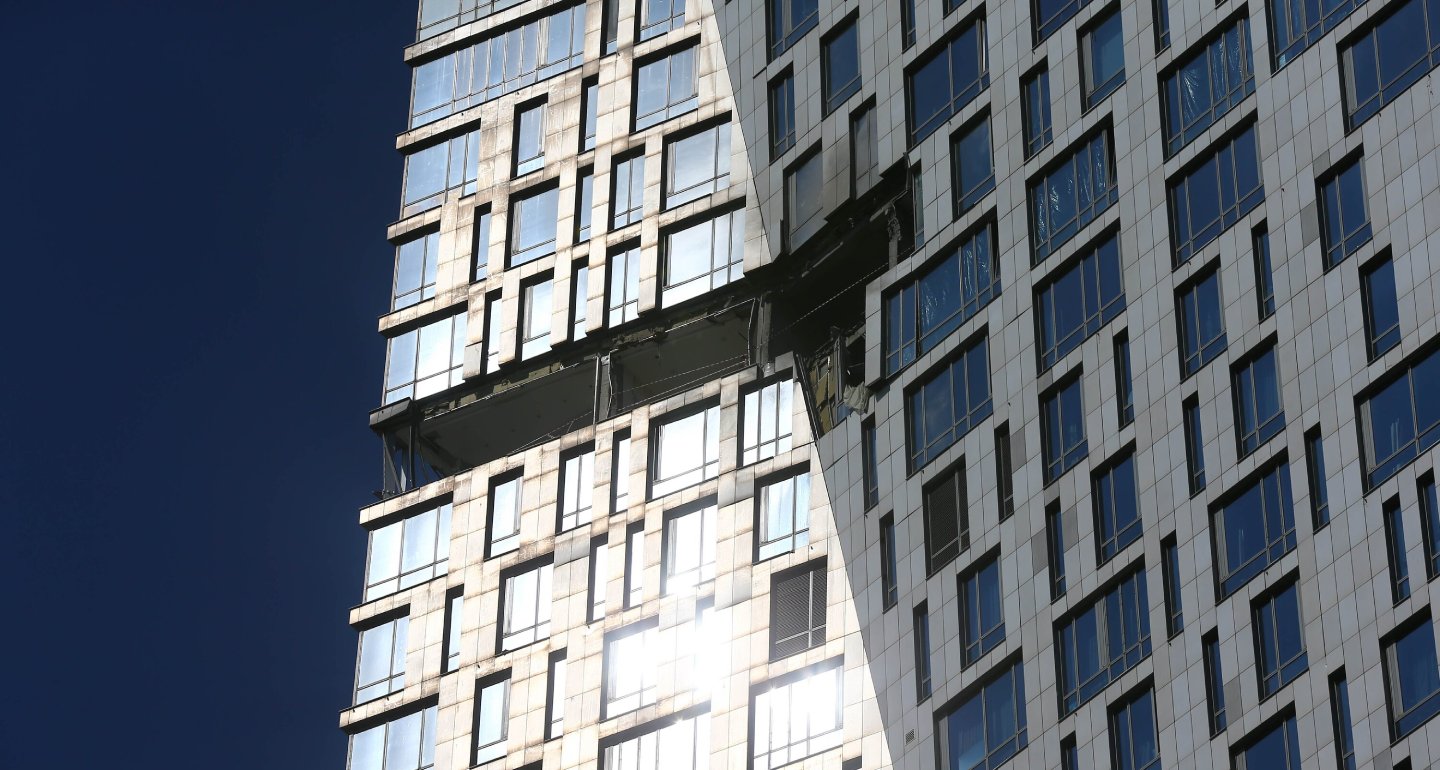
The cost of air defense has become an unregistered tax on revenue for businesses. While military rents are consolidated in the federal budget, the costs of defense are being spread across the balance sheets of companies and regional governments.

Alexandra Prokopenko
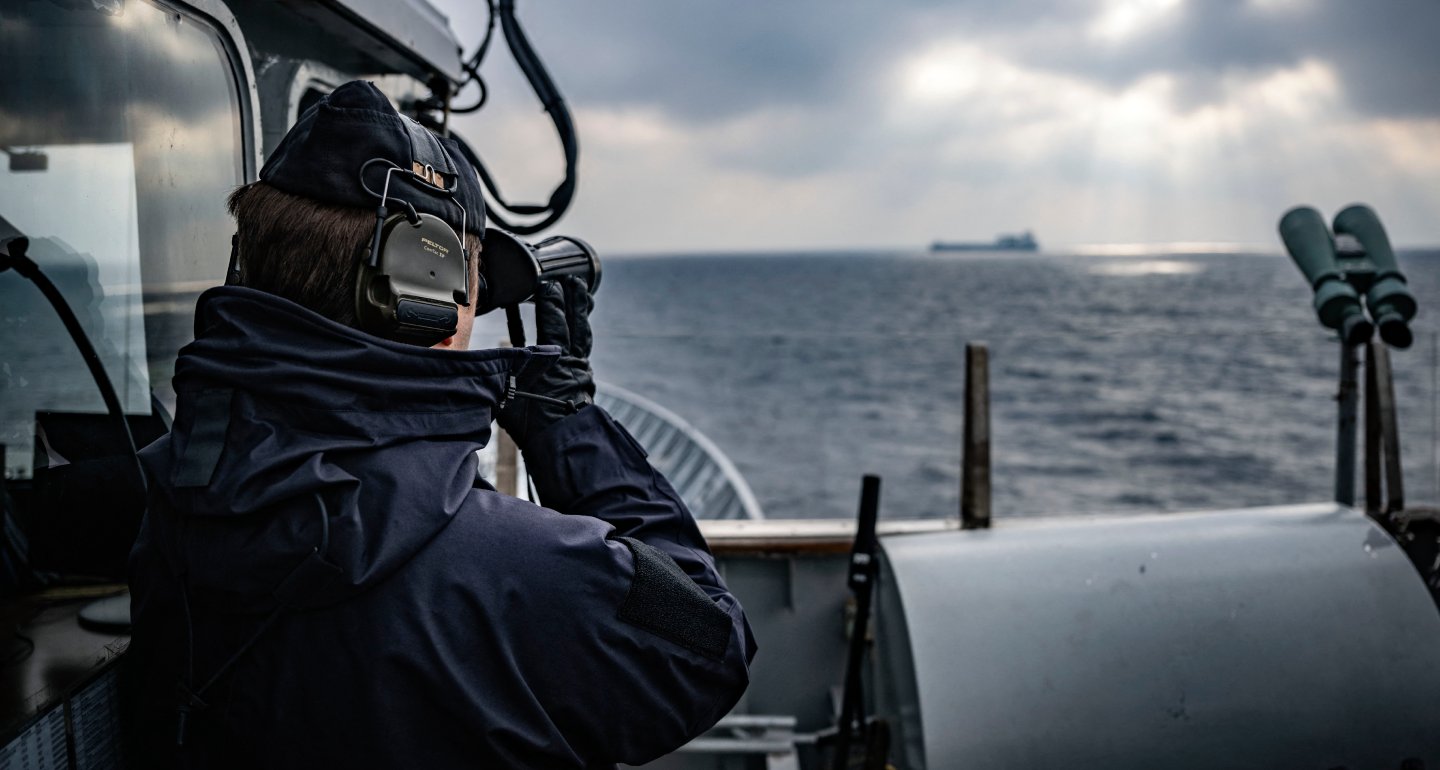
Governments in Estonia, Latvia, and Lithuania want to ensure that a U.S. military withdrawal would not leave them dangerously exposed to a Russian attack.

Sergejs Potapkins

Anger over online restrictions has led to a surge in support for the New People party, which has replaced the Communists as Russia’s second most popular political party.

Andrey Pertsev