

In The Media
Josh Kurlantzick
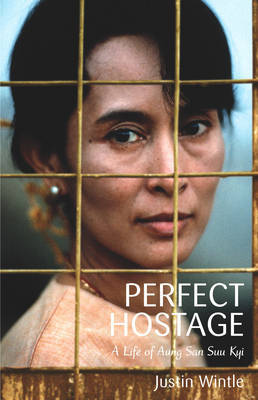
For the first time in nearly twenty years, Burma has burst into open protest against the military junta, captivating the world with its ‘saffron revolution.’
Source: London Review of Books

Perfect Hostage: A Life of Aung San Suu Kyi by Justin Wintle
For the first time in nearly twenty years, Burma has burst into open protest against the military junta, captivating the world with its ‘saffron revolution.’ Across the country, monks have led massive demonstrations, joined by civil servants, prominent cultural figures and tens of thousands of ordinary people. Throngs of red-robed monks have marched through the streets of Rangoon, waving banners and religious flags. When Burma’s military surrounded the city, the monks crouched in front of them, defiantly reciting odes to loving kindness, chanting prayers, and singing the national anthem. Their courage has rallied terrified citizens in the face of troops who have stormed monasteries, jailed thousands of protesters and killed at least ten and possibly hundreds more. The UN Security Council met on 26 September to consider the crisis, the day after President Bush had announced tougher US sanctions on the junta’s leaders.
This book review was orginally published at London Review of Books.

Former Visiting Scholar, China Program
A special correspondent for The New Republic, a columnist for Time, and a senior correspondent for The American Prospect, Kurlantzick assesses China’s relationship with the developing world, including Southeast Asia, Africa, and Latin America.
Recent Work
Josh Kurlantzick
Carnegie does not take institutional positions on public policy issues; the views represented herein are those of the author(s) and do not necessarily reflect the views of Carnegie, its staff, or its trustees.

If the Russian-speaking community in Latvia cannot articulate their interests without being seen as disloyal, they could end up embracing a pro-Kremlin agenda.

Sergejs Potapkins

Russia’s ruling party would have benefited from Putin appearing as its distant patron, but as an active frontman imposing his views on the public, he has done nothing but harm both the party’s election campaign and the ruling system overall.

Andrey Pertsev

In the tenth year of his presidency, President Mirziyoyev’s system is becoming even more personalized than that of his predecessor Karimov.

Galiya Ibragimova

The greater threat to Zelensky comes not from Fedorov alone, but from the convergence between the former defense minister’s political campaign and the anti-corruption investigations moving ever closer to the presidential administration.

Balázs Jarábik
With his public call for new elections in Ukraine, ex-defense minister Mykhailo Fedorov has opened Pandora’s box.

Konstantin Skorkin