

Commentary
Japan’s long-term security policy is driven by concerns about China, and there is little appetite for (or interest in) pursuing a confrontation with Moscow.
James D.J. Brown
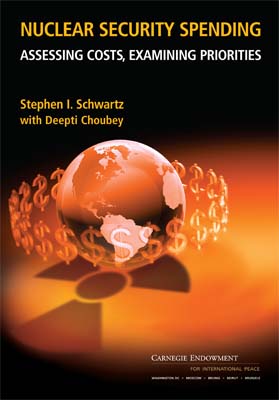
The United States spent over $52 billion on nuclear weapons and related programs in fiscal year 2008, but only 10 percent of that went toward preventing a nuclear attack through slowing and reversing the proliferation of nuclear weapons and technology.
The United States spent over $52 billion on nuclear weapons and related programs in fiscal year 2008, but only 10 percent of that went toward preventing a nuclear attack through slowing and reversing the proliferation of nuclear weapons and technology. That is the main finding of Nuclear Security Spending: Assessing Costs, Examining Priorities, a new study that uses publicly available documents and extensive interviews with government officials and experts to calculate the U.S. nuclear security "budget." The United States has never tracked nuclear weapons-related spending comprehensively, hindering effective oversight and weighing of priorities in nuclear security policy.

The lack of comprehensive accounting impairs balancing of priorities and fosters the impression that the United States is more interested in preserving and upgrading its nuclear arsenal than in reducing and eliminating the growing threats of nuclear proliferation and limited nuclear or radiological attack. Because classified expenditures and some other relevant costs are omitted from the analysis, total actual spending is significantly higher.
Key Conclusions
Policy Recommendations
The authors conclude:
“Implementing these recommendations will increase understanding and accountability, which in turn will lead to greater public support for critical nuclear security programs and a more effective allocation of public resources. When combined with a new focus on nuclear issues, including the Obama administration’s forthcoming Nuclear Posture Review, these efforts will help ensure that political and financial priorities are properly aligned.”
About the Authors
Stephen I. Schwartz is the editor of The Nonproliferation Review, published by the James Martin Center for Nonproliferation Studies at the Monterey Institute of International Studies, the largest nongovernmental organization in the United States devoted exclusively to research and training on nonproliferation issues. He is also the editor and coauthor of Atomic Audit: The Costs and Consequences of U.S. Nuclear Weapons since 1940 (Brookings Institution Press, 1998), the authoritative chronicle of historical expenditures associated with the U.S. nuclear weapons program. Schwartz has previously served as publisher and executive director of the Bulletin of the Atomic Scientists, and as a guest scholar with the Foreign Policy Studies Program at the Brookings Institution.
Deepti Choubey is deputy director of the Nonproliferation Program at the Carnegie Endowment. Her research interests include the calculations of non–nuclear-weapon states, how much the U.S. spends on nuclear security, and the role of nonproliferation for long-term U.S. foreign policy. Prior to joining the Carnegie Endowment in 2006, Choubey was director of the Peace and Security Initiative (PSI) for the Ploughshares Fund.
Stephen I. Schwartz

Former Deputy Director, Nuclear Policy Program
Choubey was previously the director of the Peace and Security Initiative for the Ploughshares Fund. She also worked for Ambassador Nancy Soderberg in the New York office of the International Crisis Group.
Carnegie does not take institutional positions on public policy issues; the views represented herein are those of the author(s) and do not necessarily reflect the views of Carnegie, its staff, or its trustees.

Japan’s long-term security policy is driven by concerns about China, and there is little appetite for (or interest in) pursuing a confrontation with Moscow.

James D.J. Brown

The truth of the strategic situation is that Europe and Russia are extremely unlikely to be able to “turn the page” on their confrontation within the next two decades.

Arkady Moshes

Russia’s AI-driven propaganda campaigns operate in a fragmented, chaotic, and often illogical manner. That’s not necessarily a problem for the Kremlin, though: It’s much easier to mimic genuine public debate that way.

Ilya Klishin

Russian strikes are weakening the economy sustaining Ukraine’s war effort. Closing the growing funding gap will require more European support and politically contentious reforms in Kyiv.

Balázs Jarábik

Trump has promised Belarus a massive potash deal. But Minsk is seeking something greater: restored Western transit and greater room for maneuver from Russia.
Balázs Jarábik