

Commentary
Amr Hamzawy
Source: Getty
In Egypt, Jordan, and Morocco, the global financial crisis has fomented social unrest, stoking increased radicalization. But governments are unlikely to pursue political liberalization.
Non-oil exporters among the Arab countries have been hit less hard by the global economic and financial crisis than other regions, but hard enough to see a major deceleration of growth and a significant increase in social tensions.
Due to their weak links to global financial markets, these nations were initially fairly isolated from the impacts of the crisis; however, as the crisis has deepened―its impact seeping into the real economy through diminished global demand, foreign direct investment (FDI), tourism, and remittances―non-oil exporters have faced increasing challenges that only add to existing poverty and unemployment problems.
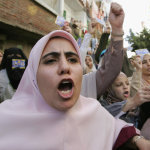
These problems are particularly salient in Egypt, Jordan, and Morocco, where the crisis has resulted in social unrest that is notably disconnected from any opposition or ruling coalitions in the formal political sphere. While governments are responding to the crisis with enhanced social programs, the lack of political voice for their dissatisfied citizens may drive greater radicalism in the region.
Relatively Limited Economic Woes Still Significant for Unemployment and Poverty
Despite enjoying relatively high GDP growth over the last several years, Morocco, Egypt, and Jordan did not generate enough jobs to keep up with their burgeoning labor forces, and the benefits of growth more generally failed to trickle down.
In today’s crisis, these countries have benefited from the economic stamina of their oil-exporting neighbors, largely through so-far resilient remittances, tourism, and exports. Yet the worldwide slowdown in tourism and agricultural exports, as well as the decline in other sources of revenues such as the Suez Canal in Egypt, has begun to dampen growth in these poor Arab countries. GDP growth is expected to drop from 7.2 to 3.6 percent in Egypt, from 5.6 to 3.0 percent in Jordan, and from 5.4 in to 4.4 percent in Morocco this year.
The sharp economic slowdown has placed great strain on the twin problems facing Morocco, Egypt, and Jordan: unemployment and poverty.
The sharp economic slowdown has placed great strain on the twin problems facing Morocco, Egypt, and Jordan: unemployment and poverty. Prior to the crisis, the unemployment rate was 9.5 and 8.4 percent in Morocco and Egypt, respectively; it is expected to rise to 10.3 and 13.9 percent in 2009.
Poverty rates have gone up as well, reaching 19 percent in Morocco, 20 percent in Egypt, and 15 percent in Jordan. In addition, alarming levels of public debt―76 percent of GDP in Egypt, 66 percent in Jordan, and 48 percent in Morocco―all high by the standards of developing countries―and limited reserves have left these countries with limited space for fiscal policy maneuvering.
Social Unrest Unconnected to Politics
Politically, the result of the crisis has been a massive rise in social tensions and protest activities related to bread-and-butter issues. Protest activities, including strikes by government employees, labor sit-ins by industrial workers, and demonstrations by the general public, have increased dramatically. Egypt alone witnessed over 600 protests in the first three months of 2008, a figure higher than the total number of protest activities in 2007.
The striking feature of these social protest activities has been their distance from the formal political sphere.
The striking feature of these social protest activities has been their distance from the formal political sphere. Established political actors, government and opposition parties alike, have remained on the sidelines of the protests in Morocco, Egypt, and Jordan. Even popular Islamist movements, with their growing preoccupation with politics, have had no significant influence. As a result, protesters’ demands have had at best a weak impact on political decision making about social policies and the allocation of economic resources.
Governments Turn to Social Programs, Not Liberalization or Repression
Governments of non-oil exporting Arab countries have presided over long socioeconomic crises in the last decades without facing real challenges to their power. To offset popular pressures, Arab governments have traditionally depended on one of two policy sets: social programs or political liberalization (measures designed to create enough political opening to regain legitimacy). Where these policies have failed, various repressive tools have frequently been utilized.
Evidence from Morocco, Egypt, and Jordan suggests that the governments of the three countries have so far decided to respond to the current crisis by implementing new social policies. In Egypt, several proposals have been introduced in parliament for poverty reduction measures, social security bonuses, and social health insurance schemes; some of these measures have been discussed in Morocco and Jordan as well. Additional proposals for supporting specific industrial sectors, such as textiles in Morocco and Egypt, have been also introduced.
The governments of the three countries have so far decided to respond to the current crisis by implementing new social policies.
However, it is too early to judge whether these measures will be adopted and implemented effectively and, moreover, whether they have the power to actually improve poverty and mitigate social tensions, particularly given these governments’ traditionally poor performance in the realm of social policies.
Their reluctance to use political liberalization to mitigate social tensions is likely due to fear of strengthening the opposition, especially Islamist movements, which have advanced in recent years to become the strongest opposition. Furthermore, after decades of liberalization measures that have not resulted in any significant shift toward democracy and the rule of law, the citizens of Morocco, Egypt, and Jordan have come to eye government-managed liberalization with suspicion. The extremely low voter turnout in the last parliamentary elections in all three countries is just one example of the public loss of faith in real political change. Their governments likely understand that―with this background―introducing new measures will not generate popular acceptance and therefore will not provide them with newfound legitimacy.
As for repression, the ad hoc character of social protest activities has thus far limited the governments’ capacity to depend on state security to keep social unrest under control. However, the past few months have seen first signs of governments, especially in Egypt, using repressive measures to respond to protests.
A Growing Danger of Radicalism
The fact that the crisis has had less dramatic effects in countries such as Egypt, Morocco, and Jordan is a blessing, but a mixed one, as the entrenched elites are more inclined to muddle through rather than contemplate far-reaching change.
When the vulnerable and the unemployed lack a political voice, they may instead challenge their governments violently.
So, most likely, governments in non-oil exporting Arab countries will continue on their current path: depending on social programs, mixed with a controlled degree of repression, to offset the impact of the global economic crisis. Protests and social unrest will probably continue to remain outside the sphere of formal politics, a situation that poses real danger of violence and radicalization.
When the vulnerable and the unemployed lack a political voice, they may instead challenge their governments violently. This is a phenomenon that is certainly not alien to the political history of Arab countries.

Director, Middle East Program
Amr Hamzawy is a senior fellow and the director of the Carnegie Middle East Program. His research and writings focus on Egypt’s and other middle powers’ involvement in regional security in the Middle East, particularly through collective diplomacy and multilateral conflict resolution
Recent Work
Amr Hamzawy

Amr Hamzawy, Kathryn Selfe
Carnegie does not take institutional positions on public policy issues; the views represented herein are those of the author(s) and do not necessarily reflect the views of Carnegie, its staff, or its trustees.
A much-discussed disagreement over internet restrictions in Russia was never an existential threat for Putin: It was about elite groups protecting their interests.

Alexandra Prokopenko

The demands of the Kremlin’s war in Ukraine, demographic problems, and public hostility toward Central Asians mean Russia does not have enough workers.
Salavat Abylkalikov
Minsk’s faith in the future of its larger neighbor’s economy is fading as Belarusian firms in Russia see record losses.

Olga Loiko
The cost of air defense has become an unregistered tax on revenue for businesses. While military rents are consolidated in the federal budget, the costs of defense are being spread across the balance sheets of companies and regional governments.
Alexandra Prokopenko

Powerful lobbyists and inertia led to Russia’s coal-mining sector missing an excellent opportunity to solve its structural problems.
Alexey Gusev