

Article
Marina Ottaway, Omar Hossino
Source: Getty
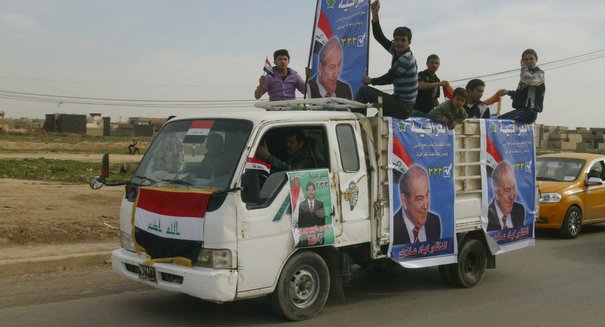
The Iraqi parliament's last-minute compromise to allow parliamentary elections in Kirkuk solves the immediate problem of who is legally entitled to vote in the city, but guarantees that the controversy will resume right after the elections.
On November 8, the Iraqi parliament reached a last-minute compromise to allow parliamentary elections in Kirkuk to go forward in January 2010. Though it solves the immediate problem of who is legally entitled to vote in the city, the deal perpetuates the pattern of postponing difficult decisions on Kirkuk and guarantees that the controversy will resume right after the elections.
According to the compromise, the 2010 elections will be held on the basis of the 2009 voter rolls, which reflect the new reality created by population movements after the overthrow of Saddam Hussein. This is a concession to the Kurds. As a concession to Arabs and Turkmens, who demanded that elections be held on the basis of the 2004 voter rolls, the election law also stipulates that results can be challenged in constituencies where the population has grown by more than 5 percent since 2004. Electoral committee investigations can be triggered by a request by at least 50 members of parliament, approved by simple majority in the entire parliament. The committee will investigate whether population increases reflect genuine demographic changes and internal migrations, or falsified registrations for people who should be voting elsewhere, and other fraud.
[T]he election law is no panacea, and it guarantees a messy post-election aftermath.
The compromise is significant for two reasons:
Nevertheless, the election law is no panacea, and it guarantees a messy post-election aftermath. As in the past, the problem of Kirkuk has simply been postponed rather than solved.
Nonetheless, other proposals debated by the parliament would have been worse. One alternative, already discussed and rejected before the provincial council elections in 2009, called for Kirkuk’s seats to be apportioned among Arabs, Kurds, Turkmens, and other minorities—an openly confessional solution that would have been very difficult to reverse later. A second suggestion was that of using the 2009 voter rolls, but granting compensatory seats to Arabs and Turkmens, again establishing the inherent right of groups to a certain level of representation, and embedding confessionalism in the law. A third suggestion, that of using the 2004 rolls, was the most destructive, establishing not only a precedent that specific population groups had an inherent right to control certain areas, but also completely denying freedom of movement, a fundamental right of citizens in a democratic system.
Former Senior Associate, Middle East Program
Before joining the Endowment, Ottaway carried out research in Africa and in the Middle East for many years and taught at the University of Addis Ababa, the University of Zambia, the American University in Cairo, and the University of the Witwatersrand in South Africa.
Recent Work
Marina Ottaway, Omar Hossino
Marina Ottaway
Carnegie does not take institutional positions on public policy issues; the views represented herein are those of the author(s) and do not necessarily reflect the views of Carnegie, its staff, or its trustees.

The European far right might fail to steer EU policy in the direction Russia wants, but they will create enough chaos inside Europe to benefit the Kremlin.

Dimitar Bechev

If the Russian-speaking community in Latvia cannot articulate their interests without being seen as disloyal, they could end up embracing a pro-Kremlin agenda.

Sergejs Potapkins

Russia’s ruling party would have benefited from Putin appearing as its distant patron, but as an active frontman imposing his views on the public, he has done nothing but harm both the party’s election campaign and the ruling system overall.

Andrey Pertsev

In the tenth year of his presidency, President Mirziyoyev’s system is becoming even more personalized than that of his predecessor Karimov.

Galiya Ibragimova
The greater threat to Zelensky comes not from Fedorov alone, but from the convergence between the former defense minister’s political campaign and the anti-corruption investigations moving ever closer to the presidential administration.

Balázs Jarábik