

Paper
Douglas H. Paal
Source: Getty
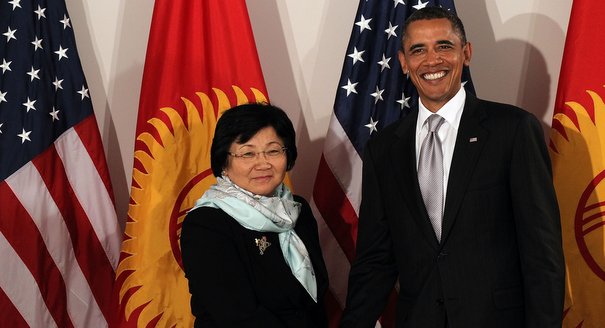
President Obama's upcoming trip to four Asian democracies will signal U.S. commitment to the region at a time when China's growing assertiveness has its neighbors worried.
President Barack Obama will depart for Asia this week, bearing the scars of a bruising defeat for his Democratic Party in the midterm elections. But he is going to a region that is more eager to welcome an American president than it has been in some years. Recent Chinese assertiveness has created an atmosphere that welcomes balancing moves from the remaining friendly superpower, no matter the president’s personal political standing at home.
Obama’s itinerary includes two newly rising powers—India and Indonesia—and two staunch allies— Japan and South Korea. All are democracies, and together they constitute a formidable presence in the region, one not to be dismissed lightly by an increasingly self-assured Beijing.
Yet Obama’s trip is not an anti-China voyage, but a return to the practice of protecting and advancing America’s long-standing interests in the region. It builds on the success started by Presidents Bill Clinton and George W. Bush’s moves to strengthen ties with India and Bush’s second-term legacy of constructive relations with China, amid many differences. The Indonesia stopover reflects renewed attention to Southeast Asia and respect for the democratic transformation that has occurred in Jakarta.
The visits to South Korea and Japan have both bilateral and multilateral elements. The G20 will meet in Seoul to address the issue of rebalancing the globe’s surplus and deficit economies. And the Asia Pacific Economic Cooperation (APEC) leaders’ meeting will discuss trade facilitation in Yokohama.
The longest stay will be three days in Mumbai and New Delhi. There will be a substantial commercial component in the Mumbai stop, where Obama will meet with business groups and plump for investment and sales of American goods and services into the Indian market. In Delhi, there is also hope to persuade the Indian government to buy American fighter jets, transport aircraft, and civilian airliners. Last-minute negotiations are also attempting to close the gap in India’s legislation governing civilian nuclear reactor contracts, in the hopes that American firms can win construction bids there. In all these instances, American hopes are undoubtedly greater than India’s readiness to satisfy them, even though the administration is going to great lengths to meet New Delhi’s appetite for a meaningful “strategic partnership.”
Indonesia represents a “make up” stop, saving the Indonesian leader’s face with a 22-hour stay-over after two previous cancellations of stops there, caused by domestic American issues. Obama will have a quick schedule of government meetings the first day, and public events at a mosque and an open-air speech the following morning, November 10.
Next year, Indonesia will chair the Association of Southeast Asian Nations and so Obama plans to return, with his children, for a longer visit when Jakarta hosts the East Asian Summit there.
South Korea is chair of the G20 and is to preside over efforts to conclude updating the structures of international financial institutions and gain commitments to rebalancing the global economy. The latter effort has the potential to be the event of most lasting consequence on this voyage, because surplus- trading nations are not offsetting their exports with increased domestic consumption at a pace that will promote global growth as deficit nations like the United States cut back their imports.
The tensions are playing out now in the form of skirmishes over currencies, with the U.S. Federal Reserve firing the biggest cannon of “quantitative easing” to get everyone’s attention. Emerging market economies are being flooded with hot money as a consequence, pushing their governments to revalue their currencies or impose current account controls.
The hope is to prevent a currency conflict from becoming an all-out trade war. But with most countries focused on preserving their own populations’ jobs, the outlook is dim for concrete results. American officials talk in terms of reference goals for adjustments in current accounts, to be monitored by the international financial institutions. This suggests hard targets are too difficult to agree on, and the outcome will be murky enough to keep everyone quiet until the trade war really starts.
Also on the agenda for Seoul is reaching final consensus between the two governments on the Korea-U.S. free trade agreement. The agreement was initially announced three-and-a-half years ago by the Bush administration, but the Democratic-controlled Congress failed to act on it. Then, during the primaries in 2008, Obama raised questions about the agreement in an effort to win votes. He has now embraced the concept but insisted on new understandings on the automobile, light truck, and beef trade.
Both sides appear truly interested in a positive outcome and see its benefit to bilateral relations, but to achieve it will have to make compromises and be prepared to sell them to aggrieved constituencies at home. Given that the rest of Asia is rapidly concluding separate free trade agreements, failure to achieve this one would put Seoul and Washington in a bad competitive light.
Obama’s concluding stop in Japan will have him meeting with 21 regional leaders at the APEC gathering. He will have already had bilateral sessions with the leaders in his three previous stops, and with China’s President Hu Jintao in Seoul. The APEC agenda has been weak in recent years, as its trade agenda has been overtaken by bilateral and mini-lateral trade deals within the region. Japan’s new leadership under the Democratic Party of Japan (DPJ) has needed time to organize its priorities, and APEC does not seem to have been among them.
Obama will mark the fiftieth anniversary of the U.S.-Japan Mutual Defense Treaty, but less formally than originally had been hoped. Nonetheless, the strains that were emerging between the DPJ and Washington after it took power under former prime minister Yukio Hatoyama are now easing, and the alliance is looking stronger under new Prime Minister Naoto Kan as sensitive issues are being resolved through quiet negotiation rather than press availabilities.
China recently has made its rising presence felt among its neighbors, and the consequence is so far welcoming for a reassertion of American interests and for President Obama personally. It is a good time for him to be on the road in Asia.
Distinguished Fellow, Asia Program
Paal previously served as vice chairman of JPMorgan Chase International and as unofficial U.S. representative to Taiwan as director of the American Institute in Taiwan.
Recent Work
Douglas H. Paal

Douglas H. Paal, Tong Zhao, Chen Qi, …
Carnegie does not take institutional positions on public policy issues; the views represented herein are those of the author(s) and do not necessarily reflect the views of Carnegie, its staff, or its trustees.

Minsk clearly expected the dialogue with Washington to yield more results, in particular the lifting of EU sanctions and permission to export potash.

Artyom Shraibman

Depleted financial reserves and a shrinking tax base mean it is no longer possible to simultaneously deliver high defense spending, price stability, and economic growth.

Alexandra Prokopenko

With the growth in points of friction between the great powers, organizations like the SCO will continue to play a role in the strategic adaptation of the smaller powers caught between them.

Temur Umarov

When faced with fuel shortages in the past, Central Asian governments could always count on additional supplies from Moscow. That safety net no longer exists.

Galiya Ibragimova
Ultimately, Zelensky sided neither with the reform camp nor with the military establishment as such, but with political control.

Balázs Jarábik