• Research
  • Politika
  • About
Carnegie Russia Eurasia center logoCarnegie lettermark logo
  • Donate
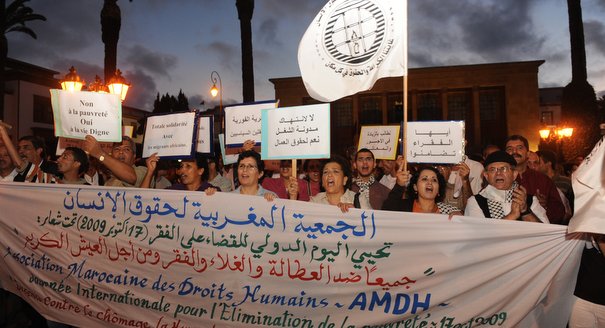
Morocco’s Experience With Poverty Reduction: Lessons for the Arab World

Source: Getty

Paper
Malcolm H. Kerr Carnegie Middle East Center

Morocco’s Experience With Poverty Reduction: Lessons for the Arab World

While Morocco’s poverty rate has fallen by more than 40 percent in the last decade, the country’s leaders must reconsider their poverty-reduction strategy if they want to sustain the positive trend and overcome remaining challenges.

Link Copied
By Lahcen Achy
Published on Dec 21, 2010

Additional Links

Full Text

Despite a lack of significant natural resources, Morocco’s poverty rate has fallen by more than 40 percent in the last decade, with less than 9 percent of its population considered poor. While lifting 1.7 million people out of poverty in ten years is notable progress, Lahcen Achy explains in a new paper that Morocco’s leaders must rethink their poverty-reduction strategy to sustain the positive trend and overcome remaining challenges.

Key policy recommendations:

  • Build human capital. Policy makers should seek to eradicate illiteracy by allocating more human and financial resources to adult literacy programs and encouraging poor families to educate their children.

  • Reduce inequality. Promoting more progressive taxation and better-targeted public spending—along with reinforcing redistribution policies—would reduce inequality.

  • Improve the business environment. Leaders should provide incentives for informal entrepreneurs to join Morocco’s formal economy and encourage them to comply with social and fiscal obligations to employees.

  • Strengthen political and fiscal decentralization. Increasing the participation of non-state actors—including local elected councils and civil society organizations—would help to improve local development policies.

“Despite significant progress in poverty reduction, Morocco faces the persistent problems of high illiteracy, inequality, volatile economic growth, informal and vulnerable jobs, and the uncertain levels of future remittances,” Achy writes. “Policy makers must review the country’s approach for alleviating poverty and take greater advantage of existing strengths to reach a broader spectrum of the population."
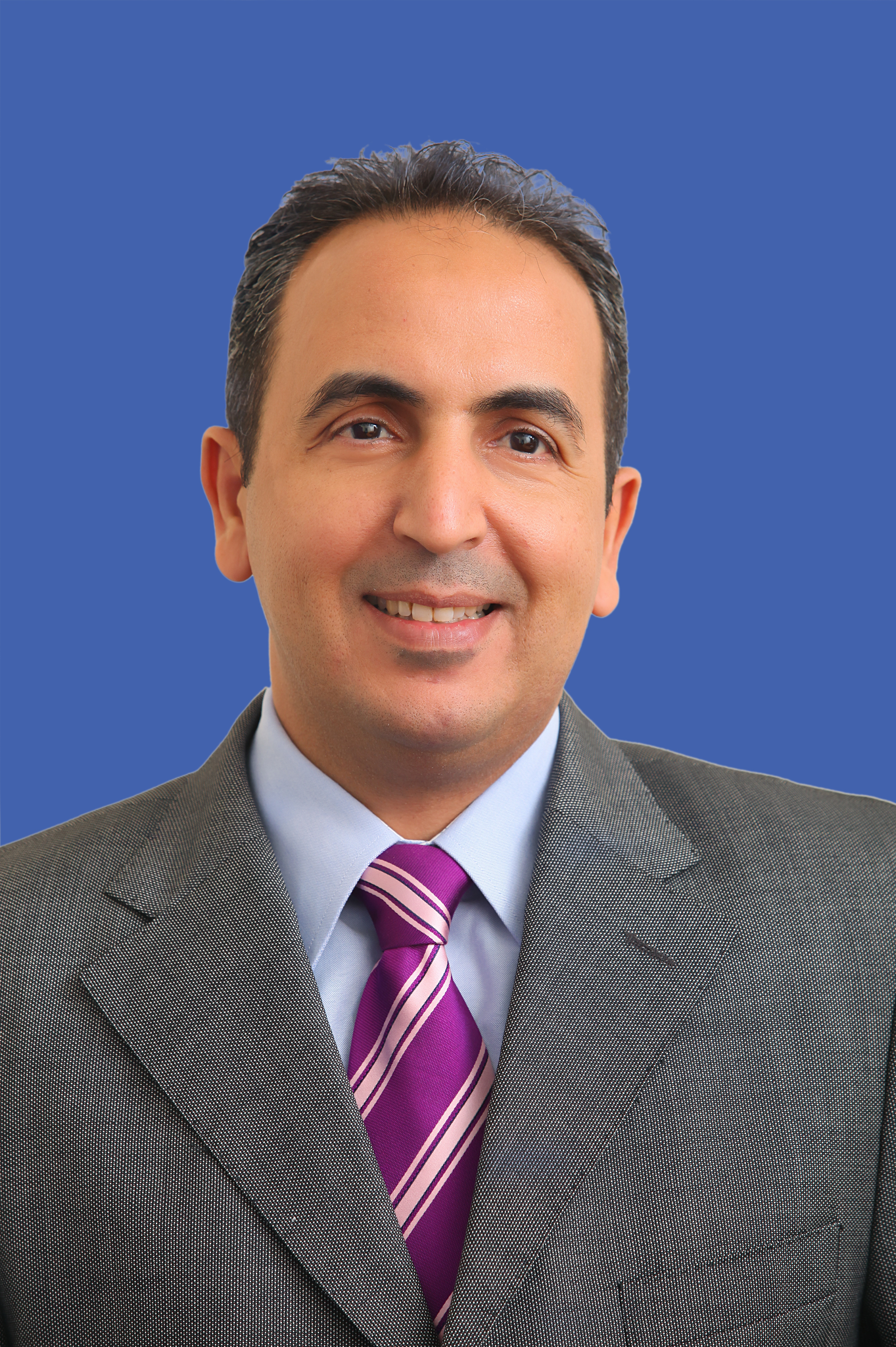
About the Author

Lahcen Achy

Former Nonresident Senior Associate, Middle East Center

Achy is an economist with expertise in development, institutional economics, trade, and labor and a focus on the Middle East and North Africa.

    Recent Work

  • In The Media
    Arab States Need Industrial Policy Reform

      Lahcen Achy

  • Paper
    The Price of Stability in Algeria

      Lahcen Achy

Lahcen Achy
Former Nonresident Senior Associate, Middle East Center
Lahcen Achy
MaghrebMoroccoNorth AfricaEconomy

Carnegie does not take institutional positions on public policy issues; the views represented herein are those of the author(s) and do not necessarily reflect the views of Carnegie, its staff, or its trustees.

More Work from Carnegie Russia Eurasia Center

  • Commentary
    Carnegie Politika
    Does Russia Have Enough Soldiers to Keep Waging War Against Ukraine?

    The Russian army is not currently struggling to recruit new contract soldiers, though the number of people willing to go to war for money is dwindling.

      Dmitry Kuznets

  • Commentary
    Carnegie Politika
    Including Russia on the EU Financial Blacklist Will Hurt Ordinary People, Not the Kremlin

    The paradox of the European Commission’s decision is that the main victims will not be those it formally targets. Major Russian businesses associated with the Putin regime have long adapted to sanctions with the help of complex schemes involving third countries, offshore companies, and nonpublic entities.

      Alexandra Prokopenko

  • Commentary
    Carnegie Politika
    Why Didn’t the Ukraine War Turn Russia’s Ruling Class Against Putin?

    A new book by Alexandra Prokopenko looks at why the Russian ruling class became the regime’s willing servants—and how they might fare in a post-Putin world.

      Vladislav Gorin

  • Commentary
    Carnegie Politika
    Collateral Damage: The Frozen Foreign Assets of Middle-Class Russians

    The volume of frozen private assets might seem insignificant compared with Russia’s sovereign reserves, but these are the savings of millions of people who believed that foreign securities were a safe investment and in the institution of private property.

      Yulia Starostina

  • Commentary
    Carnegie Politika
    The Kremlin Has Weaponized Western Financial Checks to Punish Russian Dissidents

    International compliance and anti-money laundering standards are currently formulated in such a way that the Western financial system does not differentiate between Russian political prisoners and ISIS militants.

      Alexandra Prokopenko

Get more news and analysis from
Carnegie Russia Eurasia Center
Carnegie Russia Eurasia logo, white
  • Research
  • Politika
  • About
  • Experts
  • Events
  • Contact
  • Privacy
Get more news and analysis from
Carnegie Russia Eurasia Center
© 2026 Carnegie Endowment for International Peace. All rights reserved.