

Paper
Sinan Ülgen
Source: Getty
In this week’s legislative elections, a few hundred thousand votes will determine whether or not Turkey’s ruling party can move forward unimpeded with the most radical change in the country’s constitutional order since the transition to multi-party democracy in 1946.
In this week’s legislative elections, a few hundred thousand votes will determine whether or not Turkey’s ruling party can move forward unimpeded with the most radical change in the country’s constitutional order since the transition to multi-party democracy in 1946. Turkey combines a proportional electoral system with one of the world’s highest national thresholds. Parties must obtain at least 10 percent of the national vote in order to win the right to send representatives to parliament. As a result, only well established political parties have the ability to form parliamentary groups.
A few days prior to the elections, only the ruling Justice and Development Party (AKP) and the main opposition Republican People’s Party (CHP) are assured of clearing the threshold. The Nationalist Movement Party (MHP) is polling at 10-11 percent, which is within the statistical margin of error. The ability of the MHP to clear this hurdle will determine the future of Turkish politics.
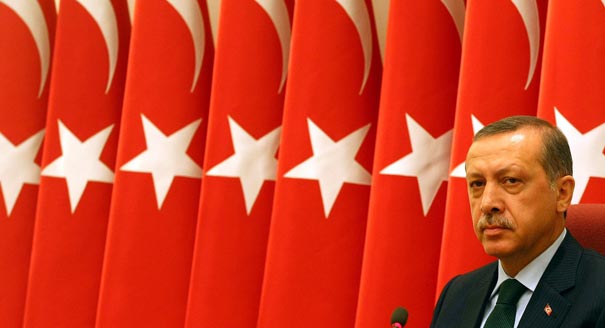
In a parliament devoid of its second-largest opposition party, the ruling AKP is likely to obtain the constitutional majority of 376 seats that its leader, Prime Minister Erdogan, so desperately seeks. This majority is critical for Erdogan’s next gambit. The prime minister has made no secret of his ambition to change the constitution and introduce a U.S. or French style presidential system with himself at the helm.
Erdogan remains by far the most popular politician in the land. If popularly elected for two consecutive five-year terms as the president starting in 2014, he will have 20 years at the top of Turkish politics, enjoying the ability to fundamentally transform domestic politics, foreign policy, and even the dynamics of Turkish society. It is therefore no coincidence that the AKP’s electoral platform was rich in references to 2023, the centennial of the Turkish Republic.
Erdogan’s dream of a constitutional majority will evaporate, however, if the MHP clears the national threshold in addition to the CHP. The prime minister’s party is nonetheless set to win an absolute majority in parliament and form the next single-party government.
The AKP’s previous electoral success is closely linked to Turkey’s economic fortunes and the rollout of social programs targeting the poor. The country rebounded strongly from the impact of the global crisis with a growth rate of 8.9 percent in 2010, the highest in the Organisation for Economic Co-operation and Development (OECD) and the third highest globally after China and Argentina. At the same time, the AKP government led efforts to produce cheap housing and implement quasi-universal health coverage. This economic dynamism has allowed the ruling party to retain its popular support despite mounting evidence of curtailed press freedom, dwindling tolerance for dissent, the centralized university entrance exam scandal, and allegations that the government is imposing a socially conservative agenda.
What may be good for the AKP may not necessarily be good for Turkish democracy. The experience of the previous constitutional amendments in September 2010 has clearly shown that Turkey’s ruling party tends to rely on its own majority rather than seek a consensus to implement even basic changes to the country’s constitutional order. A smaller majority would oblige the AKP to enter into substantive negotiations with the opposition for the desired changes and by the same token help to decrease the polarization of the country. It would also allay fears about the increasingly authoritarian tendencies of Turkey’s prime minister.
In fact, the most interesting aspect of this electoral cycle has been the transformation of the political opposition. In past years, the main opposition party, the CHP, relied heavily on support from the army and the Turkish judiciary in its bid to counter the influence of the AKP. The CHP’s main message to the Turkish electorate was that of safeguarding Republican values, in particular secularism. As a result, the CHP was only able to consolidate its support among hard core Kemalists. However, it failed to provide hope to or gain the support of a large part of the aspirational society that Turkey has now become. This structural deficiency prevented the CHP from ever becoming a credible alternative to the ruling AKP. In short, Turkish democracy suffered from the lack of a credible threat to the AKP’s rule.
With Kemal Kilicdaroglu as its new leader, the CHP is undergoing a major shift. The party’s political rhetoric has become more liberal, less nationalistic, and more in tune with the values of social democracy. This transformation will be consolidated if the CHP ends up increasing its share of the popular vote from the 22 percent it received in the elections in 2007.
Such a recalibration of the political scene in Turkey would fundamentally alter domestic dynamics. The country suffered from a loss of momentum in democratic reforms as well as a rising disinterest in Europe. This was as much due to the shifting priorities of the ruling party as the total inability of the political opposition to pressure the government on its failure to deliver on these critical issues.
After the elections, however, there is a real hope for collaboration between the ruling AKP and the opposition CHP for overhauling Turkey’s constitution, improving fundamental freedoms and the rights of minorities, and rejuvenating the European dream.
Such a change in the political constellation would also provide an invaluable window of opportunity for the EU to re-engage Turkey and its main political actors. This would redress the erosion in interest in EU accession that is currently dooming membership negotiations.
The country’s long standing Kurdish problem will also soon rise to the fore. The Kurdish Peace and Democracy Party’s (BDP) strategy of fielding independent candidates to sidestep the national threshold will probably allow them to win 25 to 30 parliamentary seats. Going forward, this political representation will be key to a constructive dialogue on a challenge that, thus far, has proven intractable.
Turkey’s newly elected representatives will ultimately be asked to create the conditions that will allow the country’s ethnic, religious, and even social minorities to believe they live in a state responsive to their needs and concerns. That is really the next and unavoidable step for Turkey’s maturing democracy. That is also how Turkey can truly substantiate its rhetoric of being an inspiration for the burgeoning democracies of the Middle East and North Africa.

Senior Fellow, Carnegie Europe
Sinan Ülgen is a senior fellow at Carnegie Europe in Brussels, where his research focuses on Turkish foreign policy, transatlantic relations, international trade, economic security, and digital policy.
Recent Work
Sinan Ülgen
Carnegie does not take institutional positions on public policy issues; the views represented herein are those of the author(s) and do not necessarily reflect the views of Carnegie, its staff, or its trustees.
This year’s wars have made alternative routes to transit through Russia no less risky for Central Asian countries.

Galiya Ibragimova
The ruling elites in contemporary Russia are not a political class, but a community of managers who are not subject to competition or public accountability. The state is becoming an operating apparatus without any internal autonomy.

Alexandra Prokopenko

Pashinyan’s pro-European party has been re-elected with a decisive victory. But the pro-Russian opposition could still slow Armenia’s progress toward peace with Azerbaijan and rapprochement with Europe.
Mikayel Zolyan
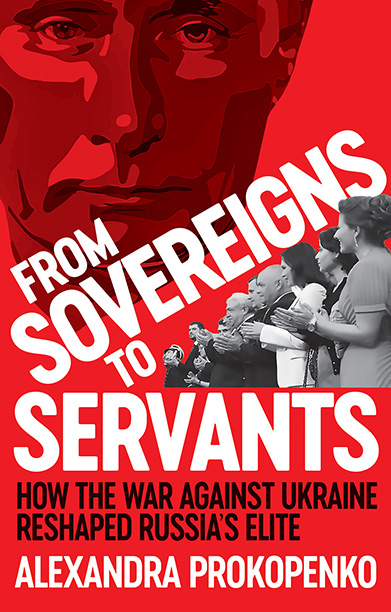
How did Putin co-opt Russia’s political and economic elites, ensuring no more than fitful resistance to the regime’s war on Ukraine?
Alexandra Prokopenko
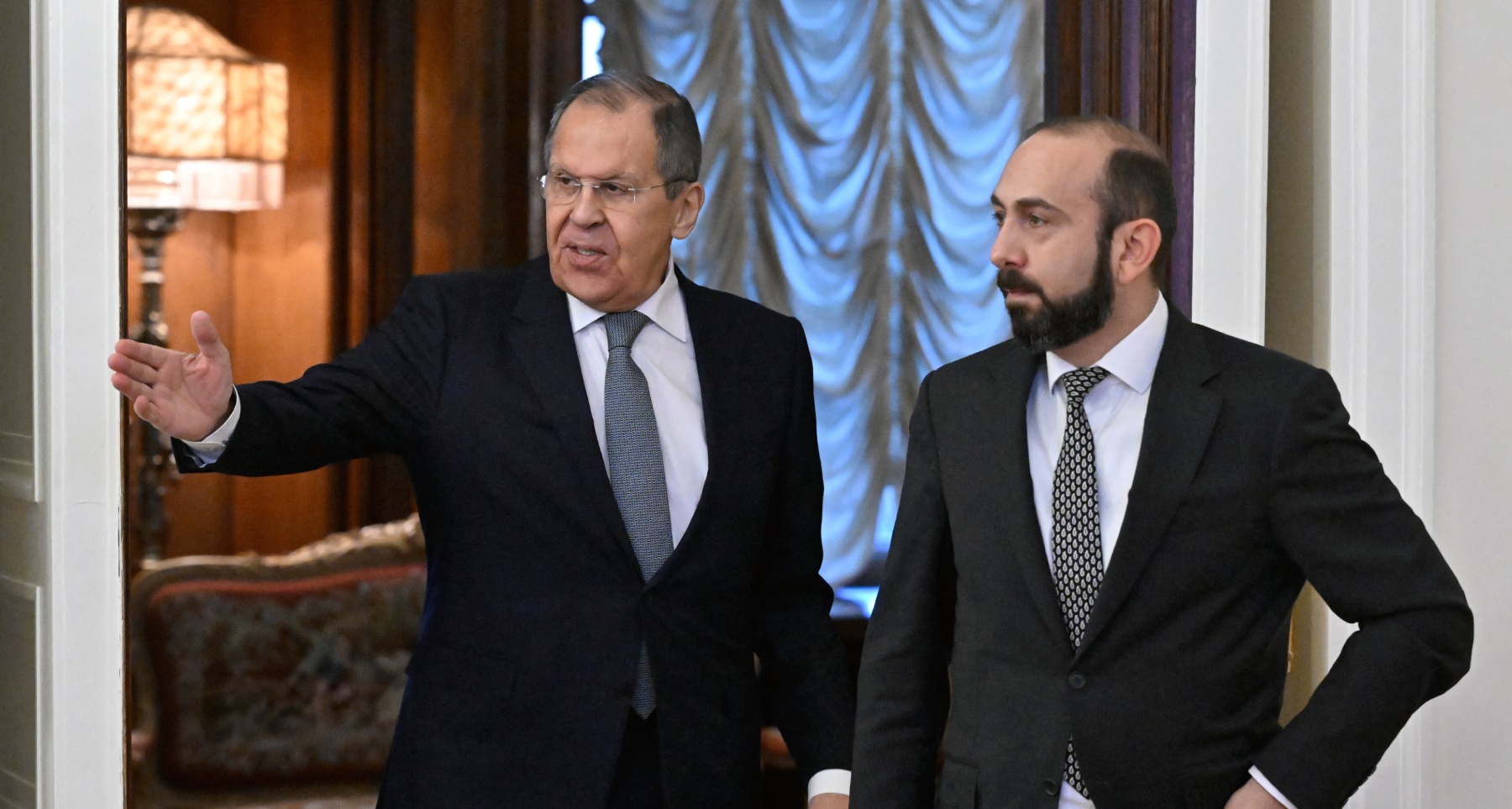
For all the menacing rhetoric, the Armenian prime minister remains a leader with whom Putin is prepared to interact: not as an ally, but as a partner, albeit a problematic one.

Alexander Atasuntsev