

Commentary
Yezid Sayigh
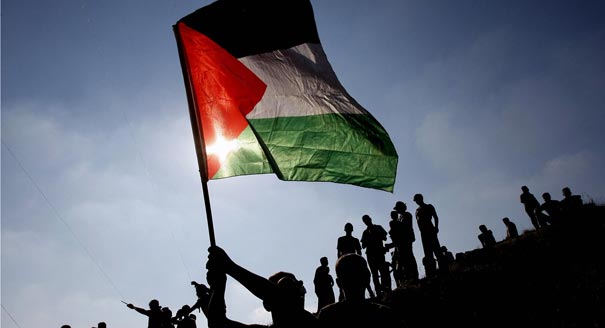
Source: Getty
The Palestinian leadership did not conduct an extensive survey of the various procedural means for applying to the UN, and assessing the likely gains and costs of each before committing to this de facto policy.
Palestinian President Mahmoud Abbas and the delegation that accompanied him to New York last week have had their moment in United Nations history. By most accounts they came off well, and Abbas regained lost ground in coming across as a determined leader. But from now on, the challenges the Palestinian leadership must meet, and the costs of every choice they may make, will only increase.
The Palestinians may yet achieve a success of sorts, if they can secure a majority in support of their bid for recognition of Palestine as a state, if and when the UN Security Council eventually votes on it. Otherwise, their gambit will prove to be a disaster, whatever its legal merits or political justifications.
Going to the UN Security Council involved high risks, not least because it unavoidably meant confronting the US administration. It was certainly valid as a means of seeking to change the ‘rules of the game’ in which the ‘peace process’, 20 years old this year, has been all process and no peace. Demonstrating the pro-Israeli bias of US diplomacy in the peace process was also legitimate, but involved even greater risks. The ‘Likudnik’ speech delivered by US President Barrack Obama – so labeled because it adopted the substance and rhetoric of the Israeli rightwing – was not the first indication of the costs, and will definitely not be the last.
Undertaking high risk required a well-thought strategy, with clear objectives and based on extensive legal and political preparation. But as recently as June, the Palestinian leadership had not yet done its homework: conducting a careful survey of the various procedural means for applying to the UN, and assessing the likely gains and costs of each. It had already committed itself publicly, if informally, to the UN bid by the time it acquainted itself with the full range of options open to it.
Furthermore, applying to the UN also required extensive diplomatic build-up. The Palestinian Authority’s foreign minister headed a commendable campaign in late 2010 and early 2011 that secured formal recognition of Palestinian statehood by a number of Latin American countries, but this success was not reinforced by a sustained effort elsewhere. Instead, a hiatus followed, partly because the Palestinian leadership was not initially planning to go to the UN at all. It only moved clearly towards this option in June, for want of any alternatives in the worrying absence of any sign of diplomatic activism by the US administration or the EU.
Even then, there is little or no evidence that countries outside the Permanent Five sitting on the Security Council – such as the current hesitators Bosnia-Herzegovina, Gabon, and Nigeria – were lobbied until the last minute. Nor is it clear that the Palestinian Authority coordinated its diplomacy with key Arab states, including Saudi Arabia and Jordan, especially when lobbying the United States and EU member-states.
By the time the UN bid appears to have become the de facto policy, it was already too late to mount effective political mobilization among grassroots organizations, sympathetic political parties, or parliaments around the world – but especially where the Palestinians have limited diplomatic leverage, that is in the United States and certain EU member-states. The absence of public shows of support in naturally sympathetic Arab and non-aligned countries – and indeed among Palestinian communities in the occupied territories and the Diaspora – points to a similar lack of mobilization there as well.
Last but not least, once a consensus had emerged within the Palestinian leadership over applying to the UN, it became resistant to developing contingency plans in case of failure. This was part of the broader lack of a strategy for the ‘day after’: what does the Palestinian leadership intend to do if its UN bid actually ‘succeeds’, that is, if it secures a supporting majority in the Security Council and compels the US administration to cast a veto against Palestinian statehood? Does it have a plan for further diplomatic initiatives or political overtures, whether towards the United States and the EU, Israel, or especially its own public?
Indeed, is the Palestinian leadership even able to activate effective Arab support in the last-minute attempt to secure the ‘swing’ Security Council votes of Bosnia-Herzegovina, Gabon, and Nigeria over coming weeks, in the face of inevitable US counter-lobbying? The pressure that the US administration can bring to bear is massive, and is no longer balanced by a more favorable European position, now that the EU has clearly signaled that it will only support the Palestinian bid if it moves to the General Assembly.
It is against this backdrop that the Palestinian performance at the UN last week needs to be assessed. On the one hand, the Palestinians were partially successful in showing the US administration to be less than even-handed towards the Israelis and Palestinians. By bringing into question its status as an honest broker, they have prompted calls for a restructuring of how the peace process is managed. Abbas’s insistence on confirming the 1967 borders and an end to settlement construction as the basis for peace talks indicates an intention to redefine the ‘rules of the game’, but this requires a clear plan and determined follow-up.
On the other hand, by forcing President Obama into a corner, the Palestinian leadership forced him to jump in the only likely direction for a US politician in an election year: to blazon support for a more rightwing position on the Israeli-Palestinian conflict than we have seen from a US president for many years, if ever, or than we see from many Israelis today. This will dominate US electoral rhetoric on the subject for the coming year, and will overshadow any new diplomatic efforts, if not guarantee that they will be stillborn if attempted.
The Palestinian leadership may view such ‘outing’ of the US administration as a gain in and of itself, since it can argue that it has dispelled any lingering illusions about US even-handedness in the Palestinian-Israeli peace process. This would not be an insignificant gain, so long as there is a strategy for the ‘day after’. This would have to assume that the peace process is dead until well after the US presidential election in November 2012, and would therefore focus Palestinian diplomatic efforts in the meantime on proposing a more equitable and effective framework for an eventual resumption of meaningful diplomacy in 2013. There can be few people anywhere who view the schedule proposed by the Quartet for conclusion of full Palestinian-Israeli agreement by the end of 2012 as the least bit credible.
Furthermore, if, as is likely, the Security Council vote goes against the Palestinians – that is, if they can neither secure a majority in favour, nor compel a US veto – then the issue of UN recognition will have lost much of its political impact, even if the matter then moves to the General Assembly where it is assured of a successful outcome.
Of course, the Palestinian leadership is far from alone in bearing responsibility for the moribund state of the peace process, but it is in the most vulnerable position and will bear the brunt of the consequences. Abbas’s credible showing at the UN has boosted his popularity, but this will be difficult to maintain: calls from the US administration, the EU, and even Israel to maintain international aid flows to the Palestinian Authority will help keep it alive, but will not resolve the fundamental political dilemma facing Abbas and the rest of the leadership. Bereft of any diplomatic initiative, they will struggle to maintain their domestic credibility and legitimacy. By the time the US presidential elections are over, it may have become impossible for Abbas to extract the tangible gains from Israel that he needs for political survival, let alone for a durable peace.

Senior Fellow, Malcolm H. Kerr Carnegie Middle East Center
Yezid Sayigh is a senior fellow at the Malcolm H. Kerr Carnegie Middle East Center in Beirut, where he leads the program on Civil-Military Relations in Arab States (CMRAS). His work focuses on the comparative political and economic roles of Arab armed forces, the impact of war on states and societies, the politics of postconflict reconstruction and security sector transformation in Arab transitions, and authoritarian resurgence.
Recent Work
Yezid Sayigh
Yezid Sayigh
Carnegie does not take institutional positions on public policy issues; the views represented herein are those of the author(s) and do not necessarily reflect the views of Carnegie, its staff, or its trustees.

The return of parliamentary politics reflects a broader shift from earlier expectations of a settlement and elections toward the reality of a prolonged war.

Balázs Jarábik

The Russian state has opted for complete ideological control of the internet and is prepared to bear the associated costs.

Maria Kolomychenko

After four years of war, there is no one who can stand up to the security establishment, and President Vladimir Putin is increasingly passive.

Tatiana Stanovaya
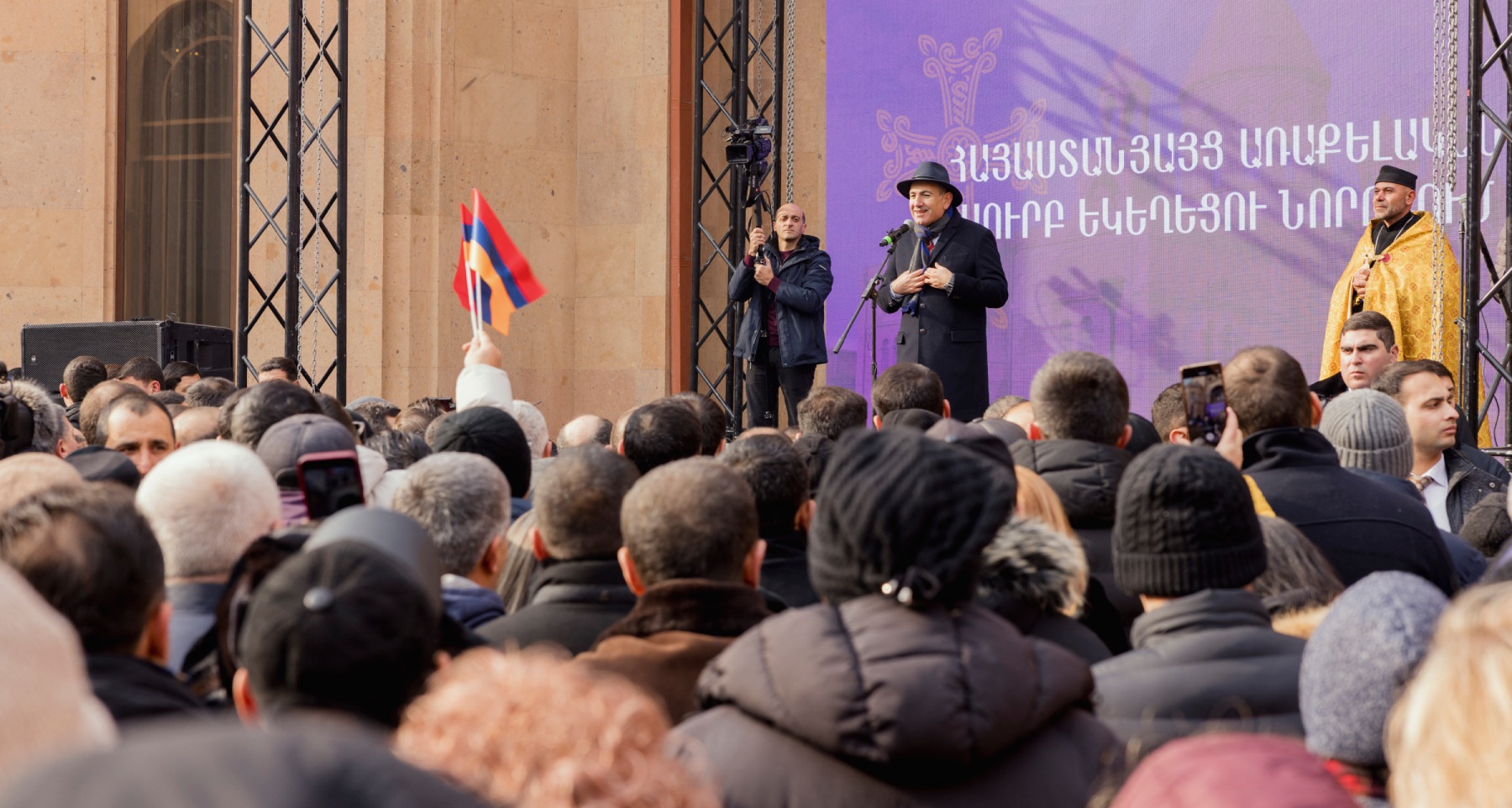
It’s true that many Armenians would vote for anyone just to be rid of Pashinyan, whom they blame for the loss of Nagorno-Karabakh, but the pro-Russia opposition is unlikely to be able to channel that frustration into an electoral victory.
Mikayel Zolyan
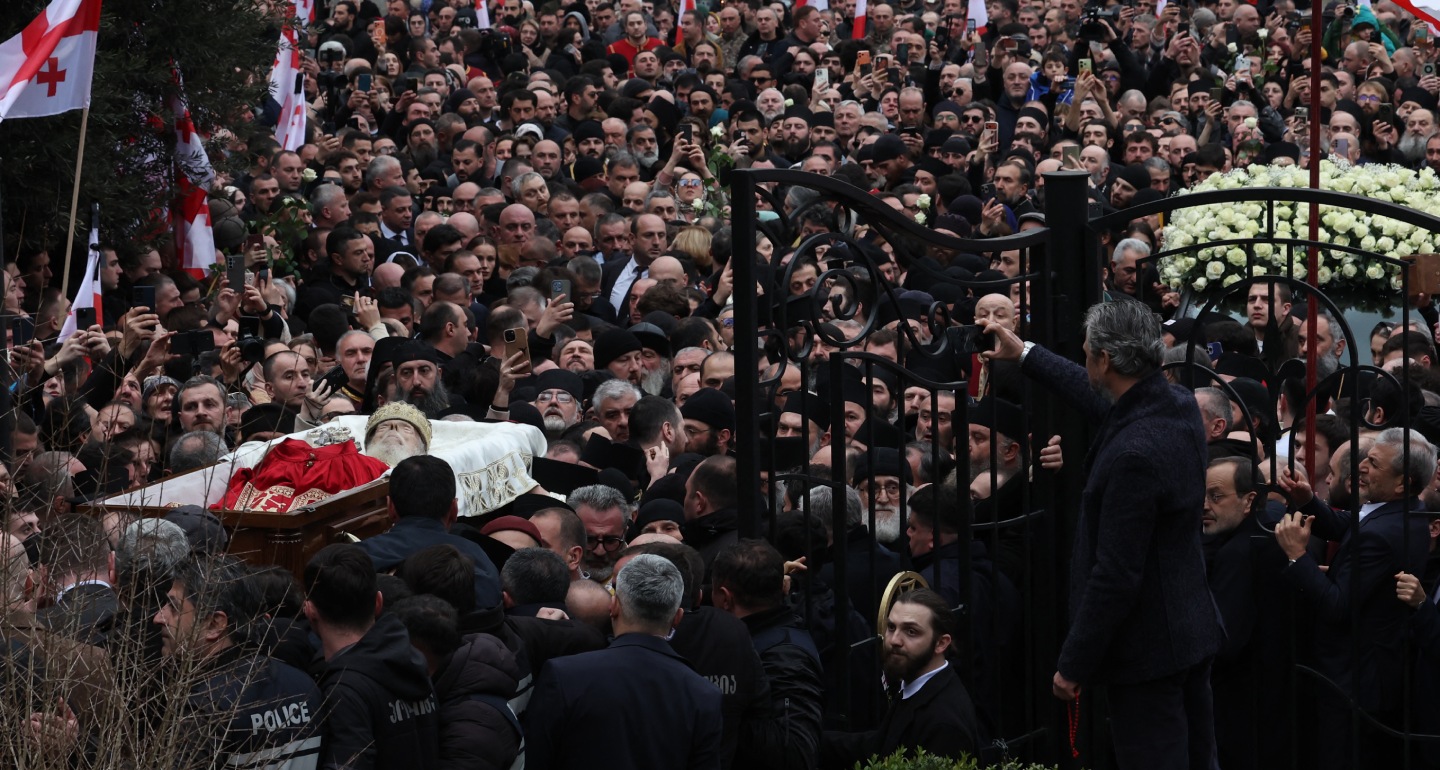
The front-runner to succeed Ilia II, Metropolitan Shio, is prone to harsh anti-Western rhetoric and frequent criticism of “liberal ideologies” that he claims threaten the Georgian state. This raises fears that under his leadership the Georgian Orthodox Church will lose its unifying role and become an instrument of ultraconservative ideology.

Bashir Kitachaev