

Commentary
Two divergent trends—Putin’s hardline vision of how to prosecute the war in Ukraine, and a growing desire for change in Russia—could tear the regime apart.
Tatiana Stanovaya
Source: Getty
An analysis of the Iran deal from a nonproliferation perspective.
On July 14, 2015, Iran and the five permanent members of the UN Security Council plus Germany (P5+1) concluded a Joint Comprehensive Plan of Action (JCPOA) concerning the future of Iran’s nuclear program. The deal, which is the outcome of more than two years of negotiations, includes limits on Iran’s nuclear program as well as provisions for verification, implementation, procurement, sanctions relief, and peaceful nuclear cooperation. It singles out specific nuclear sites in Iran for particular scrutiny and restrictions, including the enrichment facilities at Natanz and Fordow and the heavy-water reactor, with its supporting facilities, at Arak. Unsurprisingly, the deal is complex—the text and its five annexes stretch to over 100 pages.
Our aim here is to analyze the deal as impartially and objectively as possible solely from a nonproliferation perspective. It is not to offer a final conclusion about whether the deal is a good or bad one, but instead to help readers make up their own minds.
As in many complex negotiations, parties to the JCPOA traded compromises between seemingly unrelated areas. Accordingly, we look at the benefits and risks of the agreement as a whole, as well as the pros and cons of individual provisions. Throughout we identify key questions and issues that will need to be addressed in the months and years ahead if the deal is to be implemented successfully.

The agreement provides well-defined limits on Iran’s nuclear program lasting between ten and fifteen years. If implemented, these restrictions would measurably enhance confidence during the term of the agreement that Tehran will not seek nuclear weapons. This will help avoid much-worse alternatives, including Iran’s resumption of threatening nuclear activities and war.
The JCPOA provides the basis for transparency of procurement and for verification of nuclear activities to enable the International Atomic Energy Agency (IAEA) to determine that Iran’s nuclear program is wholly understood and is dedicated exclusively to peaceful uses.
The agreement demonstrates the viability of the rules-based nonproliferation regime created by the Nuclear Non-Proliferation Treaty (NPT) and including especially the IAEA safeguards system, notwithstanding the lacunae and imperfections of this regime. Indeed, the JCPOA buttresses the NPT. Whereas states may withdraw from the NPT and, in principle, then seek nuclear weapons, in the JCPOA Iran has committed not to ever seek nuclear weapons under any circumstances. And whereas the NPT does not include specific restrictions on activities that could contribute to the design and development of a nuclear explosive device, the JCPOA does.
The preface of the JCPOA establishes expectations that Iran’s peaceful nuclear program should evolve at a “reasonable pace,” “consistent with international non-proliferation norms. . . . [and] practical needs”—benchmarks that the Iranian program previously did not meet. It establishes a channel for open diplomatic engagement between the United States and Iran after thirty-seven years.
Other states could be encouraged to follow the Iranian example of acquiring uranium enrichment and other dual-use capabilities that would significantly shorten the time required to produce a nuclear weapon.
One or more parties to the agreement may not implement provisions as required or perform to the satisfaction of other parties. Failures to perform may result in disputes that the parties will not resolve peacefully.
After the restrictions on its nuclear program end, Iran, like any party to the NPT, but endowed with capabilities advanced during the period the JCPOA was in force, may exercise its right to resume nuclear behavior that the international community finds provocative. This could potentially give it the capability to break its commitments and manufacture a small number of nuclear weapons in a relatively short period of time.

The parties to the JCPOA recognized the need to address inevitable challenges that will arise during implementation of the deal. These challenges will stem from political opposition to the agreement in both Iran and the United States, and from common temptations to test the boundaries of agreements such as this.
The dispute resolution mechanism combines reasonableness with sensitivity to the need for timely action. It also provides significant leverage by invoking the UN Security Council in a way that would make the reimposition of sanctions highly likely if Iran were found to be in significant noncompliance.
That said, realistically, states’ willingness to hold other parties to account for implementation and to take envisioned steps to enforce it will depend on the circumstances obtaining at the time. These circumstances will include performance of the specific terms of the JCPOA as well as broader political, economic, and security dynamics, even though the JCPOA is confined to nuclear-related matters.

Today, most of Iran’s 19,000 gas centrifuges are low-capacity IR-1s, but Iran has set up some more advanced IR-2m machines and is developing more powerful models.
Iran’s enrichment program provoked the nuclear crisis, so the JCPOA must effectively address the threat it poses, within the constraints of the NPT. The JCPOA will increase breakout time and reduce Iran’s incentives to secretly enrich uranium and its capacity to do so without being detected. All of this is an important achievement. But after ten-to-fifteen years, key restrictions will sunset and Iran will be treated again like other non-nuclear-weapon states under the NPT.

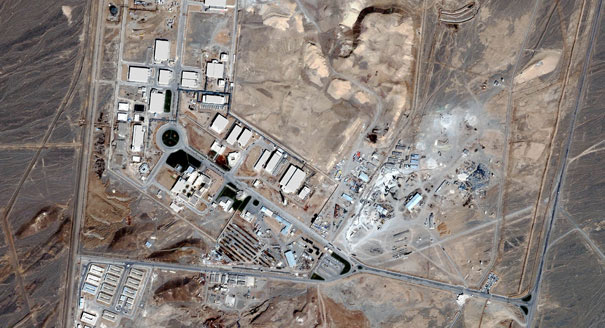
Natanz is the site of Iran’s largest uranium-enrichment complex, and the revelation in 2002 that Iran had built it in secret touched off the nuclear crisis. In fact, there are two enrichment plants at Natanz. One is an industrial-scale facility designed for 50,000 centrifuges; it is currently equipped with over 15,000 IR-1 centrifuges and about 1,000 IR-2ms. A second, smaller facility is used for test operations of advanced centrifuges under development and, until 2013, enrichment to 20 percent.
Enrichment at Natanz will be effectively banned for fifteen years. Thereafter, the scale and pacing of enrichment should be “reasonable,” “consistent with international non-proliferation norms. . . . [and] practical needs,” but it is not clear how Iran’s compliance with these criteria would be assessed and enforced.

Activities at this site exacerbated the crisis beginning in 2009, when it was discovered that Iran had secretly built a bunkered underground installation that Western governments believed was meant for undeclared enrichment. By late 2013, Iran had installed about 2,700 IR-1 centrifuges at Fordow and was operating some to enrich to 20 percent.
The JCPOA’s Fordow provisions further reduce the threat at this site, building upon the interim agreement in 2013 to limit the number of centrifuges and to halt enrichment at 20 percent U-235. That said, Fordow could retain value as a potential hard-to-target location for enrichment should Iran at any time contest implementation of the JCPOA, or after fifteen years.

Since 2006, Iran has defied UN Security Council resolutions ordering the suspension of construction of the IR-40 reactor at Arak, a heavy-water reactor ideally suited to producing weapons-grade plutonium.
A country seeking to produce fuel for nuclear weapons has two basic options: plutonium or highly enriched uranium. The JCPOA effectively eliminates the threat that the IR-40 project would give Iran a capability to produce, separate, and stockpile plutonium it could use for nuclear weapons.

Iran obtained equipment, materials, and know-how for the sensitive elements of its nuclear program through black market procurement activities, many of which violated or evaded other states’ export control laws.
If implementation is effective, these provisions should build confidence that Iran’s nuclear program is transparent and should render implementation easier because any detected procurement outside this channel would be a violation of the JCPOA.

Verification by the IAEA is vital to monitor Iran’s compliance with the JCPOA and Iran’s safeguards obligations. The IAEA seeks to verify that declared facilities, activities, and nuclear materials are not diverted to acquire nuclear weapons, and also to verify that no undeclared activities or activities that are not peaceful are undertaken.
The IAEA will have access going beyond Iran’s safeguards agreement in some key specific areas. But the JCPOA reflects Iran’s resistance to making additional commitments, including the Additional Protocol, that were sought in light of the country’s twenty-year record of systematic deception.
Political and operational challenges may make it difficult to obtain timely and usable intelligence to defend a request for access to investigate potential undeclared facilities and activities. Iran, other parties to the JCPOA, and/or the IAEA may differ over the provision of such access.
In the twenty-four days allowed to resolve differences, it is possible that Iran could seek to remove evidence, particularly having to do with proscribed activities, such as testing of detonation systems, that do not involve nuclear materials. This could exacerbate disputes about Iran’s compliance. It cannot be known in advance how the Joint Commission composed of China, the European Union, France, Germany, Iran, Russia, the United Kingdom, and the United States would resolve such disputes, and what the consequences would be if they could not.

The P5+1 have engaged in negotiations on the basis that nuclear sanctions imposed on Iran will be lifted in tandem with Iran’s implementation of the provisions of the JCPOA. The deal is based on the premise that sanctions relief will move Iran to comply with the provisions restricting its nuclear activities, as will the provisions to snap sanctions back into place if Iran fails to implement its terms.
The premise of the UN Security Council’s imposition of sanctions on Iran was that these sanctions would be lifted if Iran took agreed steps to constrain its nuclear activities and built international confidence that its nuclear program was exclusively peaceful. The JCPOA reflects this premise.
One or more parties could initiate the process that would lead to sanctions being snapped back into place, but Iran has stated that if this occurs it could cease performing its commitments under the JCPOA in whole or in part. Thus, reimposition of sanctions will remain a lever that each party could pull, but a decision to use it would have to be weighed against possible consequences.

Iran has long sought to use nuclear energy for generating electricity and other civilian purposes such as the production of radioactive isotopes for cancer treatment and, in this regard, would benefit significantly from international cooperation. The P5+1, therefore, sought to use such cooperation as an inducement to Iran for concluding the JCPOA.
These provisions may contribute to Iran fulfilling its obligations under the JCPOA. But in the absence of clearly defined P5+1 obligations, the text looks like a wish list that could prove to be a liability.

Japan Chair for a World Without Nuclear Weapons, Senior Fellow
George Perkovich is the Japan Chair for a World Without Nuclear Weapons and a senior fellow in the Carnegie Endowment for International Peace’s Nuclear Policy Program. He works primarily on nuclear deterrence, nonproliferation, and disarmament issues, and is leading a study on nuclear signaling in the 21st century.

Nonresident Senior Fellow, Nuclear Policy Program
Hibbs is a Germany-based nonresident senior fellow in Carnegie’s Nuclear Policy Program. His areas of expertise are nuclear verification and safeguards, multilateral nuclear trade policy, international nuclear cooperation, and nonproliferation arrangements.

Jessica T. Mathews Chair, Co-director, Nuclear Policy Program
Acton holds the Jessica T. Mathews Chair and is co-director of the Nuclear Policy Program at the Carnegie Endowment for International Peace.

Senior Fellow and Co-director, Nuclear Policy Program
Toby Dalton is a senior fellow and co-director of the Nuclear Policy Program at the Carnegie Endowment. An expert on nonproliferation and nuclear energy, his work addresses regional security challenges and the evolution of the global nuclear order.
Carnegie does not take institutional positions on public policy issues; the views represented herein are those of the author(s) and do not necessarily reflect the views of Carnegie, its staff, or its trustees.

Two divergent trends—Putin’s hardline vision of how to prosecute the war in Ukraine, and a growing desire for change in Russia—could tear the regime apart.

Tatiana Stanovaya
Ultimately, Zelensky sided neither with the reform camp nor with the military establishment as such, but with political control.

Balázs Jarábik
Tokayev’s predecessor, Nursultan Nazarbayev, outlined arrangements for a power transition too soon and in too much detail, ultimately losing control over the process. Tokayev is determined not to meet the same fate.

Temur Umarov

Andrey Melnichenko’s essay offers no answer to the fundamental question of how, under any kind of negotiated settlement, Europe can protect itself from the Russian ressentiment that is inevitable in all scenarios except for an outright victory for Putin.

Leonid Bershidsky

Despite unhappiness on the ground, Moscow is determined to use both carrot and stick to ensure there is record support for United Russia in occupied Ukraine.

Konstantin Skorkin