• Research
  • Politika
  • About
Carnegie Russia Eurasia center logoCarnegie lettermark logo
  • Donate
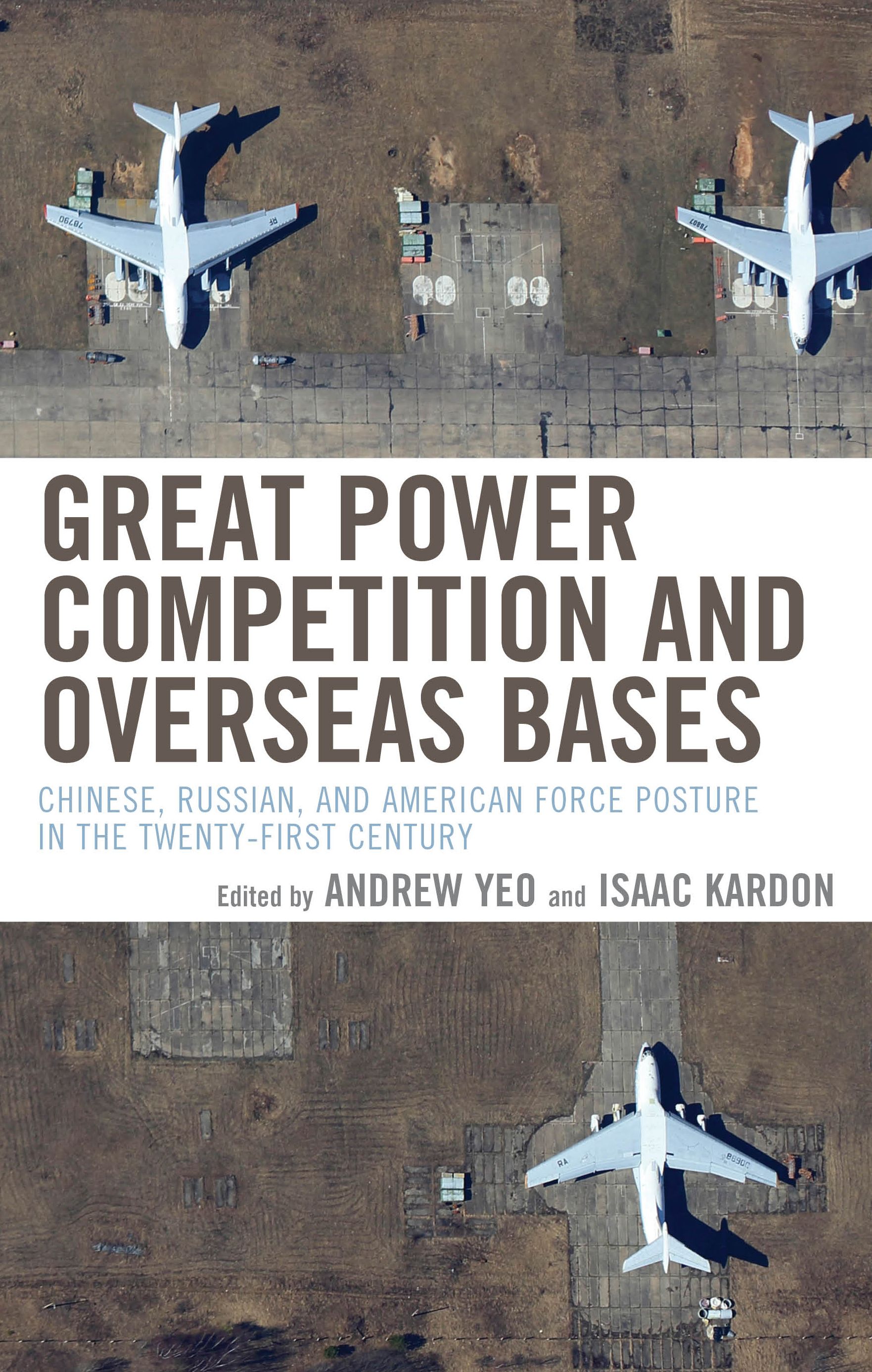
Great Power Competition and Overseas Bases: Chinese, Russian, and American Force Posture in the Twenty-First Century
Book

Great Power Competition and Overseas Bases: Chinese, Russian, and American Force Posture in the Twenty-First Century

This book examines the emerging dynamics of geostrategic competition for overseas military bases and base access.

Link Copied
By Andrew Yeo and Isaac B. Kardon
Published on Aug 27, 2024

Additional Links

Hardback - $85.00Paperback - $32.00Ebook - $30.00

What challenges and risks do Chinese and Russian bases pose to the United States’ military strategy? How do the military postures of great powers interact and with what consequences for regional and global security? This book examines the emerging dynamics of geostrategic competition for overseas military bases and base access. The comparative framework adopted in this volume examines how the geopolitical interests of the United States, China, and Russia and their respective underlying force posture interact in different regions including the Indo-Pacific, Europe, sub-Sahara Africa, the Indian Ocean, the Middle East, and the Arctic Circle.

By exploring the security, political economic, and domestic political dynamics of specific regions, the contributors to this volume reveal varied motivations for overseas military bases and base access among great powers. With analysis on the particular dynamics of overseas bases in major regional theaters, the book offers a valuable window into the nature and scope of the broader “great power competition” underway in the twenty-first century.

Advance Reviews

"Superb. A timely and thoughtful examination of the drivers and consequences of past and future military basing considerations and decisions that have and will shape the geostrategic landscape. A must read by those who ponder the future of great power competition and military force design."
— Gary Roughead, Admiral, U.S. Navy (Retired), Former U.S. Navy Chief of Naval Operations

"The book presents a measured and deeply informed assessment by tremendously talented thinkers from both academic and policy of three different, but potentially effective, approaches to overseas bases and international politics. This is essential reading on an underappreciated subject."
— Jon Caverley, Professor of Strategy, United States Naval War College

Authors

Andrew Yeo
Senior fellow and the SK-Korea Foundation Chair, Brookings Institution’s Center for Asia Policy Studies
Andrew Yeo
Isaac B. Kardon
Senior Fellow, Asia Program
Isaac B. Kardon
AsiaEast AsiaChinaRussiaRussia and EurasiaUnited StatesNorth AmericaSecurityDefense

Carnegie does not take institutional positions on public policy issues; the views represented herein are those of the author(s) and do not necessarily reflect the views of Carnegie, its staff, or its trustees.

More Work from Carnegie Russia Eurasia Center

  • Commentary
    Carnegie Politika
    Russia’s Unspoken Condition for Ending the War Is Zelensky’s Resignation

    Insisting on Zelensky’s resignation is not just a personal vendetta, but a clear signal that the Kremlin would like to send to all its neighbors: even if you manage to put up some resistance, you will ultimately pay the price—including on a personal level.

      Vladislav Gorin

  • Commentary
    Carnegie Politika
    For Putin, Increasing Russia’s Nuclear Threat Matters More Than the Triad’s Modernization

    For Putin, upgrading Russia’s nuclear forces was a secondary goal. The main aim was to gain an advantage over the West, including by strengthening the nuclear threat on all fronts. That made growth in missile arsenals and a new arms race inevitable.

      Maxim Starchak

  • Commentary
    Carnegie Politika
    Japan’s “Militarist Turn” and What It Means for Russia

    For a real example of political forces engaged in the militarization of society, the Russian leadership might consider looking closer to home.

      James D.J. Brown

  • Commentary
    Carnegie Politika
    Why Is Ukraine Extending a Hand to the Belarusian Opposition-in-Exile?

    The risk posed by Lukashenko today looks very different to how it did in 2022. The threat of the Belarusian army entering the war appears increasingly illusory, while Ukraine’s ability to attack any point in Belarus with drones gives Kyiv confidence.

      Artyom Shraibman

  • Commentary
    Carnegie Politika
    Russia Won’t Give Up Its Influence in Armenia Without a Fight

    Instead of a guaranteed ally, the Kremlin now perceives Armenia as yet another hybrid battlefield where it is fighting the West.

      Mikayel Zolyan

Get more news and analysis from
Carnegie Russia Eurasia Center
Carnegie Russia Eurasia logo, white
  • Research
  • Politika
  • About
  • Experts
  • Events
  • Contact
  • Privacy
Get more news and analysis from
Carnegie Russia Eurasia Center
© 2026 Carnegie Endowment for International Peace. All rights reserved.