

Commentary
For Lukashenko, abandoning Western internet services and embracing Russian equivalents would mean tying himself even closer to Moscow.
Artyom Shraibman

How existing conceptualizations of the term “information integrity” fall short and how information integrity can achieve conceptual goodness.
Kamya Yadav
Former Research Analyst, Technology and International Affairs
Kamya Yadav is a research analyst in the Technology and International Affairs Program at the Carnegie Endowment for International Peace. Kamya is a PhD student at the University of California, Berkeley, where she researches gender, representation, and technology in the context of developmental political economy, with a regional focus on South Asia.

Senior Fellow, Technology and International Affairs, Director, Information Environment Project
Alicia is the director of the Information Environment Project and the author of The Information Animal: Humans, Technology and the Competition for Reality. Alicia was a technical advisor to the Aspen Institute’s Commission on Information Disorder and is a founding member of its Global Cybersecurity Group.
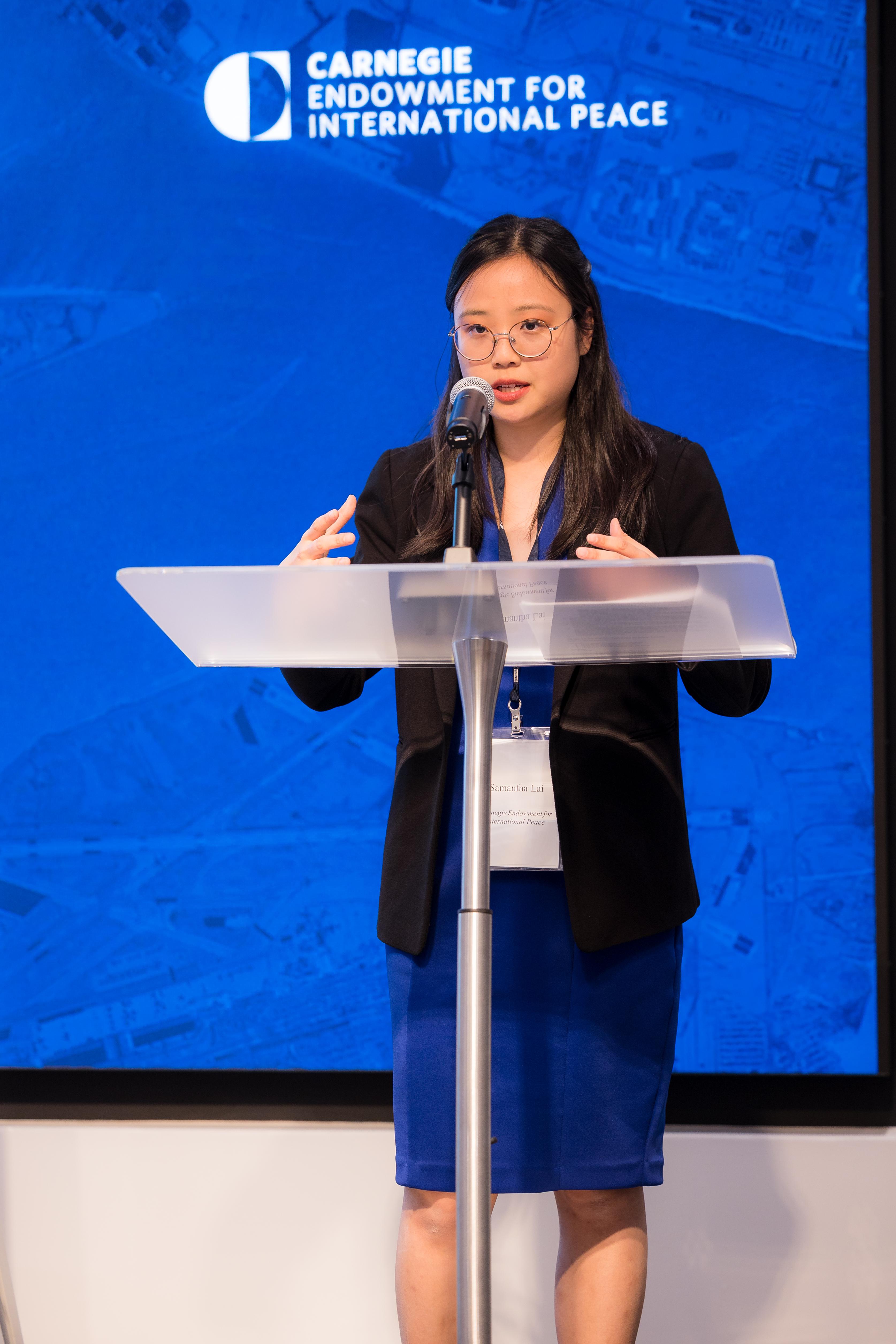
Samantha Lai
Former Senior Research Analyst, Technology and International Affairs
Samantha Lai was a senior research analyst at the Carnegie Endowment for International Peace's Information Environment Project.
Carnegie does not take institutional positions on public policy issues; the views represented herein are those of the author(s) and do not necessarily reflect the views of Carnegie, its staff, or its trustees.

For Lukashenko, abandoning Western internet services and embracing Russian equivalents would mean tying himself even closer to Moscow.

Artyom Shraibman

The Russian state has opted for complete ideological control of the internet and is prepared to bear the associated costs.

Maria Kolomychenko

Despite having the resources and expertise, the Russian space industry missed the opportunity to offer the United States or China a mutually rewarding partnership in the lunar race.

Georgy Trishkin

Central Asia’s digital ambitions are achievable, but only if policy is aligned with the region’s physical constraints.

Aruzhan Meirkhanova

The internet is awash not only with instructions from digital security experts, but also with urban legends and conspiracy theories that divert attention away from the real dangers of Max.

David Frenkel