

Paper
Thomas Carothers
Source: Getty
Despite myriad challenges and occasional stumbles, the new Hungarian government is moving ahead with energy and conviction to uproot years of illiberalism and corruption and rebuild Hungarian democracy.
Hungary’s startling political turnaround in April—the decisive defeat of Viktor Orbán and his party, Fidesz, by political upstart Péter Magyar and his newly formed Tisza Party—attracted global attention. It represented the defeat of a leader of illiberal forces in Europe and a major MAGA political soulmate and presented an unexpected opportunity for political renovation in what had become the European Union’s most glaring case of democratic erosion. Only four months since Magyar’s inauguration, it is still early days in what will inevitably be a long transition process. Yet enough time has passed for a first look at how Hungary’s new political moment is going. Overall, the news is good. The new government is acting with energy, firmness, and serious democratic intentions. The depth of the challenges involved remains considerable and some stumbles have occurred, but overall, this continues to be the most hopeful moment in Hungarian politics in decades and a potentially significant case of successful redemocratization after serious backsliding.
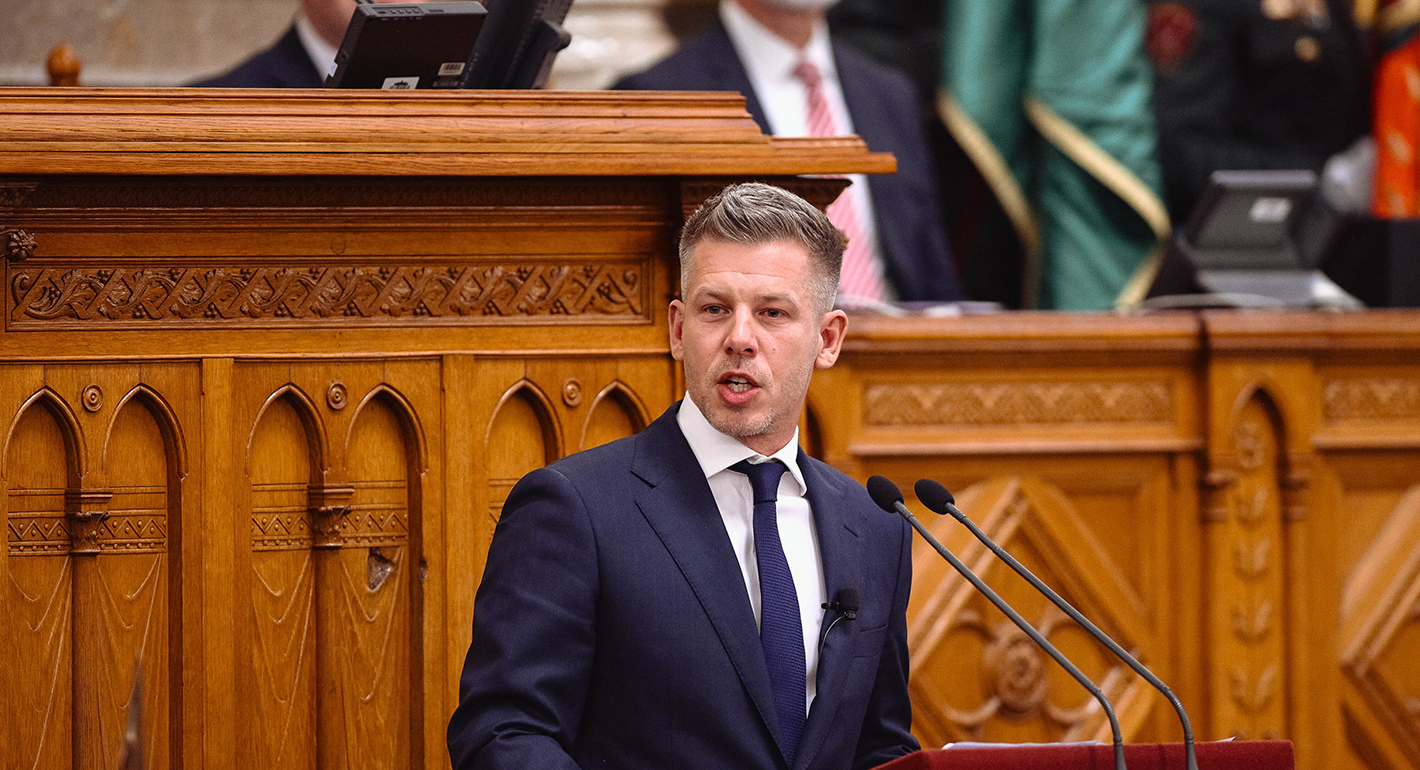
Péter Magyar was relentless and energetic during his campaign and is proving to be the same as prime minister. He dominates in Parliament, speaking often and at length, usually in a tough, confrontational way to a Fidesz bloc long used to being beyond challenge. Magyar and his team have moved quickly to introduce reforms across a wide array of fronts—mixing symbolic steps, like opening up the former prime minister’s gilded offices to the public, with substantive ones, like closing the Sovereignty Protection Office, an institution Fidesz established late in its rule to pressure and intimidate the nongovernmental sector. Following an electoral campaign rooted in social media and a constant stream of pointed messaging, the new government is pursuing a highly transparent and communicative style of governing, causing some critics to deride the approach as “Facebook governance” but many supporters to feel directly connected and informed.
Hungary’s redemocratization entails a distinctive combination of an enormous amount that needs to be done with an enormous amount of power to do it.
Although various cases of attempted democratic reconstruction after the electoral ouster of a backsliding government have emerged in recent years—like Poland in 2023, Senegal in 2025, and Zambia in 2021—Hungary’s situation differs from them in two critical ways. First, the outgoing illiberal forces were in power for an unusually long time (sixteen years) and used their political supermajority (a greater than two-thirds share of seats in Parliament) to construct and entrench a remarkably vast, complex governing system, rooted in extensive patronage and corruption. Second, the new government has unusually sweeping power thanks to it having itself gained a parliamentary supermajority. This supermajority gives the government a high degree of influence and in many ways control over constitutional reform, the state apparatus, and the economy. Moreover, Tisza rules alone, not in a coalition, freeing it from the constraints that opposition coalitions that come to power often experience. In simple terms, Hungary’s redemocratization entails a distinctive combination of an enormous amount that needs to be done with an enormous amount of power to do it.
Receive research announcements and invitations to events from the Carnegie Democracy, Conflict, and Governance Program.
Within a potentially almost limitless transitional agenda, five early priorities of the new government stand out.
The central task for the new government is dismantling the old system of power, which Fidesz expressly designed to outlast its time in office. This process of dismantlement has several main components.
The first is pushing hard against the corruption of the outgoing system, corruption having been a primary reason behind Fidesz’s massive loss of support in recent years. Thanks to relentless investigative work by independent media and civic actors, as well as new openness in relevant parts of the government, revelations about the corrupt practices of the Fidesz system, which were already multiplying in the year before the elections, have become an almost everyday occurrence since April. The government has established a National Asset Recovery and Protection Office, which has broad investigative and enforcement powers relating to abuses involving public assets. This new agency, working together with prosecutors and judges, will seek to recover government assets stolen during the Fidesz years. Setting up such an agency was a central Tisza campaign promise—but actually recovering assets will likely be a long, difficult road given the scale and complexities of past wrongdoing, and the fact that a significant share of Fidesz’s corruption was cleverly designed legalized corruption. Also on the anti-corruption front, Hungary will be joining the European Public Prosecutor’s Office, the EU’s anti-corruption investigative unit.
The second part of dismantling the old system is an unfolding set of measures to remove key persons associated or aligned with it. These have included a constitutional amendment to force the resignation of the holdover president, Tamás Sulyok; instituting a new retirement age for justices of the Constitutional Court, obliging some of them to step down; and successfully pressuring the prosecutor general to resign. The government also instituted a ban on any person serving as prime minister for more than eight years going forward, rendering Orbán ineligible to return to power in that capacity. The measures have also included removing some of the Fidesz holdovers in ministries and replacing them with new people.
A third component is getting the complex process underway of revamping or closing down many of the holdover institutions that Fidesz created or marshalled as parallel structures outside the ministries to control state assets and functions after Fidesz left power. A major step in this vein has been a set of legal measures to remove the legal protections for and then begin to dissolve what are known as public interest asset management foundations, institutions Fidesz created or restructured to exercise authority and spending power outside the government in a wide range of areas. By the end of August, sixteen foundations closed and several billion euros worth of funds returned to the state. The government is also pursuing reforms of judicial institutions it regards as having been deformed in the Fidesz years, such as the Constitutional Court, where it has put forward proposed institutional changes beyond the lowered retirement age, such as how the head of the court is selected.
With Fidesz having invested enormous effort to capture the print and electronic media and enlisted them to serve Fidesz’s partisan agenda, media reform has been an area of special importance to the new Tisza government. In the first place, this has consisted of stopping the governmental funding flows to the extensive universe of Fidesz-friendly newspapers, magazines, radio stations, and television stations, causing an almost immediate collapse of the whole echo chamber of Fidesz print and broadcast propaganda. This included closing the news production at the main national television and radio stations for six weeks and then reopening them under new, professionalized management in August. A small but highly visible measure was the government ceasing Fidesz’s practice of plastering large, tendentious political posters all over Budapest and banning the practice of the government employing such posters going forward.
Beyond these focused steps, in June, the Parliament approved an amendment to the national media law to put in place systematic institutional reforms aimed at removing the structures of control that Fidesz had built to dominate the media and replacing them with institutional mechanisms in line with European prodemocratic standards, including an independent public media board. These measures have generated intensive discussion in the media and more widely, with a mix of praise for the overall direction of change but some criticisms for a rushed process and question marks around some of the government’s choices for the new oversight bodies. The government has signaled that it will put forward a comprehensive media reform package later this year.
Alongside public anger over corruption, public frustration over Hungary’s poorly performing economy of the past several years was another leading factor driving Fidesz’s electoral demise. Consequently, the new government has also been giving high priority to putting the economy on a better footing, ideally rapidly.
Magyar and his team moved fast to unlock the EU funds for Hungary that had been withheld in recent years due to EU concerns over corruption and other rule of law issues.
To that end, Magyar and his team moved fast to unlock the EU funds for Hungary that had been withheld in recent years due to EU concerns over corruption and other rule of law issues. Magyar traveled to Brussels within weeks of taking office and quickly secured a political agreement with European Commission President Ursula von der Leyen for the release of 16.4 billion euros (10 billion euros of recovery funds and 6.4 billion of cohesion funds). The government then worked quickly to craft the needed administrative and legal reforms required to fulfill the agreement by the deadline at the end of August for the release of the recovery funds. If the commission approves those reforms, they will be released by the end of this year. Release of the 6.4 billion euros of cohesion funds is being pursued on a separate track. With the Hungarian budget roughly one-sixtieth the size of the U.S. federal budget, the amount of these funds for Hungary is roughly the equivalent in U.S. terms of a potential budgetary boost of over 1 trillion dollars.
Overall, the economic situation has improved somewhat since the election. Tisza’s coming to power produced a surge of increased confidence on the part of investors, resulting in governmental interest rates coming down within several months, with the National Bank cutting interest rates three times in a row starting in June, for the first time in more than ten years. Inflation, which was high in recent years, has also eased, registering less than a 2 percent annualized rate in July. Hungary’s currency, the forint, strengthened considerably against the dollar and euro after the April election. Thanks to tightened control of government spending, the lower interest rates, and the strengthened forint, the government was able to keep the budget deficit—which Fidesz sent into a spiral as a result of reckless fiscal policies, including financial giveaways ahead of the election—from going above 8 percent, though it remains high. The manufacturing outlook has also improved as a result of positive business sentiments rooted in hopes for more transparent and rational business policies on the part of the new government.
The neglect and decay of Hungary’s core governance services—especially relating to health, education, and transportation—was another major Fidesz failing that motivated many voters to give Tisza a try. The new government has been working to rebuild and move forward in these areas as well. In this first phase, these efforts have followed a basic three-part pattern. First, the government has taken some quick, low-cost, high-visibility remedial measures. In the health sector for example, the government put some small but closely targeted emergency funding into repairing air-conditioning in the hospitals to help get through the hot summer months and committed to making available information about infection rates at different hospitals as well as wait times for ambulance services. Second, the government has begun carrying out stakeholder and expert consultations on priorities for reform. For example, the new education minister has held extensive consultations with educators and others on a raft of reform areas and plans. And third, the government has been formulating comprehensive reform plans that will be put forward in the autumn in most major governance domains.
An additional area of emphasis in these governance reforms has been the cultural sector, a domain of significant—and highly partisan—engagement by Fidesz over the years as part of Orbán’s efforts to create a comprehensive ideological framework for reshaping Hungarian society. The government has carried out audits and publicly released information on how large amounts of cultural funding over the years were steered to Fidesz-related people and organizations, often for Fidesz-friendly cultural projects, and sometimes just for obviously corrupt purposes. And the government has put in place new people and procedures in the cultural funding mechanisms to end the partisan cultural crusade.
Magyar and his foreign policy team have moved quickly to reset Hungary’s foreign policy away from Orbán’s ceaseless antagonism and hostility to Brussels, subservience to Russia, and belief in the rise of a post-liberal world and Hungary’s necessary place at the center of it.
The main thrust of this reset has been rebuilding ties with the European Union, not just relating to the EU funds mentioned above but also more generally. Important to this effort was an early revision of policy toward Ukraine to align with EU policy and reduce the friction with Ukrainian President Volodymyr Zelensky that Orbán relentlessly stoked, although some tensions persist over the issue of the rights of the Hungarian minority in Ukraine. Magyar has visited Berlin, Paris, Vienna, and Warsaw to put relations with EU states of special importance to Hungary on a new and better footing. The new government has also stopped Orbán’s frequent flirtations with Moscow and in late August issued policy guidelines stating that Russia’s actions in Ukraine are a threat to Hungary (and Europe and the global order).
In June, Magyar hosted the leaders of the three other countries in the Visegrád Group (the Czech Republic, Poland, and Slovakia) in Hungary, where they announced a relaunching of a group that had become inactive in recent years due to Orbán’s efforts to make it a platform for illiberalism and the group’s opposition to that.
In addition, the new foreign minister, Anita Orbán (no relation to Viktor Orbán), has set about cleaning out and renovating the foreign ministry, after the deep politicization of Hungary’s diplomatic service under Fidesz. She has announced the departure of dozens of ambassadors and started naming successor appointments of people not engaged in partisan politics.
Heavily wounded by its devastating electoral loss, Fidesz has been struggling to find its footing in Hungary’s new political context. Orbán maintains his role as head of party and continues to avoid signaling any successor, yet he has been notably absent from public view during recent months. Due to the new limit on prime ministerial terms, he has no prospect of returning to power. Unable to maintain its old sphere of captive media, think tanks, and cultural organizations, or to steer governmental funds to its cronies and allies, Fidesz no longer has any obvious levers of influence beyond its weak role in Parliament as an opposition party facing a supermajority. And—as was the case during the campaign, when they seemed out of ideas and energy and relied on tired scaremongering tropes rather than engaging on salient policy issues—in the past several months Orbán and Fidesz have failed to articulate any incisive ideas about policy choices. Instead, they have constantly repeated a bombastic message—one that many Hungarians find farcical—about the death of democracy under Tisza rule. An outflow of various senior party members to take up business opportunities or other pursuits has further weakened the party.
Fidesz no longer has any obvious levers of influence beyond its weak role in Parliament as an opposition party facing a supermajority.
Thus, unlike in Poland (where the illiberal party suffered electoral defeat but then immediately began seriously challenging the new government and making a return to power seem imaginable, or even likely), Fidesz is currently at sea. Over time, it may find a new set of political messages that gain traction and thus regain some of its lost voter base, but for the time being it presents little challenge to the new government.
Of course, no process of democratic transition, even one showing considerable positive momentum, is without problems. Magyar and his party are in a hurry to tackle an enormously wide and deep set of needed systematic changes. Although they are showing notable dynamism in doing so, at times their search for speed results in errors of both judgment and execution. This was the case in July for example, when Magyar moved abruptly and clumsily in the early phase of the process of selecting a candidate to succeed the outgoing president. And various observers in the media and civic sector have complained at various times over the past few months that the government is short circuiting needed consultation periods or processes in its rush to get things done, such as the amendment to the media law. At the same time, Magyar has shown a willingness to admit mistakes and reset his course on botched appointments—as he did in the case of the selection of a new president and in the appointment of a justice minister—something that, many Hungarians note, Viktor Orbán never did.
In addition, while Magyar continues to impress with his level of energy and dedication, he has at times demonstrated a harshness and combativeness that borders on imperiousness and has triggered some concerns in a country coming out of many years of overweening prime ministerial rule. This has been visible not just in his frequent speeches in Parliament, where he often speaks in scorching terms about Fidesz’s past wrongs and personalizes some of his remarks, but sometimes also on Facebook, where he has tangled with journalists and other independent voices.
The government’s maximum force, maximum speed use of its parliamentary supermajority to force out the country’s holdover president sparked some criticism, not just from Fidesz but also from the civic sector and international observers. So too did the new constitutional provision setting a twelve-year limit on parliamentarians’ terms, effective starting in the next national election. The measure is viewed by some as political retribution against Fidesz (which would be primarily affected by it) rather than a principled systemic reform, especially because it is without parallel in the European Union.
Managing high public expectations is a perennial challenge in contexts of positive electoral turnarounds, and Hungary is no exception. Hungarians voted in large numbers for Tisza out of a burning hope for rapid, major improvements in economic well-being and governance services as well as tough justice for corrupt officials of the outgoing regime. These are objectives that will inevitably take time. Thus far the government has been largely meeting the high expectations through its dynamism and high degree of communicativeness. After gaining 53 percent of the vote in April, Tisza’s support grew to over 60 percent in July while Fidesz, which received 39 percent in April is now polling at around 24 percent.
But the pressure of high expectations will continue to weigh on the new government and will likely define the contours of the second, more extended phase of Hungary’s transition, which is emerging now after the relentless rush of the first four months of Tisza rule. One major task in the next phase will be the government putting forward and attempting to put in place comprehensive reforms in key areas, starting with the promised constitutional reform and extending to broadscale reform in the media, education, health, and other sectors. Going from a stream of revelations about past corruption to a stream of successful prosecutions of key former officials will be another. And turning the early good news on the economy into sustained improvement will be a third.
On top of all the internal complexities and challenges that the new government faces are a set of wider factors that further complicate its work. These include the region’s continuing drought with its negative consequences for energy production and agriculture, Europe’s overall relatively stagnant economic situation and serious security worries relating to Russia, and the uncertainty about international energy prices caused by continuing conflict in the Middle East. Nevertheless, after a summer of rapid, at times head-snapping change away from sixteen years of democratic erosion and governance stagnation, a majority of Hungarians have reason to remain optimistic about the path ahead.
The author thanks Andrea Csanádi, Hanna Folsz, Péter Krekó, and Zsuzsanna Végh for helpful comments and corrections on a draft. The views expressed herein are the responsibility of the author alone.
Correction: The article incorrectly referred to the “National Asset Recovery and Protection Office” as the “National Agency Recovery and Protection Office.” This has been fixed.

Harvey V. Fineberg Chair for Democracy Studies; Senior Fellow, Democracy, Conflict, and Governance Program
Thomas Carothers, a senior fellow in the Carnegie Endowment for International Peace’s Democracy, Conflict, and Governance Program, is a leading expert on comparative democratization and international support for democracy.
Recent Work
Thomas Carothers
Thomas Carothers
Carnegie does not take institutional positions on public policy issues; the views represented herein are those of the author(s) and do not necessarily reflect the views of Carnegie, its staff, or its trustees.

Experts from throughout Carnegie’s global network assess the stark humanitarian toll, the regional ramifications, and the diplomatic challenges posed by the Taliban’s takeover of Afghanistan.



Saskia Brechenmacher, Rudra Chaudhuri, Ryan Crocker, …
American democracy has been deeply damaged by a president’s refusal to concede power and his supporters’ use of violence and intimidation to pressure political officials—problems fueled by polarization and an antidemocratic faction of the Republican Party. Here’s where the fault lines come from—and how to begin patching them.

Rachel Kleinfeld
Despite a checkered past record, U.S. programs to promote democracy abroad should not be equated with systemic Russian attempts to interfere with other nations’ politics.
Thomas Carothers

Based on the data, policymakers and practitioners need to ask hard questions about whether the terrorist threat justifies a continuing U.S. military buildup in Africa.

Steve Feldstein
U.S. democracy policy is under severe strain, but writing off the United States as a key supporter of global democracy is premature.
Thomas Carothers