

{
  "authors": [
    "Harith Hasan",
    "Kheder Khaddour",
    "Loulouwa Al Rachid"
  ],
  "type": "event",
  "centerAffiliationAll": "dc",
  "centers": [
    "Carnegie Endowment for International Peace",
    "Malcolm H. Kerr Carnegie Middle East Center"
  ],
  "collections": [],
  "englishNewsletterAll": "democracy",
  "nonEnglishNewsletterAll": "",
  "primaryCenter": "Malcolm H. Kerr Carnegie Middle East Center",
  "programAffiliation": "DCG",
  "programs": [
    "Democracy, Conflict, and Governance",
    "Middle East"
  ],
  "projects": [
    "X-Border Local Research Network"
  ],
  "regions": [
    "Middle East",
    "Iraq",
    "Syria",
    "Levant"
  ],
  "topics": [
    "Political Reform"
  ]
}
The Iraqi-Syrian Border Post-ISIS: Local Actors, Geopolitical Rivalries, and the Economy
Fri, January 22nd, 2021
Live on Facebook and YouTube
The Iraqi-Syrian frontier zone, which encompasses Syria’s eastern Euphrates region and Iraq’s western Mosul Governorate, has played a central role in regional and international politics. Kurdish parties on both sides of the border have played a major role in defining cross-border dynamics, which has pushed Turkey to intervene both in northeastern Syria and in northern Iraq. These dynamics will be essential for defining the future of the border region and prospects for wider stability in both countries.
The Malcolm H. Kerr Carnegie Middle East Center invites you to a virtual panel discussion on Friday, January 22 from 4:00-5:00 p.m. Beirut (GMT+2) to examine the local actors and geopolitical shifts along both sides of the frontier. The event will be held in Arabic and broadcast live on the center’s Facebook and YouTube channels. Viewers can submit questions using the Live Chat feature during the event.
Carnegie does not take institutional positions on public policy issues; the views represented herein are those of the author(s) and do not necessarily reflect the views of Carnegie, its staff, or its trustees.
Event Speakers
Associate researcher at the Arab Center for Research and Policy Studies.
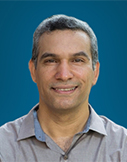
Harith Hasan is an associate researcher at the Arab Center for Research and Policy Studies.
Nonresident Scholar, Malcolm H. Kerr Carnegie Middle East Center

Kheder Khaddour is a nonresident scholar at the Malcolm H. Kerr Carnegie Middle East Center in Beirut. His research focuses on tribal structures in the Levant, civil-military relations in Syria, and the role of borders in shaping local and national identities across the Middle East.
Former Co-Director, Program on Civil-Military Relations in Arab States, Carnegie Middle East Center
Loulouwa Al Rachid was a co-director of the Program on Civil-Military Relations in Arab States at the Carnegie Middle East Center.