

Research
- +10
Rosa Balfour, Frances Z. Brown, Yasmine Farouk, …
{
  "authors": [
    "Moisés Naím"
  ],
  "type": "legacyinthemedia",
  "centerAffiliationAll": "dc",
  "centers": [
    "Carnegie Endowment for International Peace"
  ],
  "collections": [],
  "englishNewsletterAll": "asia",
  "nonEnglishNewsletterAll": "",
  "primaryCenter": "Carnegie Endowment for International Peace",
  "programAffiliation": "AP",
  "programs": [
    "Asia"
  ],
  "projects": [],
  "regions": [
    "North America",
    "United States",
    "East Asia",
    "China"
  ],
  "topics": [
    "Economy",
    "Trade",
    "Security",
    "Military"
  ]
}
Source: Getty
Business leaders, government officials and military planners fret over China's potential to wreak havoc in the world. These anxieties are based on China's growing power; but the real threats it poses will spring from its weaknesses, not its strengths.
Source: Carnegie

Business leaders, government officials and military planners fret over China's potential to wreak havoc in the world. Worried about the US trade deficit, John Snow, US Treasury secretary, recently visited Beijing to see if something could be done about the undervalued exchange rate that makes Chinese exports even cheaper than they would otherwise be. His colleagues at the Pentagon worry that China may develop the economic and military wherewithal to challenge US global supremacy. President Vicente Fox complains of China's aggressive tactics in luring light industry away from Mexico, while Germans and Japanese worry that China's cheap exports add to their own deflationary problems.
These anxieties are based on China's growing power; but the real threats it poses will spring from its weaknesses, not its strengths.
China will almost certainly have an accident within 10 years that will slow its economic growth and destabilise its politics. Less certain is the nature of such an accident. Will it be a 1990s- vintage crisis, where a financial crash is followed by a surprisingly rapid recovery? Or a 1960s-style political upheaval that halts progress for many years? Most likely it will be a hybrid: a crisis that starts as a financial accident and turns into a political maelstrom as its social aftershocks spread.
Why is it impossible for China to avoid a politico-economic crisis in the next decade? Because no country has ever been able to go through the social, economic and political change that China will undergo without accidents that derail even the best-laid plans.
Take urbanisation, for example. Each year for the foreseeable future about 12m Chinese farmers will move to a city. Conservative estimates place the associated costs at 4 per cent of gross domestic product a year. More problematic, the demands on urban infrastructure and social services will be impossible to satisfy. For example, China's roads are growing at 6 per cent a year, while the number of cars increases by 10 per cent. Its investment in water supply over the past five years equals the total for the preceding four decades. Yet, for most Chinese, water shortages will be an enduring reality. The same applies to electricity. The ensuing shortages are as inevitable as the political resentments they breed. In China corruption amplifies such resentments and makes them more politically destabilising, not least by feeding the impression that the shortages are in- equitably allocated.
Economic reforms are another explosive additive to this volatile cocktail of change. The Chinese model of gradual economic deregulation coupled with slow political change does not make the fine-tuning of economic reforms any easier. In fact its "gradualism" has increasingly been used to justify a reform paralysis.
This policy paralysis is not just the result of the chokehold of vested interests at the highest levels of decision-making. Caution and confusion also play a part, as the political consequences of economic change are unpredictable and hard to manage. Prescribing that the renminbi should float according to market forces, for example, is far easier than managing the political consequences of such a move. China is already bracing for the de- stabilising effects of reforms that will result from its joining the World Trade Organisation. The "gradual" deregulation of the financial sector has created a mountain of bad debt that, according to most experts, cannot be reduced without restrictions on state-owned enterprises and job cuts in manufacturing. The situation is worse for the 800m rural Chinese who earn just 15 per cent of the urban average.For rural unemployment to stay below 20 per cent, the economy needs to expand by 7 per cent a year.
To sustain such a growth rate, several miracles have to occur. Maintaining political order will be the main one. As Minxin Pei, a respected China scholar, has noted, counting periods where the central government has lost control of large swaths of territory, China has experienced more than 1,000 years of internal chaos.
To avoid repeating this sad history China needs to apply both control and liberalisation in artfully sequenced steps. The problem is that there are no reliable recipes for this and no one has ever managed to avoid accidents while trying. That is why, if it happens in China, it will be a miracle.
The writer is editor-in-chief of Foreign Policy magazine
Originally published in the Financial Times, on September 15, 2003

Distinguished Fellow
Moisés Naím is a distinguished fellow at the Carnegie Endowment for International Peace, a best-selling author, and an internationally syndicated columnist.
Recent Work



Rosa Balfour, Frances Z. Brown, Yasmine Farouk, …
Moisés Naím
Carnegie does not take institutional positions on public policy issues; the views represented herein are those of the author(s) and do not necessarily reflect the views of Carnegie, its staff, or its trustees.

China’s banking crisis in the 2000s was resolved by transferring the costs to households through financial repression—a decision that recapitalized the banks while exacerbating the structural imbalances that continue to shape the Chinese economy today.

Michael Pettis

Chinese biotech companies have been on the receiving end of U.S. economic coercion. Yet their responses have differed significantly because firm and state interests are not uniformly aligned. For Washington, treating all Chinese tech firms the same, irrespective of their actual interests, risks pushing them farther into Beijing’s corner.

Xue Gong
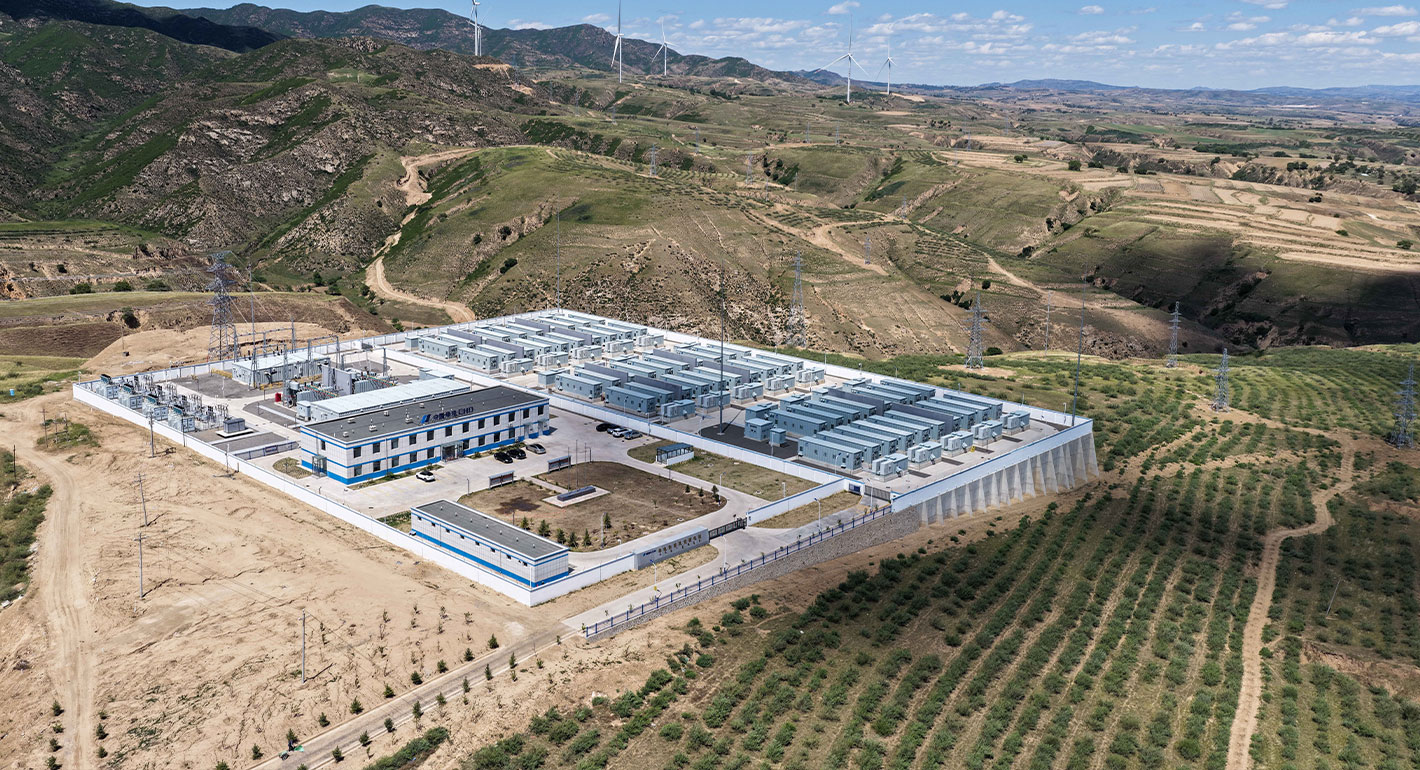
China’s latest energy plan explicitly calls for integrating data centers into the electricity system, particularly connecting them to green energy. It appears Beijing wants to use compute as a source of domestic demand to absorb renewables excess capacity.

Damien Ma

But their "principal to principal" model will only be as effective as the political strength of each leader back home.
Damien Ma

U.S. unpredictability has allowed China to capitalize on its positioning as the “responsible great power”. Paradoxically, the more China wins the perception game, the more likely expectations will rise for Beijing to deliver not just words but to demonstrate with its deeds.

Chong Ja Ian