

Report
- +2
George Perkovich, Jessica Tuchman Mathews, Joseph Cirincione, …
{
  "authors": [
    "Jon Wolfsthal"
  ],
  "type": "legacyinthemedia",
  "centerAffiliationAll": "dc",
  "centers": [
    "Carnegie Endowment for International Peace"
  ],
  "collections": [],
  "englishNewsletterAll": "ctw",
  "nonEnglishNewsletterAll": "",
  "primaryCenter": "Carnegie Endowment for International Peace",
  "programAffiliation": "NPP",
  "programs": [
    "Nuclear Policy"
  ],
  "projects": [],
  "regions": [
    "Pakistan"
  ],
  "topics": [
    "Security",
    "Military",
    "Foreign Policy",
    "Nuclear Policy",
    "Nuclear Energy"
  ]
}
REQUIRED IMAGE
It's been a poorly kept secret for several years that Pakistan helped develop nuclear programs in Iran, North Korea and probably in Libya. For the United States, however, Pakistan's help in the war on terror has been more important than its peddling of nuclear technology to rogue states.
Source: Carnegie
It's been a poorly kept secret for several years that Pakistan helped develop nuclear programs in Iran, North Korea and probably in Libya. For the United States, however, Pakistan's help in the war on terror has been more important than its peddling of nuclear technology to rogue states. As a result, Islamabad has felt no significant U.S. pressure to impose tighter controls on Pakistani nuclear experts, expertise or equipment. But as evidence of Pakistan's role in nuclear proliferation mounts, that's no longer an acceptable trade-off. A country that arrests terrorists one day and sells nuclear technology the next is not contributing to greater U.S. security.
After Sept. 11, 2001, news reports revealed that two Pakistani scientists had direct contacts with Osama bin Laden while he was operating in Afghanistan. Investigators later alleged that Abdul Qadeer Khan, the father of Pakistan's nuclear program, had traveled almost a dozen times to North Korea to help Pyongyang develop a uranium-enrichment program. And International Atomic Energy Agency officials reported that uranium-enrichment equipment inspected in Iran was identical to that found in Pakistan. Now, Pakistani officials confirm that several of the country's top nuclear experts are being questioned for providing nuclear technologies to other countries. And there is a growing possibility that Libya's nuclear program, which Libyan leader Moammar Kadafi recently pledged to shut down, bears Pakistan's nuclear signature.
The U.S. has had little success in convincing high-level Pakistani officials to safeguard the country's nuclear materials and technology. Last year, for example, Secretary of State Colin L. Powell raised the issue with Pakistani President Pervez Musharraf, offering U.S. assistance. The Pakistani response was the equivalent of: "Butt out, we can handle our own affairs." Last month's announcement that the Pakistani army was assuming control of the country's nuclear program was strictly a public-relations move.
It's possible that the Pakistani scientists being questioned were operating without government permission. But Pakistan had a heads-up about such contacts from the U.S. two years ago, which should have prompted authorities to be more vigilant about monitoring nuclear personnel. It's also possible that Pakistani nuclear experts helped Iran and North Korea as part of official policy. Pakistan received intermediate-range missiles from North Korea, but it was never clear how cash-strapped Islamabad could afford them. Similarly, cash and oil from Iran may have been lures for Pakistan's nuclear technology.
Regardless of why its scientists peddled nuclear assistance, Pakistan has a problem it cannot or will not control: It has become the world's No. 1 nuclear proliferator.
Accordingly, some say that Pakistan should be sanctioned or treated as a rogue state. It's unclear, however, that punishment — or the threat of punishment — would stop Pakistan from selling nuclear technology or compel it to monitor its nuclear facilities more closely. Instead, it might increase economic pressures and destabilize Pakistan, reducing even its nominal control over nuclear weapons and facilities.
There's a better course.
The U.S. should make clear at the presidential level that Pakistan's past nuclear misconduct has damaged American security, and that to ensure its partnership with Washington, Islamabad must satisfy U.S. concerns about its nuclear program. This would have to include acceptance of American assistance to establish a personnel-reliability program, which would include use of background checks, polygraphs and drug tests; to improve physical protection of nuclear weapons, materials and equipment by deploying modern security systems; and to adopt international standards on the protection of nuclear materials at production and storage sites.
At the same time, Washington must emphasize that its top priority in its relations with Pakistan is nuclear proliferators, not assistance in the pursuit of Bin Laden and members of Al Qaeda. Concern is already running high in Pakistan that the U.S., just as it did after the Soviets had left Afghanistan, will cut its ties after Bin Laden is captured. Making nuclear nonproliferation the goal might reduce this fear because it would require the U.S. to work with Pakistan over the long haul, including helping to reform its economy. Furthermore, India's and Pakistan's agreement to talk peace could give Islamabad more leeway to work with Washington to secure its arsenal.
The belief in Pakistan is that the U.S. cannot fight the war on terror without its help. But the price for such cooperation cannot be Pakistan's continuing complicity in spreading nuclear technology to rogue states. That price is simply too high.
Washington has promised a brighter future for Kadafi because he has abandoned his nuclear ambitions. It should do the same for Pakistan as long as Islamabad acts responsibly and stops selling its nuclear knowledge to the highest bidders.
Jon Wolfsthal is deputy director of the Non-Proliferation Program at the Carnegie Endowment. He is co-author of "Deadly Arsenals: Tracking Weapons of Mass Destruction."
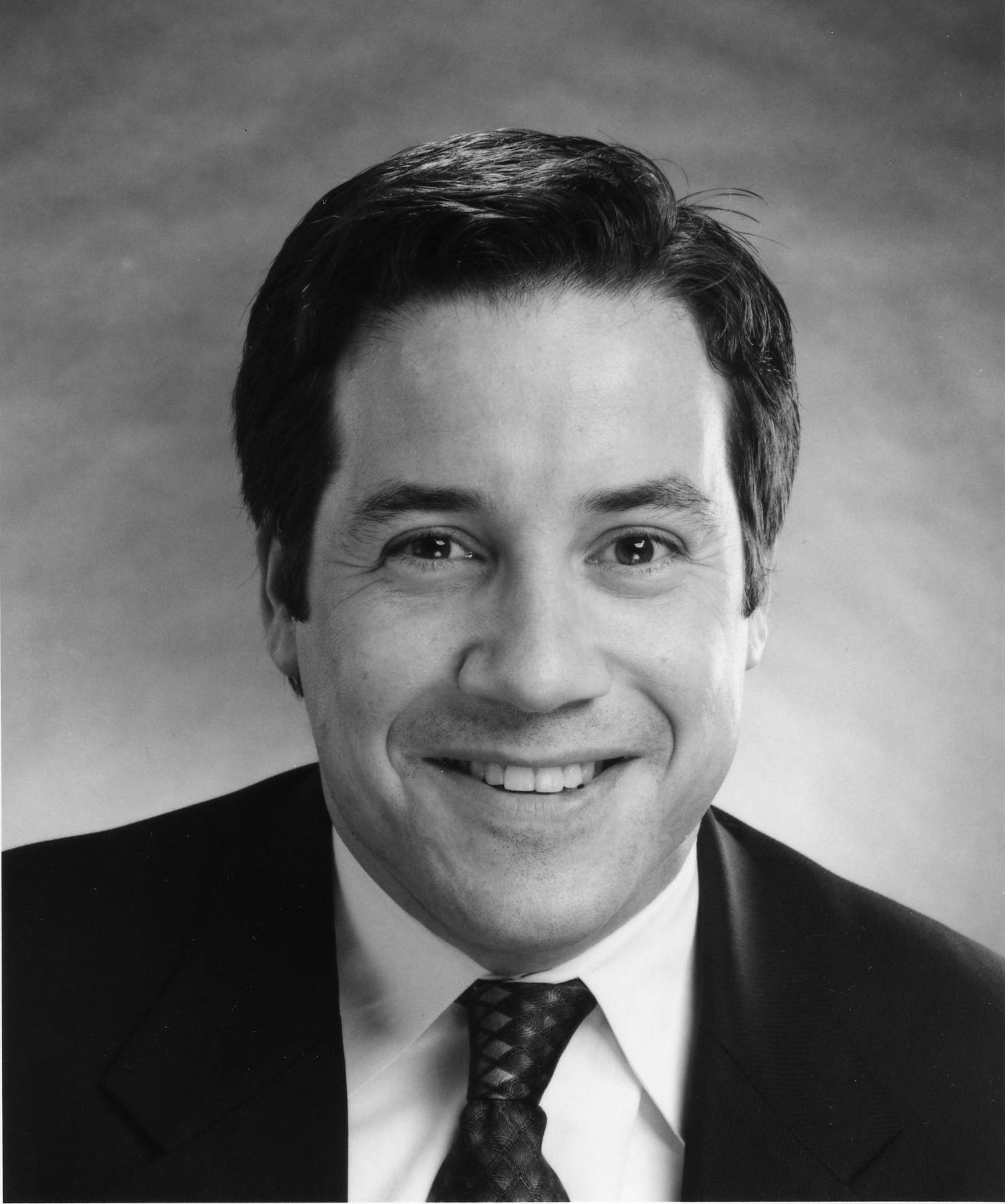
Former Nonresident Scholar, Nuclear Policy Program
Jon Wolfsthal was a nonresident scholar with the Nuclear Policy Program.
Recent Work


George Perkovich, Jessica Tuchman Mathews, Joseph Cirincione, …
Jon Wolfsthal
Carnegie does not take institutional positions on public policy issues; the views represented herein are those of the author(s) and do not necessarily reflect the views of Carnegie, its staff, or its trustees.

The nuclear relationship between China and the United States is increasingly shaped by widening perception gaps rather than deliberate strategic design.

Tong Zhao

But their "principal to principal" model will only be as effective as the political strength of each leader back home.

Damien Ma

U.S. unpredictability has allowed China to capitalize on its positioning as the “responsible great power”. Paradoxically, the more China wins the perception game, the more likely expectations will rise for Beijing to deliver not just words but to demonstrate with its deeds.

Chong Ja Ian

Hanoi and Beijing have long treated each other as distant cousins rather than comrades in arms. That might be changing as both sides draw closer to hedge against uncertainty and America’s erratic behavior.

Nguyễn Khắc Giang

Across Asia, China is better positioned to withstand energy shocks from the fallout of the Iran war. Its abundant coal capacity can ensure stability in the near term. Yet at the same time, the country’s energy transition away from coal will make it even less vulnerable during the next shock.
Damien Ma