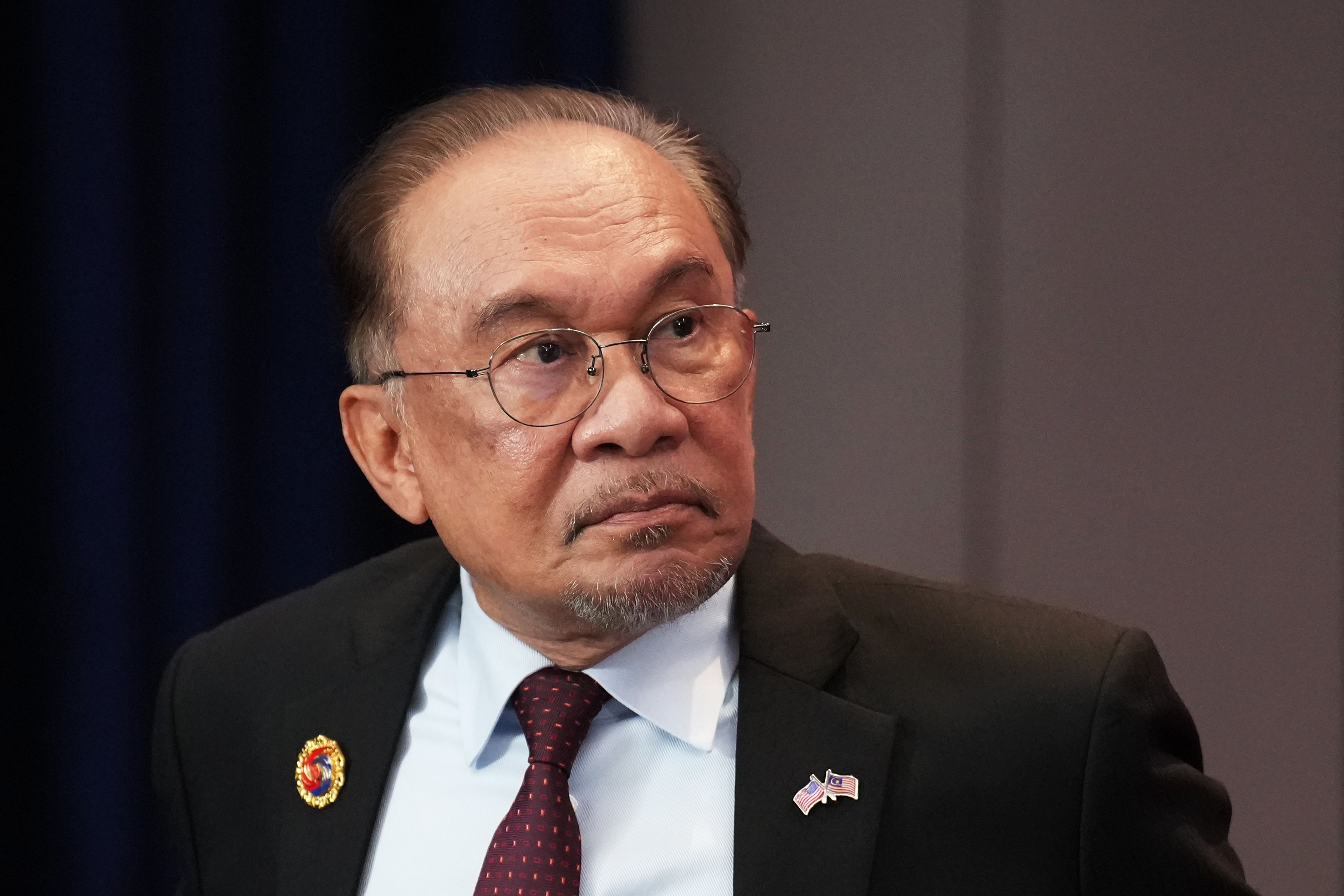
Malaysia’s chairmanship sought to fend off short-term challenges while laying the groundwork for minimizing ASEAN’s longer-term exposure to external stresses.
Elina Noor
{
"authors": [],
"type": "other",
"centerAffiliationAll": "dc",
"centers": [
"Carnegie Endowment for International Peace"
],
"collections": [],
"englishNewsletterAll": "democracy",
"nonEnglishNewsletterAll": "",
"primaryCenter": "Carnegie Endowment for International Peace",
"programAffiliation": "DCG",
"programs": [
"Democracy, Conflict, and Governance",
"Middle East"
],
"projects": [],
"regions": [
"Middle East",
"Egypt",
"Iraq"
],
"topics": [
"Political Reform",
"Democracy",
"Foreign Policy"
]
}REQUIRED IMAGE
U.S. efforts to promote democracy in the Middle East have several components.
Source: Carnegie Resource Page
U.S. efforts to promote democracy in the Middle East have several components. The first and most visible component is the statements issued by the president and other high government officials. In addition, there is quiet diplomatic engagement with several countries in the region. The third, less understood component consists of a diverse array of assistance programs implemented by governmental and non-governmental actors. This fact-sheet provides an overview of these actors and their activities.
Please click on Word icon above to read full document.
Carnegie does not take institutional positions on public policy issues; the views represented herein are those of the author(s) and do not necessarily reflect the views of Carnegie, its staff, or its trustees.
Malaysia’s chairmanship sought to fend off short-term challenges while laying the groundwork for minimizing ASEAN’s longer-term exposure to external stresses.
Elina Noor
For Malaysia, the conjunction that works is “and” not “or” when it comes to the United States and China.
Elina Noor
In July 2025, Vietnam and China held their first joint army drill, a modest but symbolic move reflecting Hanoi’s strategic hedging amid U.S.–China rivalry.
Nguyễn Khắc Giang
The Thai-Cambodian conflict highlights the limits to China's peacemaker ambition and the significance of this role on Southeast Asia’s balance of power.
Pongphisoot (Paul) Busbarat
Beijing believes that Washington is overestimating its own leverage and its ability to handle the trade war’s impacts.
Rick Waters, Sheena Chestnut Greitens