

Commentary
Maria Lipman
{
  "authors": [
    "Maria Lipman"
  ],
  "type": "legacyinthemedia",
  "centerAffiliationAll": "",
  "centers": [
    "Carnegie Endowment for International Peace",
    "Carnegie Russia Eurasia Center"
  ],
  "collections": [],
  "englishNewsletterAll": "",
  "nonEnglishNewsletterAll": "",
  "primaryCenter": "Carnegie Russia Eurasia Center",
  "programAffiliation": "",
  "programs": [],
  "projects": [],
  "regions": [
    "North America",
    "United States",
    "Caucasus",
    "Russia"
  ],
  "topics": [
    "Political Reform",
    "Democracy",
    "Foreign Policy"
  ]
}
Source: Getty
Source: Washington Post

After the collapse of communism and the Soviet Union, Russia rid itself of its oppressive police state, and the Russian people were finally free to choose how they wanted their country to evolve. In those days it was believed that Russia would become part of a broader democratic world. The time of irreconcilable confrontation with the West seemed to be over.
But by 2003 Alexander Vershbow, then-U.S. ambassador to Russia, was talking about a widening "values gap" between the United States and Russia with regard to democracy and the rule of law. And in today's Russia, the West -- and especially the United States -- is increasingly regarded as an adversary whose values are not shared by Russians. For example, Western human rights views were challenged last month by participants in a "World Council of the Russian People" held under the auspices of the Russian Orthodox Church. A leading figure in the Russian Orthodox Church raised doubts about whether the "secular liberal" concept of human rights can be accepted as universal "without an appropriate correction." He emphasized that Russia should not uncritically adopt these ideas since they had been formulated in Western Europe, with Russian Orthodoxy taking no part in the process.
The Russian Orthodox Church has, of course, traditionally been hostile to values and influences from the West. What seems noteworthy here is that the council session was attended by several high-ranking pro-Kremlin legislators and government executives who listened reverentially as this church leader challenged liberal values and denounced what he referred to as the "militant zeal of a secular, humanitarian approach." Moreover, the council was broadly publicized by the government-controlled media, and a television talk show a couple of days later had an audience that showed its strong support for the view that the Western concept of human rights was inherently alien to the Russian people.
Throughout Russian history the inevitable need to catch up with the West has been accompanied by a reluctance to accept the Western model of development, and this has led to xenophobia, anti-Western sentiments and isolationism. The late 1980s and early '90s were the years of promise, when it seemed that Russia might break out from this vicious circle of national development. But this promise was not fulfilled.
The hardships of the early post-communist years caused bitter disillusionment. The insecurity and disparities in wealth under fledgling capitalism brought anxiety and resentment. The task of reforming a nation crippled and demoralized by decades under an inhuman regime proved insurmountable. It would have taken a true visionary to mobilize the Russian people and pursue the path of modernization. And Vladimir Putin is no visionary. He addressed his nation's pain and anger by offering a return to traditional paternalism -- a model that people welcomed with a sense of relief. For even if the government was habitually self-seeking, incompetent and corrupt, it was once again possible for people to avoid making choices and assuming responsibility for Russia's future.
Putin put an end to incipient political modernization; the development of institutions, checks and balances, and public participation were all scrapped. Instead there was the Kremlin as the sole center of decision making and control, the obsequious and greedy bureaucracy, and the fatherly figure of the superior ruler. Alternative political thinking has become unwelcome and the object of suspicion. Challenging superior authority is increasingly seen as unacceptable. The nation and the state have slipped back to the familiar pattern of seeing enemies inside and outside, regarding the West as a force that seeks to harm Russia and Westerners as potential spies.
To be sure, human rights are unequivocally defined in the Russian constitution. Russia is a signatory of quite a number of charters based on the concept of human rights and liberty. President Putin has repeatedly stated that Russia is a European country. Lyudmila Alekseeva, a veteran human rights activist persecuted during communist times, is a prominent member of his Council for Human Rights and Civil Society. And at this point, Putin is hardly likely to make an open and radical reversal of course and formally announce that Russia does not belong to the Western world. After all, Russia is seeking accession to the World Trade Organization and is preparing for the Group of Eight summit in July.
Yet the values gap between Russia and the West is bound to grow, even if Putin is chairing the meeting of the world's chief democratic leaders does have a vision of his country as part of the world of shared liberal values. This is dictated by the logic of Russian domestic political development in Putin's tenure and the increasingly divergent priorities of Russia and the West in global affairs.
Some in the Kremlin have voiced cautious concern over the threat of isolationism. Vladislav Surkov, an influential aide to Putin, was talking in February about "opponents" of Putin's course: He described them as those who seek to take Russia "two steps back" by emphasizing the "Western scare" and "Western threat." Though Surkov wouldn't specify who these opponents are, he was probably referring to his rivals in the Kremlin administration, which is constantly torn by internal feuding. But the problem is more serious than a hypothetical group of hard-line xenophobes on Putin's staff. The growing isolationism and the deepening rift with the West are real and powerful, and it is not at all clear whether Putin will choose to -- or even be able to -- resist this trend.
Masha Lipman, editor of the Carnegie Moscow Center's Pro et Contra journal, writes a monthly column for The Post.
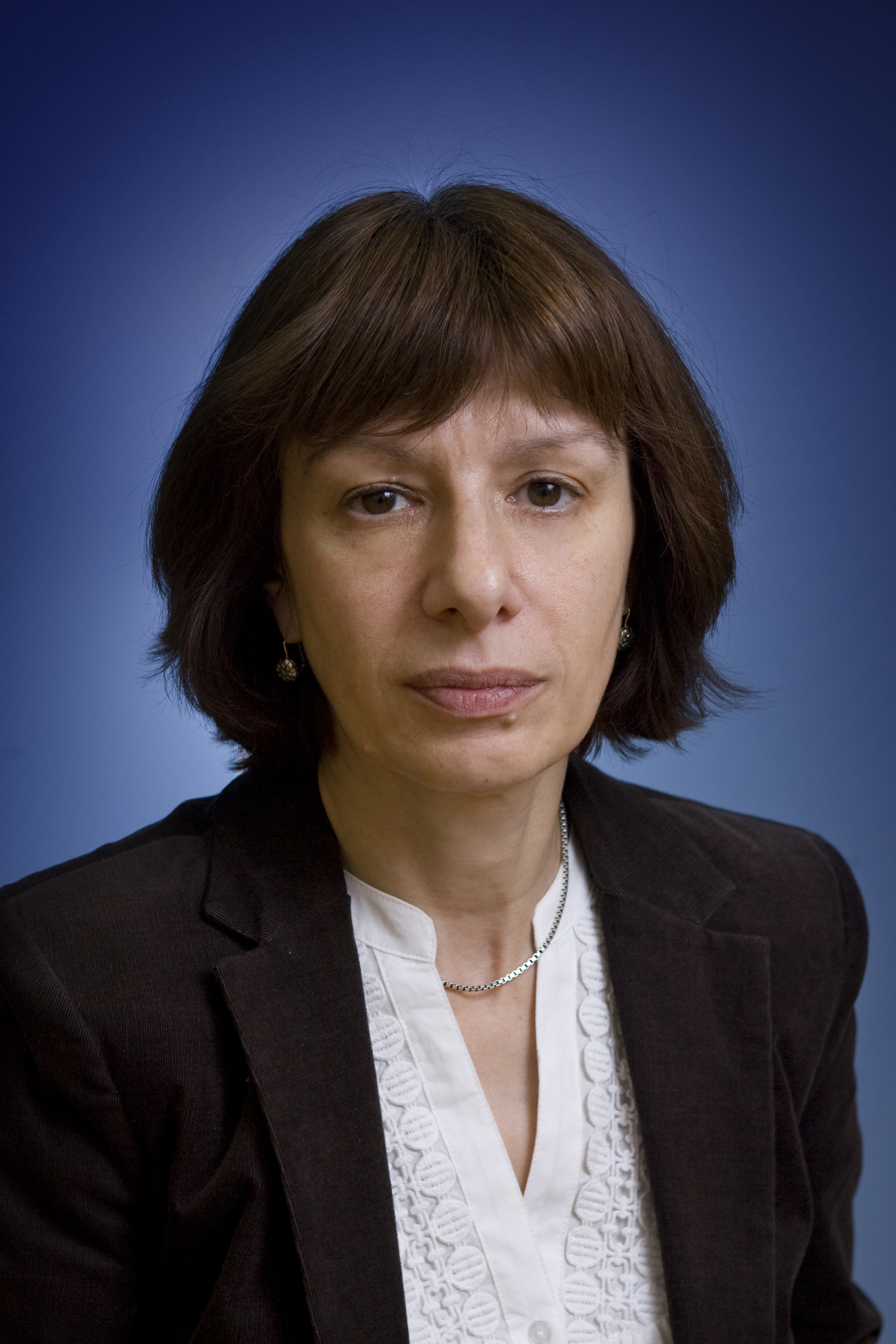
Former Scholar in Residence, Society and Regions Program, Editor in Chief, Pro et Contra, Moscow Center
Lipman was the editor in chief of the Pro et Contra journal, published by the Carnegie Moscow Center. She was also the expert of the Carnegie Moscow Center’s Society and Regions Program.
Recent Work
Maria Lipman
Maria Lipman
Carnegie does not take institutional positions on public policy issues; the views represented herein are those of the author(s) and do not necessarily reflect the views of Carnegie, its staff, or its trustees.

Malaysia’s chairmanship sought to fend off short-term challenges while laying the groundwork for minimizing ASEAN’s longer-term exposure to external stresses.

Elina Noor

For Malaysia, the conjunction that works is “and” not “or” when it comes to the United States and China.
Elina Noor
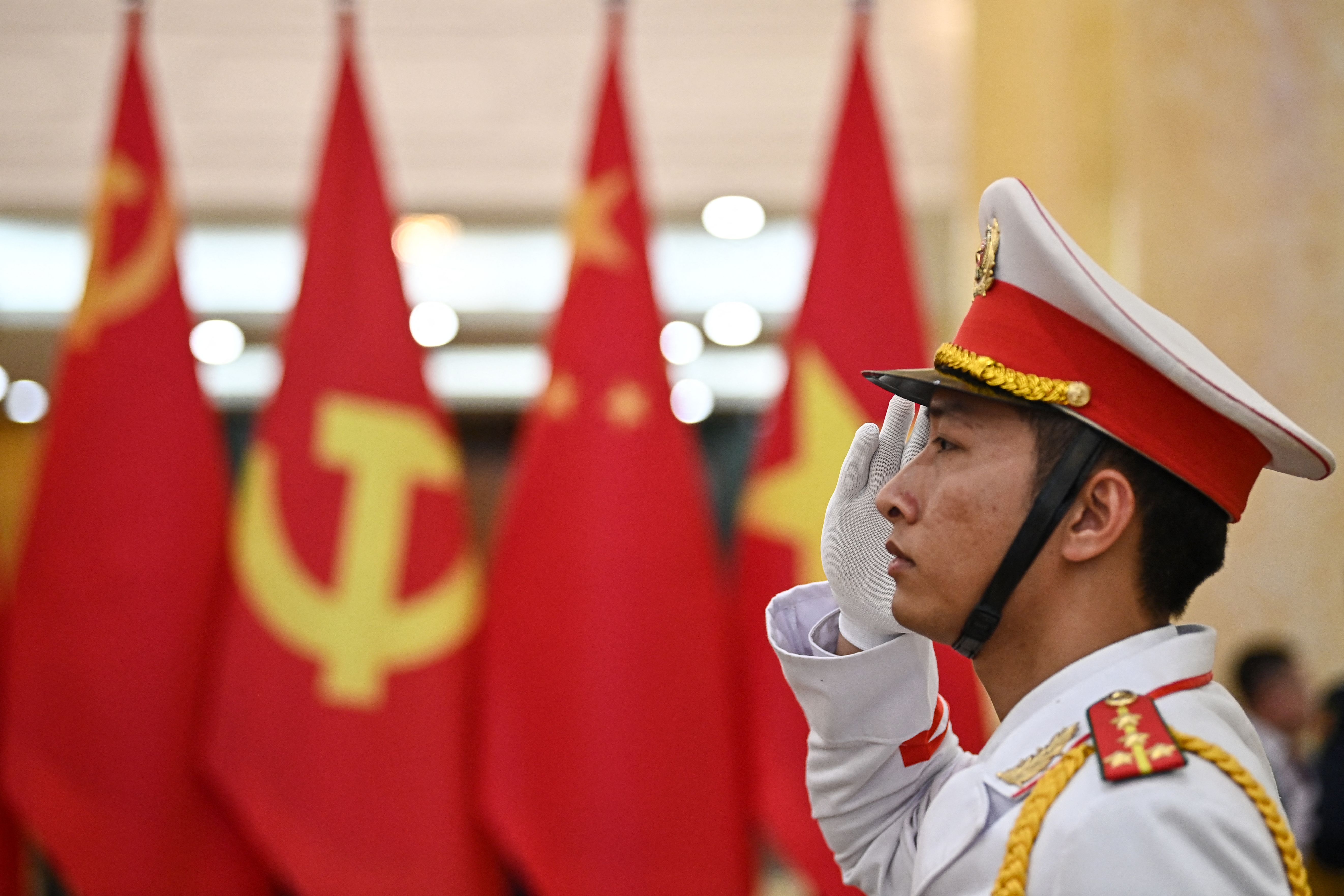
In July 2025, Vietnam and China held their first joint army drill, a modest but symbolic move reflecting Hanoi’s strategic hedging amid U.S.–China rivalry.

Nguyễn Khắc Giang

Regulation, not embargo, allows Beijing to shape how other countries and firms adapt to its terms.
Alvin Camba
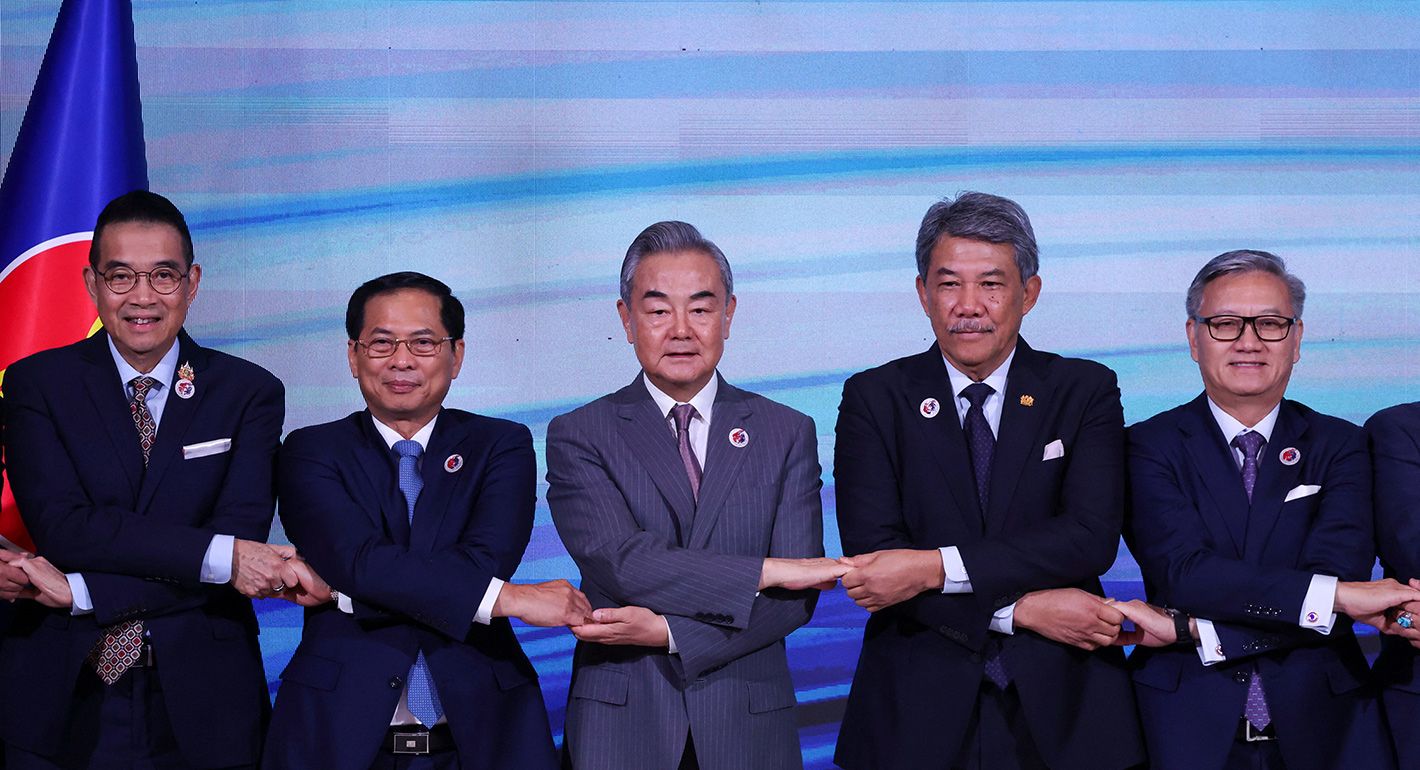
The Thai-Cambodian conflict highlights the limits to China's peacemaker ambition and the significance of this role on Southeast Asia’s balance of power.
Pongphisoot (Paul) Busbarat