

In The Media
Michele Dunne, Robert Kagan
{
  "authors": [
    "Robert Kagan"
  ],
  "type": "legacyinthemedia",
  "centerAffiliationAll": "dc",
  "centers": [
    "Carnegie Endowment for International Peace"
  ],
  "collections": [],
  "englishNewsletterAll": "asia",
  "nonEnglishNewsletterAll": "",
  "primaryCenter": "Carnegie Endowment for International Peace",
  "programAffiliation": "AP",
  "programs": [
    "Asia",
    "Russia and Eurasia"
  ],
  "projects": [],
  "regions": [
    "Middle East",
    "China",
    "Caucasus",
    "Russia"
  ],
  "topics": [
    "Political Reform",
    "Foreign Policy"
  ]
}
Source: Getty
Robert Kagan and Robert Cooper discuss whether the world is reverting to a struggle between great powers or if it is embracing the democratising spirit of 1989.
Source: Prospect

7th April 2008
As the Bush administration winds down it seems a good time to take stock of world affairs. It seems to me that the world has become “normal” again, in the sense that the great-power competition that shaped international affairs for centuries, and which seemed to have disappeared after 1989, has returned. So, too, the conflict over values and principles—between liberal democracy and autocracy—that has influenced the behaviour of nations since the Enlightenment.
The early post-cold war years offered hope for a new kind of international order, with nation states growing together or disappearing altogether, ideological conflicts melting away, cultures intermingling and increasingly free commerce and communications. Geopolitics was out; geoeconomics was in. Hard power was passé; soft power was au courant. Democratic liberalism was victorious, and the alternatives—whether communism, fascism or simple authoritarianism—seemed doomed. Russia and China were transforming themselves into market economies, something that would inevitably produce a political revolution in both countries. The great task of the post-cold war era, it was assumed, was to build an ever more perfect international system of laws and institutions.
But it hasn’t turned out that way. While the EU remains a shining example of the postmodern order, the rest of the world has not followed suit. In most places, the nation state remains as strong as ever, so too the nationalist passions and competition among nations that have shaped history. International competition among great powers has returned, with Russia, China, Europe, Japan, India, Iran, the US and others vying for regional predominance. Struggles for honour, status and influence have returned as central features of the international scene. It turns out that the post-cold war moment was an aberration. History has returned.
And it has also returned in an ideological sense. Autocracy has proven compatible with rising national wealth. The rulers of Russia and China have figured out how to permit open economic activity while suppressing political dissent. They have ensured that people making money keep their noses out of politics. New wealth gives autocracies a greater ability to control information—to monopolise television stations and to keep a grip on internet traffic—often with the assistance of foreign corporations.
Although there is a great desire in the liberal west to hope otherwise, autocrats and democrats have divergent interests. And although relations among nations are always conducted on many different planes—great powers co-operate in some areas while competing in others—the conflicting interests and worldviews of the democracies and the autocracies greatly determine their relations. We saw this most recently at the Nato summit in Bucharest. Despite earnest European efforts, led by Germany, to pursue an accommodating Ostpolitik towards Moscow, a clear divide emerged between the democracies of Nato and the autocracy of Russia across a range of geopolitical matters, from Kosovo to missile defence to Nato enlargement. The tension between democracy and autocracy has also been evident in the case of China. Despite a potent desire in the west to keep relations with China harmonious, the democracies have been unable to resist condemning China’s crackdown in Tibet—with unknown ramifications for China’s already suspicious view of the democracies. The old competition between liberalism and autocracy has re-emerged, with the world’s great powers lining up according to the nature of their regimes. Geographical faultlines run along Russia’s western boundaries, raising tensions over the future of Ukraine and Georgia, for instance. China worries about encirclement by what its own strategists call an “axis of democracy.”
Meanwhile, as the great powers jostle, an even more ancient struggle has erupted between radical Islamists and the modern secular cultures and powers that they believe have dominated, penetrated and polluted their Islamic world. These three struggles—great-power competition, the democracy-autocracy divide and the clash between Islamic radicalism and modernity—have combined to fracture the international system. The grand expectation that the world had entered an era of convergence has proven wrong. We have entered an age of divergence.
The assumption that the cold war was won as an inevitable consequence of the superiority of liberalism failed to recognise the contingency of events—battles won or lost, social movements successful or crushed, economic practices implemented or discarded. The spread of democracy was not merely the unfolding of certain ineluctable processes of economic and political development. The global shift towards liberal democracy coincided with the historical shift in the balance of power towards those nations who favoured it. But that shift was not inevitable, and it need not be lasting. Today, the re-emergence of the great autocratic powers, along with the reactionary forces of Islamic radicalism, has weakened that order and threatens to do so further in the years and decades to come. If we care about democracy and liberalism, we can’t simply sit back and wait for history to unfold. The democracies need to pull together and take a hand in shaping it.
All best
Bob
Continue Reading the Article

Former Senior Associate
Kagan, author of the recent book, The Return of History and the End of Dreams (Knopf 2008), writes a monthly column on world affairs for the Washington Post and is a contributing editor at both the Weekly Standard and the New Republic.
Recent Work

Michele Dunne, Robert Kagan
Robert Kagan, Michele Dunne
Carnegie does not take institutional positions on public policy issues; the views represented herein are those of the author(s) and do not necessarily reflect the views of Carnegie, its staff, or its trustees.

China’s banking crisis in the 2000s was resolved by transferring the costs to households through financial repression—a decision that recapitalized the banks while exacerbating the structural imbalances that continue to shape the Chinese economy today.

Michael Pettis

Chinese biotech companies have been on the receiving end of U.S. economic coercion. Yet their responses have differed significantly because firm and state interests are not uniformly aligned. For Washington, treating all Chinese tech firms the same, irrespective of their actual interests, risks pushing them farther into Beijing’s corner.

Xue Gong
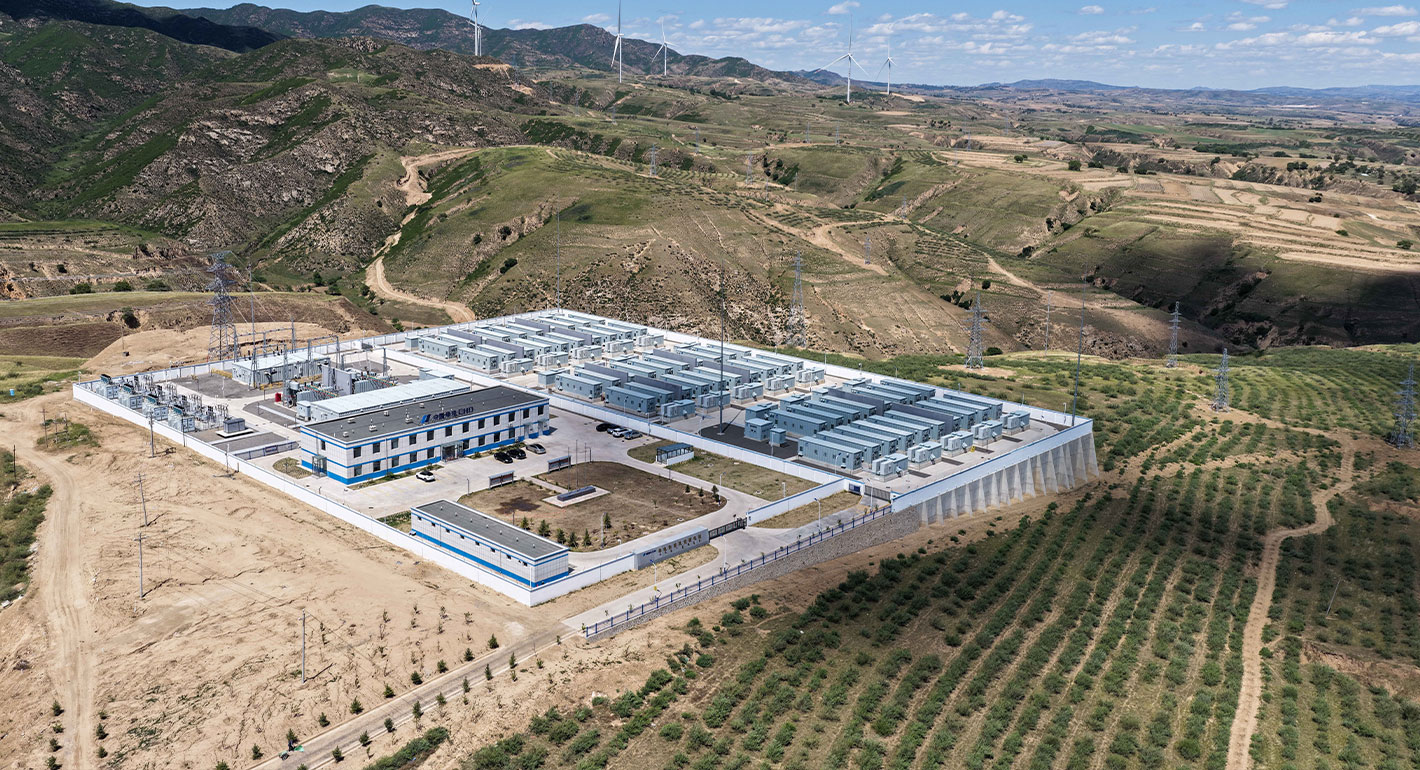
China’s latest energy plan explicitly calls for integrating data centers into the electricity system, particularly connecting them to green energy. It appears Beijing wants to use compute as a source of domestic demand to absorb renewables excess capacity.

Damien Ma

But their "principal to principal" model will only be as effective as the political strength of each leader back home.
Damien Ma

U.S. unpredictability has allowed China to capitalize on its positioning as the “responsible great power”. Paradoxically, the more China wins the perception game, the more likely expectations will rise for Beijing to deliver not just words but to demonstrate with its deeds.

Chong Ja Ian