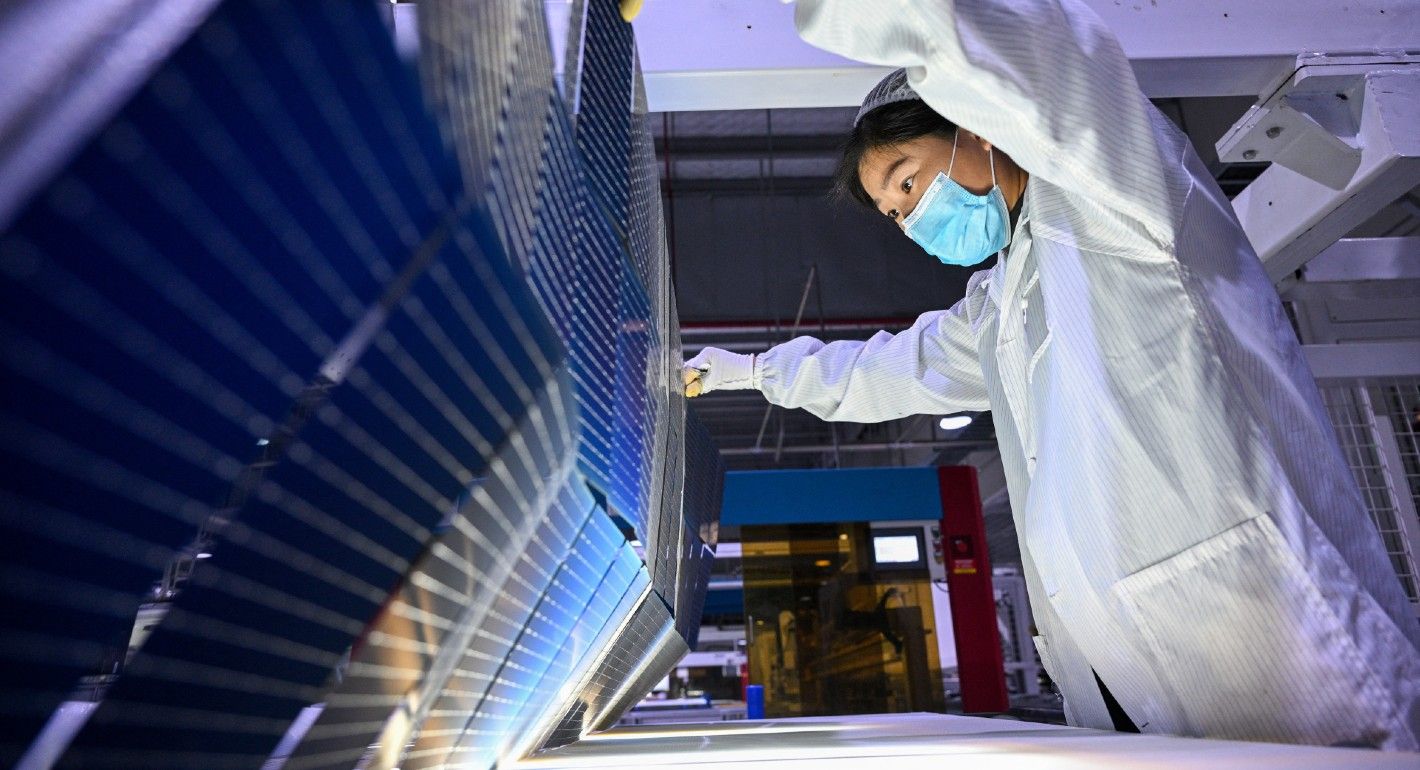
Rather than climate ambitions, compatibility with investment and exports is why China supports both green and high-emission technologies.
Mathias Larsen
{
"authors": [],
"type": "pressRelease",
"centerAffiliationAll": "dc",
"centers": [
"Carnegie Endowment for International Peace",
"Malcolm H. Kerr Carnegie Middle East Center"
],
"collections": [],
"englishNewsletterAll": "menaTransitions",
"nonEnglishNewsletterAll": "",
"primaryCenter": "Malcolm H. Kerr Carnegie Middle East Center",
"programAffiliation": "MEP",
"programs": [
"Middle East"
],
"projects": [],
"regions": [
"Egypt",
"Gulf",
"Levant",
"Maghreb",
"Middle East"
],
"topics": [
"Economy"
]
}REQUIRED IMAGE
The financial interdependence that sovereign wealth funds (SWFs) created between the West and the Arab world could help stabilize multilateral relations and promote economic development and political stability in the Middle East, concludes a new paper from the Carnegie Middle East Center.
BEIRUT, Oct 15—The financial interdependence that sovereign wealth funds (SWFs) created between the West and the Arab world could help stabilize multilateral relations and promote economic development and political stability in the Middle East, concludes a new paper from the Carnegie Middle East Center.
Sven Behrendt studies the rise of Arab SWFs, assesses their investment strategy, and evaluates the policies of Arab investors and Western nations. He also analyzes the political implications of policy initiatives, such as the International Working Group of Sovereign Wealth Funds convened by the IMF, which agreed to new voluntary principles and investment practices in Washington last Saturday.
Key conclusions
Behrendt cautions:
“It is vital that the International Working Group’s work acquires a high degree of political legitimacy, anticipating the tremendous growth of SWFs in the mid-term future, further straining any new financial markets regime. Otherwise states will revert to national legislation in regard to regulating SWFs. The outcomes of these policy processes risk becoming a function of the domestic discourse between pragmatists and populists in the Western countries.”
###

Rather than climate ambitions, compatibility with investment and exports is why China supports both green and high-emission technologies.
Mathias Larsen
“Involution” is a new word for an old problem, and without a very different set of policies to rein it in, it is a problem that is likely to persist.
Michael Pettis
While China's investment story seems contradictory from the outside, the real answers to Beijing's high-quality growth ambitions are hiding in plain sight across the nation's cities.
Yuhan Zhang
China's stimulus addiction cannot go on forever. Beijing still has policy space to clean up the country's massive debt issue, but time is running short.
Michael Pettis
A quick look at the complexities behind Beijing’s enduring Catch-22 situation with revaluing the Renminbi, despite advantages of a stronger currency.
Michael Pettis