

Q&A
Mark Medish
{
  "authors": [
    "Mark Medish"
  ],
  "type": "legacyinthemedia",
  "centerAffiliationAll": "dc",
  "centers": [
    "Carnegie Endowment for International Peace"
  ],
  "collections": [],
  "englishNewsletterAll": "ctw",
  "nonEnglishNewsletterAll": "",
  "primaryCenter": "Carnegie Endowment for International Peace",
  "programAffiliation": "russia",
  "programs": [
    "Russia and Eurasia"
  ],
  "projects": [],
  "regions": [
    "North America",
    "United States",
    "Caucasus",
    "Russia",
    "Georgia"
  ],
  "topics": [
    "Political Reform",
    "Security",
    "Foreign Policy"
  ]
}
Source: Getty
The path back from the brink of conflict will be a difficult one for Russia and the West. It will require an ambivalent Russia to choose love over hatred, to purge its old demons and to rethink its global role. It will also require the self-absorbed West to adopt a long term strategy for promoting peace and prosperity in Eurasia.
Source: International Herald Tribune

And hordes and hordes.
Try and take us on!
Yes, we are Scythians!
Aleksandr Blok wrote these opening lines in late January 1918 a few weeks after the Bolsheviks disbanded Russia’s first freely elected parliament, plunging the country into a bloody civil war.
Of course Russia has changed significantly since then. And yet the famous poem seems uncannily relevant ninety years later.
Blok had a prophetic sense of Russia’s national resurgence and an impending clash of civilizations. His reference to Scythians anchored Russia’s proud roots in the myth of a lost Eurasian tribe fated to act as a “shield” between East and West.
Russia unleashed its ancient wrath when it struck back at Georgia militarily last August. As a veteran US diplomat aptly observed, Moscow was exhibiting “road rage”. The Kremlin felt it had been cut off one too many times and was lashing out. “Try and take us on!”
The Kremlin’s ensuing diplomatic script could be summarized by Blok’s poem. Put in simpler terms, Moscow’s new message was that the shoe is on the other foot. Tired of Western double-standards and riding high on oil wealth, Moscow wanted to show the world that anything the West could do, Russia could do too.
And, jeering, you merely counted the days
Until your cannon could point at us!
The time is come. Trouble beats its wing –
and every day our grudges grow…
Nato enlargement up to Russia’s borders in Ukraine and Georgia? How about a small war in the Caucasus? Unilateral declaration of independence by Kosovo? How about the same for Abkhazia and South Ossetia? A US missile defense system in Poland and the Czech Republic? How about Iskander missile batteries on the Baltic coast and a military partnership with Venezuela?
Mission accomplished. Russia has gotten our attention. Russia is not a eunuch among nation states; it has legitimate interests too. It must be heeded, within reason, on issues affecting those interests.
But tragically Russia seems to have had little sense of purpose beyond venting. Instead it has indulged in a series of visceral responses to perceived slights, revealing atavism, not strength. Rage is not a strategy.
Most countries, old and new, have had identity crises of one kind or another. This is particularly true of former empires, historically united by force rather than consent. Russia’s case is especially acute due to the deformities of Communism. Russia still behaves like a deeply conflicted demiurge between East and West.
Russia is a Sphinx. Rejoicing, grieving,
And drenched in black blood,
It gazes, gazes, gazes at you,
With hatred and with love!
The path back from the brink of conflict will be a difficult one for Russia and the West. It takes two to tango. It will require an ambivalent Russia to choose love over hatred, to purge its old demons and to rethink its global role. It will also require the self-absorbed West to adopt a long term strategy for promoting peace and prosperity in Eurasia.
There is little doubt that the maximalist schemes of the Anglo-American neoconservatives aimed for too much, too soon, with dangerous consequences for Europe. It is important to understand that when it comes to foreign policy the West has produced its own brand of Bolsheviks and its own arrogant pathologies.
Before it’s too late – sheathe your old sword,
Comrades! We shall be brothers!
Perhaps not brotherhood, but we can already see the rough outlines of a new approach in Moscow and Western capitals, most of which have toned down the truculent rhetoric. Missile defense, which is not an urgent security issue, is an obvious area for compromise.
Ukraine and Georgia can be firmly embraced by Transatlantic structures, foremost the EU, in tandem with Nato partnership. For genuine Eurasian stability, Russia will ultimately need to join Nato, but this may be a discussion for another decade.
Longstanding territorial disputes should be returned to the negotiating table, recognizing that frozen conflicts are usually better than hot ones.
US President-elect Barack Obama will have an important opportunity to change things and rebuild a US foreign policy based on principled pragmatism. The clear majority of American voters expect him both to uphold US values and avoid unnecessary new confrontations.
In Russia’s case, the key insight will have to come not from the electorate but from the entrenched leadership of Prime Minister Vladimir Putin and his protégé President Dmitry Medvedev. If inspiration fails them, the decline of oil revenues might help bring Russia’s leaders to their senses -- and to move beyond road rage.
This work originally appeared in the International Herald Tribune.
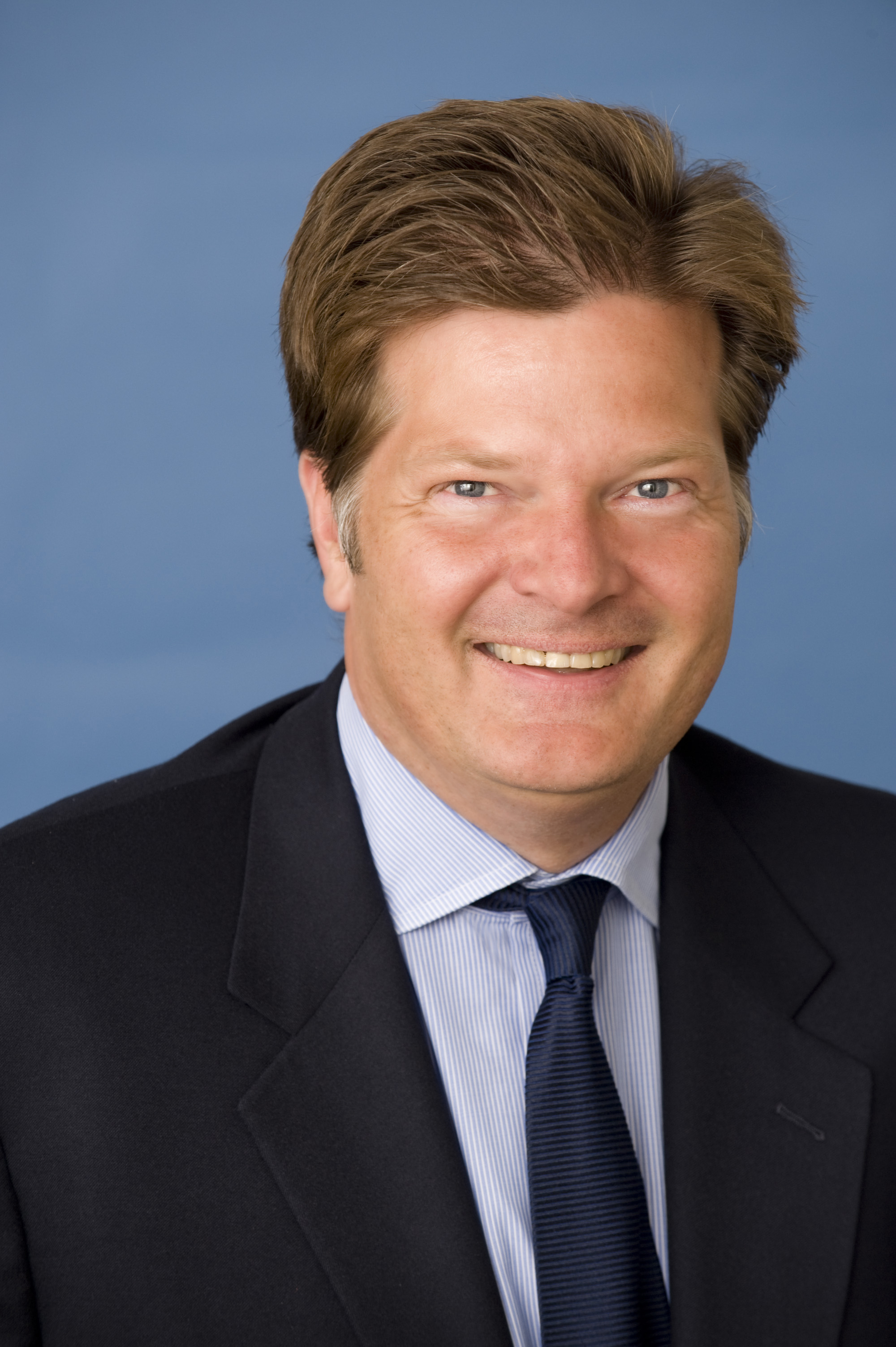
Former Visiting Scholar
Medish served in the Clinton administration as special assistant to the President and senior director for Russian, Ukrainian, and Eurasian Affairs on the National Security Council from 2000 to 2001.
Recent Work
Carnegie does not take institutional positions on public policy issues; the views represented herein are those of the author(s) and do not necessarily reflect the views of Carnegie, its staff, or its trustees.

But their "principal to principal" model will only be as effective as the political strength of each leader back home.

Damien Ma

U.S. unpredictability has allowed China to capitalize on its positioning as the “responsible great power”. Paradoxically, the more China wins the perception game, the more likely expectations will rise for Beijing to deliver not just words but to demonstrate with its deeds.

Chong Ja Ian

Hanoi and Beijing have long treated each other as distant cousins rather than comrades in arms. That might be changing as both sides draw closer to hedge against uncertainty and America’s erratic behavior.

Nguyễn Khắc Giang

Across Asia, China is better positioned to withstand energy shocks from the fallout of the Iran war. Its abundant coal capacity can ensure stability in the near term. Yet at the same time, the country’s energy transition away from coal will make it even less vulnerable during the next shock.
Damien Ma

Malaysia’s chairmanship sought to fend off short-term challenges while laying the groundwork for minimizing ASEAN’s longer-term exposure to external stresses.

Elina Noor