

In The Media
Michele Dunne, Robert Kagan
{
  "authors": [
    "Robert Kagan"
  ],
  "type": "legacyinthemedia",
  "centerAffiliationAll": "dc",
  "centers": [
    "Carnegie Endowment for International Peace"
  ],
  "collections": [],
  "englishNewsletterAll": "ctw",
  "nonEnglishNewsletterAll": "",
  "primaryCenter": "Carnegie Endowment for International Peace",
  "programAffiliation": "SAP",
  "programs": [
    "South Asia"
  ],
  "projects": [],
  "regions": [
    "North America",
    "United States",
    "South Asia",
    "India",
    "Pakistan"
  ],
  "topics": [
    "Political Reform",
    "Democracy",
    "Security",
    "Military",
    "Foreign Policy"
  ]
}
Source: Getty
Following the Pakistani terrorist attacks in Mumbai, the international community should respond by declaring that parts of Pakistan have become ungovernable and a menace to international security. This violation of Pakistan’s sovereignty will begin to show the world that states that harbor terrorists cannot take their sovereign rights for granted — these rights need to be earned.
Source: Washington Post

One can feel sympathy for Zardari's plight. He and his new civilian government did not train or assist the Pakistani terrorist organizations that probably carried out last week's attacks in Mumbai. Nor is it his fault that al-Qaeda, the Taliban and other dangerous groups operate in Waziristan and the Federally Administered Tribal Areas of western Pakistan, from which they launch attacks on U.S. and European forces trying to bring peace to Afghanistan. For that we can thank elements of the Pakistani military, Pakistani intelligence and the late military dictatorship of Pervez Musharraf. Reversing decades-old policies of support for these groups may be impossible for any Pakistani leader, especially when the only forces capable of rooting them out are the same forces that created them and sustain them.
So if the world is indeed not to be held hostage by non-state actors operating from Pakistan, what can be done? The Bush administration is right to press Pakistan to cooperate fully with India's investigation of the Mumbai attacks. But that may not have much effect. Pakistani intelligence services have already balked at sending their top official to India to help. Nor is mere cooperation by Pakistan likely to satisfy the outraged Indian people. They, like Americans after Sept. 11, 2001, want to see some action taken against the groups that carried out the attacks. So all the warnings in the world may not be enough to forestall an Indian attack, especially given the Indian government's political vulnerability, even if it risks another Indo-Pakistani war.
Rather than simply begging the Indians to show restraint, a better option could be to internationalize the response. Have the international community declare that parts of Pakistan have become ungovernable and a menace to international security. Establish an international force to work with the Pakistanis to root out terrorist camps in Kashmir as well as in the tribal areas. This would have the advantage of preventing a direct military confrontation between India and Pakistan. It might also save face for the Pakistani government, since the international community would be helping the central government reestablish its authority in areas where it has lost it. But whether or not Islamabad is happy, don't the international community and the United States, at the end of the day, have some obligation to demonstrate to the Indian people that we take attacks on them as seriously as we take attacks on ourselves?
Would such an action violate Pakistan's sovereignty? Yes, but nations should not be able to claim sovereign rights when they cannot control territory from which terrorist attacks are launched. If there is such a thing as a "responsibility to protect," which justifies international intervention to prevent humanitarian catastrophe either caused or allowed by a nation's government, there must also be a responsibility to protect one's neighbors from attacks from one's own territory, even when the attacks are carried out by "non-state actors."
In Pakistan's case, the continuing complicity of the military and intelligence services with terrorist groups pretty much shreds any claim to sovereign protection. The Bush administration has tried for years to work with both the military and the civilian government, providing billions of dollars in aid and advanced weaponry. But as my Carnegie Endowment colleague Ashley Tellis has noted, the strategy hasn't shown much success. After Mumbai, it has to be judged a failure. Until now, the military and intelligence services have remained more interested in wielding influence in Afghanistan through the Taliban and fighting India in Kashmir through terrorist groups than in cracking down. Perhaps they need a further incentive -- such as the prospect of seeing parts of their country placed in an international receivership.
Would the U.N. Security Council authorize such action? China has been Pakistan's ally and protector, and Russia might have its own reasons for opposing a resolution. Neither likes the idea of breaking down the walls of national sovereignty -- except, in Russia's case, in Georgia -- which is why they block foreign pressure on Sudan concerning Darfur, and on Iran and other rogue states. This would be yet another test of whether China and Russia, supposed allies in the war against terrorism, are really interested in fighting terrorism outside their own borders. But if such an action were under consideration at the United Nations, that might be enough to gain Pakistan's voluntary cooperation. Either way, it would be useful for the United States, Europe and other nations to begin establishing the principle that Pakistan and other states that harbor terrorists should not take their sovereignty for granted. In the 21st century, sovereign rights need to be earned.
This article originally appeared in the Washington Post.
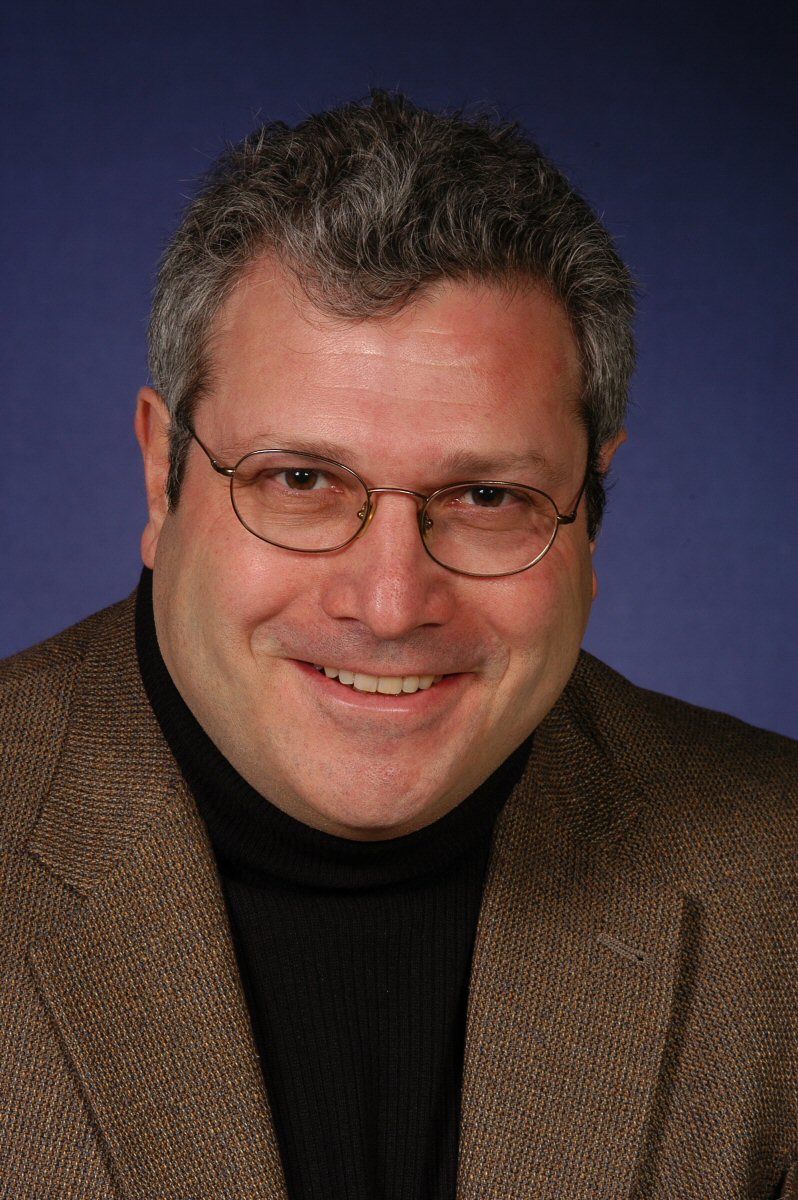
Former Senior Associate
Kagan, author of the recent book, The Return of History and the End of Dreams (Knopf 2008), writes a monthly column on world affairs for the Washington Post and is a contributing editor at both the Weekly Standard and the New Republic.
Recent Work

Michele Dunne, Robert Kagan
Robert Kagan, Michele Dunne
Carnegie does not take institutional positions on public policy issues; the views represented herein are those of the author(s) and do not necessarily reflect the views of Carnegie, its staff, or its trustees.

But their "principal to principal" model will only be as effective as the political strength of each leader back home.

Damien Ma

U.S. unpredictability has allowed China to capitalize on its positioning as the “responsible great power”. Paradoxically, the more China wins the perception game, the more likely expectations will rise for Beijing to deliver not just words but to demonstrate with its deeds.

Chong Ja Ian

Hanoi and Beijing have long treated each other as distant cousins rather than comrades in arms. That might be changing as both sides draw closer to hedge against uncertainty and America’s erratic behavior.

Nguyễn Khắc Giang

Across Asia, China is better positioned to withstand energy shocks from the fallout of the Iran war. Its abundant coal capacity can ensure stability in the near term. Yet at the same time, the country’s energy transition away from coal will make it even less vulnerable during the next shock.
Damien Ma

Malaysia’s chairmanship sought to fend off short-term challenges while laying the groundwork for minimizing ASEAN’s longer-term exposure to external stresses.

Elina Noor