

In The Media
Michele Dunne, Robert Kagan
{
  "authors": [
    "Robert Kagan"
  ],
  "type": "legacyinthemedia",
  "centerAffiliationAll": "",
  "centers": [
    "Carnegie Endowment for International Peace"
  ],
  "collections": [],
  "englishNewsletterAll": "",
  "nonEnglishNewsletterAll": "",
  "primaryCenter": "Carnegie Endowment for International Peace",
  "programAffiliation": "",
  "programs": [],
  "projects": [],
  "regions": [
    "North America",
    "United States"
  ],
  "topics": [
    "Security",
    "Military",
    "Foreign Policy"
  ]
}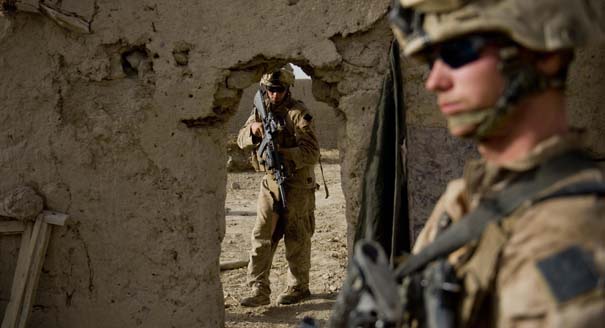
Source: Getty
It doesn’t make sense fiscally or politically; at a time when people talk of trillion-dollar stimulus packages, to propose a 10 percent cut from the defense budget, especially given the high price we will pay in America's global position.
Source: Washington Post

It doesn't make fiscal sense to cut the defense budget when everyone is scrambling for measures to stimulate the economy. Already, under the current Pentagon budget, defense contractors will begin shutting down production lines in the next couple of years -- putting people out of work. Rather than cutting, the Obama administration ought to be increasing defense spending. As Harvard economist Martin Feldstein recently noted on this page, defense spending is exactly the kind of expenditure that can have an immediate impact on the economy.
A reduction in defense spending this year would unnerve American allies and undercut efforts to gain greater cooperation. There is already a sense around the world, fed by irresponsible pundits here at home, that the United States is in terminal decline. Many fear that the economic crisis will cause the United States to pull back from overseas commitments. The announcement of a defense cutback would be taken by the world as evidence that the American retreat has begun.
This would make it harder to press allies to do more. The Obama administration rightly plans to encourage European allies to increase defense capabilities so they can more equitably share the burden of global commitments. This will be a tough sell if the United States is cutting its own defense budget. In Afghanistan, there are already concerns that the United States may be "short of breath." In Pakistan, the military may be tempted to wait out what its members perceive as America's flagging commitment to the region. A reduction in defense funding would feed these perceptions and make it harder for Obama's newly appointed special envoy, Richard Holbrooke, to press for necessary changes in both countries.
What worries allies cheers and emboldens potential adversaries. The Obama administration is right to reach out and begin direct talks with leaders in Tehran. But the already-slim chances of success will grow slimmer if Iranian leaders believe that the United States may soon begin pulling back from their part of the world. President Mahmoud Ahmadinejad's spokesman has already declared that the United States has lost its power -- just because President Obama said he is willing to talk. Imagine how that perception would be reinforced if Obama starts cutting funding for an already inadequately funded force.
Similarly, the Obama administration is right to want to begin negotiations with Russia over missile defense and arms control. But it is a poor opening gambit to announce a cut in American defense spending before negotiations even begin. If Russian leaders believe that the United States is looking for a way out of weapons systems -- missile defense in particular -- they will negotiate accordingly. They might ask why they should make a deal at all.
Cuts in the defense budget would have consequences in other areas of the budget, most notably foreign aid. Some Republicans have already begun to grumble about foreign aid and development spending. If the Obama administration begins by cutting defense, it will be much harder to persuade Republicans to support foreign aid.
Finally, everyone knows the U.S. military is stretched thin. Some may hope that Obama can begin substantially drawing down U.S. force levels in Iraq this year. No doubt he can to some extent. But this is an especially critical year in Iraq. The most recent round of elections is only one of three: District elections are in June and all-important parliamentary elections are in December. The head of U.S. Central Command, Gen. David Petraeus, is unlikely to recommend a steep cut with so much at stake.
Moreover, any reduction of U.S. forces in Iraq is going to be matched by an increase of forces in Afghanistan. The strain on U.S. ground forces, even with reductions in Iraq, won't begin to ease until the end of next year. And that assumes that the situation in Iraq stays quiet, that there is progress in Afghanistan, that Pakistan doesn't explode and that no other unforeseen events require American action.
At a time when people talk of trillion-dollar stimulus packages, cutting 10 percent from the defense budget is a pittance, especially given the high price we will pay in America's global position. The United States spends about 4 percent of GDP on defense. In 1962, the figure was 9 percent. Some unreconstructed anti-Cold Warriors from the 1980s may see the Obama revolution as a return to the good old days of battling against Ronald Reagan's defense spending. But that's not the way Barack Obama ran for president. He didn't promise defense cuts. On the contrary, he called for additional forces for the Army and Marines. He insisted that the American military needs to remain the strongest and best-equipped in the world. In his inaugural address, President Obama reminded Americans that the nation is still at war. That being so, this is not the time to start weakening the armed forces.
Click here to see this article as it originally appeared in the Washington Post.

Former Senior Associate
Kagan, author of the recent book, The Return of History and the End of Dreams (Knopf 2008), writes a monthly column on world affairs for the Washington Post and is a contributing editor at both the Weekly Standard and the New Republic.
Recent Work

Michele Dunne, Robert Kagan
Robert Kagan, Michele Dunne
Carnegie does not take institutional positions on public policy issues; the views represented herein are those of the author(s) and do not necessarily reflect the views of Carnegie, its staff, or its trustees.

The nuclear relationship between China and the United States is increasingly shaped by widening perception gaps rather than deliberate strategic design.

Tong Zhao

But their "principal to principal" model will only be as effective as the political strength of each leader back home.

Damien Ma

U.S. unpredictability has allowed China to capitalize on its positioning as the “responsible great power”. Paradoxically, the more China wins the perception game, the more likely expectations will rise for Beijing to deliver not just words but to demonstrate with its deeds.

Chong Ja Ian

Hanoi and Beijing have long treated each other as distant cousins rather than comrades in arms. That might be changing as both sides draw closer to hedge against uncertainty and America’s erratic behavior.

Nguyễn Khắc Giang

Across Asia, China is better positioned to withstand energy shocks from the fallout of the Iran war. Its abundant coal capacity can ensure stability in the near term. Yet at the same time, the country’s energy transition away from coal will make it even less vulnerable during the next shock.
Damien Ma